
Space is an intriguing and mysterious place that humans have only explored a tiny portion of. Although planet Earth can feel massive to us, it’s actually one of the smallest planets in the solar system. It’s hard to believe that most of the planets around us are many times bigger than our home planet. We live in a system of eight planets, all bound to the Sun and orbiting around it.
These eight planets are Mercury, Venus, Earth, Mars, Jupiter, Saturn, Neptune, and Uranus. However, there are a number of other celestial objects in the solar system. There are several dwarf planets, asteroids, stars, and moons. The biggest planet in the solar system by far is Jupiter. It is 11 times bigger than the Earth, but compared to the Sun, it’s still quite small. The Sun is over 10 times larger than Jupiter!
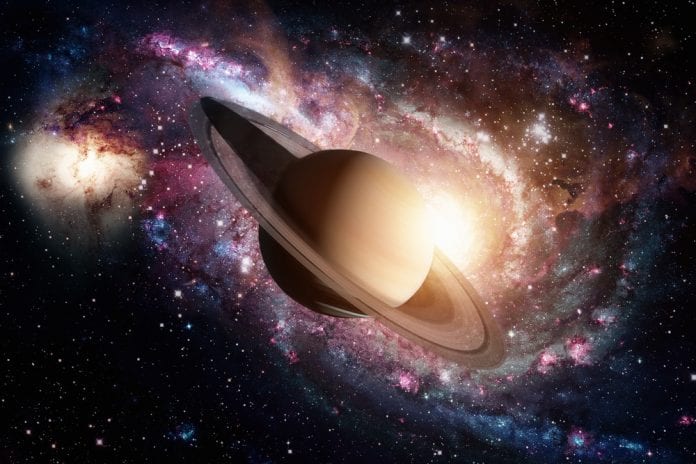
One of the most interesting planets and most recognizable is the second-largest, Saturn. Saturn is well known for the iconic rings around it and is about 9.5 times larger than Earth. There is a storm on Saturn that is about as big as our entire planet. Although each planet has a ring of debris and other materials orbiting around it, Saturn’s rings are the only concretely visible rings. Saturn is considered a gas giant just like Uranus, Neptune, and Jupiter. It has many interesting characteristics that are totally unique compared to all the other planets. Keep reading to find out about the top 10 facts you should know about Saturn.
10It’s The Second Largest Planet in Our System
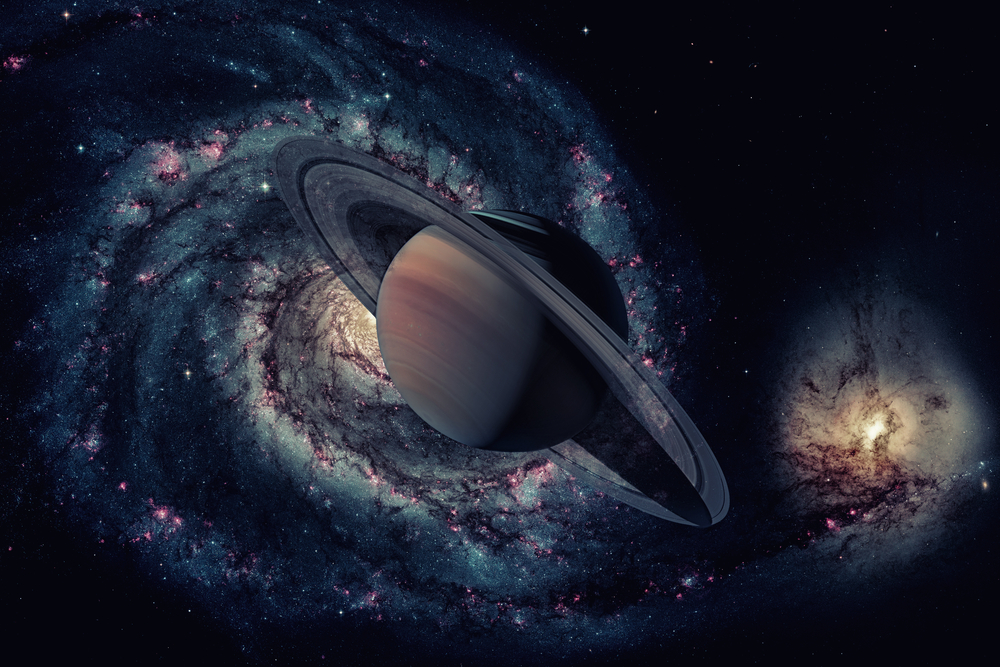
The solar system that Earth is a part of includes eight planets, most of which are much bigger than our relatively small home planet. The biggest planet in the solar system is Jupiter, and Saturn comes in second with a radius of 58,232 kilometers. If you walked around the surface of the planet at the equator, you would walk a total of 365,882 kilometers. However, Saturn is also one of the lowest density planets. It’s even less dense than water and has essentially no solid ground like Earth. Saturn does weigh a lot more than Earth, but this difference is one of the smallest because of Saturn’s low density.
Gas giants are categorically much larger than terrestrial and rocky planets like Earth and other smaller planets in our solar system. The surface of Saturn is even more massive than you may think- the total amount of square kilometers comes to a whopping 42.7 billion. Plus, the volume of the planet is 827.13 trillion cubed kilometers. In every way, Saturn is staggeringly larger than Earth. Hundreds of our planet could fit inside Saturn; it’s just that big!
Saturn is the sixth planet from the Sun, much further and much colder than the Earth because of this distance. While it takes sunlight only about eight minutes to reach us here on Earth, the journey of sunlight lasts over 80 minutes to get to Saturn. The planet also has a magnetic field much stronger than Earth’s but less than Jupiter’s. The planet and its rings are surrounded by a certain area of space that is affected by the field.
9Ancient Greek and Roman Mythology Used Saturn

Many ancient religions, stories, and mythology are based on the observable planets in our solar system. The day of the week Saturday was even named after Saturn! There is also a large amount of Roman and Greek mythology-inspired by the only planet with such massive and beautiful rings.
In ancient Roman mythology, Saturn was considered a god. Saturn was often depicted as a hooded man and had many sacrifices and celebrations dedicated to him. The harvest celebration of Saturnalia took place every year from December 17th to the 23rd. Saturn, often called Saturnus, was considered the god of harvest and sowing in Roman beliefs. In ancient Rome, a temple was dedicated to Saturnus as a place to worship and make sacrifices to the god.
On the other hand, Greek mythology designated Saturn as the god Cronus- the god of agriculture. He is considered the father of all the Greek gods, one of the most powerful of all. However, the Greek stories often depict Cronus as a monstrous father who often ate his own children.
In both Roman and Greek mythology, Saturn is associated with symbols such as the scythe and usually as an elderly man with a long beard. He is also the god of Time, often called the Father of Time, being one of the oldest of the gods. This is largely due to the fact that the ancient Romans and Greeks believed Saturn to be the oldest existing thing in the universe. The most distant of the observable planets, Saturn had a powerful image to the ancients.
8Saturn Is the Flattest Planet in Our System
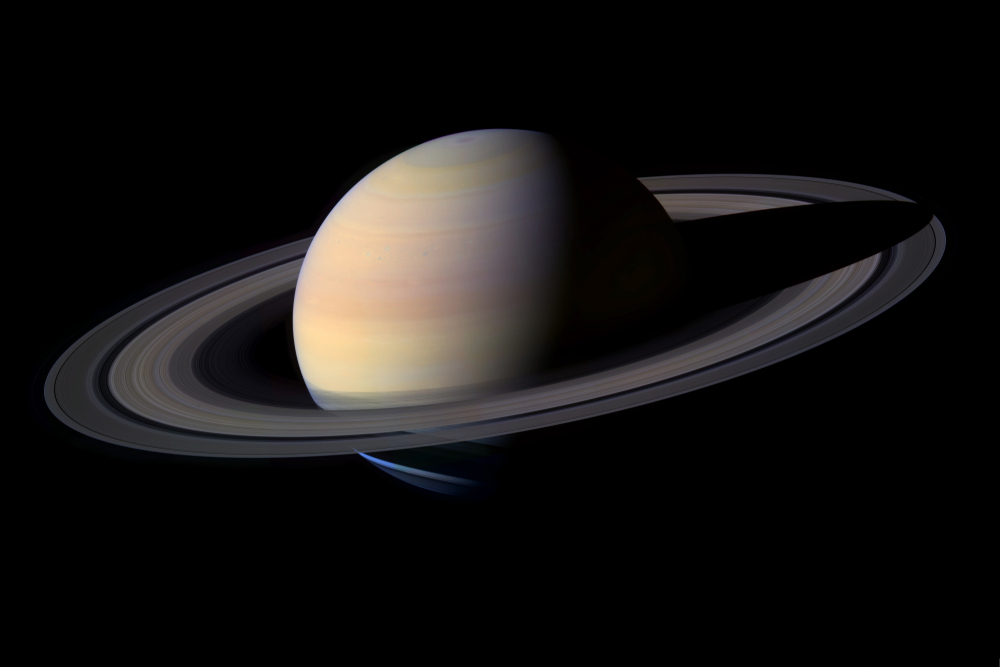
Looking at any photo of Saturn will reveal that it has a slightly different shape compared to the other planets. Namely, it is not perfectly round as most planets are. Both poles of Saturn have gradually become more flat than rounded, creating a bit of a pancake effect. The reason for this strange shape is the extremely quick rotation of the planet. Earth makes one full rotation every 24 hours, creating one full day. On Saturn, a day only lasts about 10.5 hours- less than half of an Earth day.
Because of this unusually quick rotation, Saturn’s equator gradually becomes larger while the poles flatten out. Saturn is more of an oval shape nowadays, slowly becoming slightly flattered with every rotation. The faster a planet spins, the more it flattens out. However, there is a limit to how flat a planet could get.
If a planet became too flat, the spinning speed would have to be so fast that all the particles would likely fling off and any form of gravitational attraction would disappear. The flatness of Saturn is barely perceptible, but there’s another object in another solar system that is even more oval-shaped. The huge asteroid of Haumea is found in the Kuiper Belt and appears slightly flatter than an egg.
The reason for this extreme shape is because of very rapid rotation. Haumea spins so quickly that scientists believe it was probably kick-started by a collision with another space object. It also has two moons with a strong gravitational pull, making it spin ever more quickly.
7Saturn Is Made of Hydrogen
Similarly to most stars and other gas giants, Saturn is mostly made up of hydrogen and helium. Most researchers agree that the planet is 94% hydrogen and about 6% helium. There are also tiny percentages of methane, water, and ammonia on the planet. Although it’s impossible to prove at this point in the space exploration industry, many scientists believe that Saturn could have a solid core made of rock that is around the same size as Earth.
Although Saturn has most of the same components of a star, it is still considered a planet. Because it has such a low density, Saturn does not have enough mass to power a star. The atmosphere and surface of Saturn are nearly the same density, meaning they mix together with low levels of distinction.
The hydrogen that makes up Saturn is in different forms depending on the location on the planet. Closer to the core of Saturn, the hydrogen is in metallic form. Above this, it’s mostly liquid hydrogen. The liquid and metallic hydrogen are what controls the strong metallic field of the planet. Jupiter is able to maintain a stronger metallic field because of the far larger amounts of this hydrogen.
Because of its position fairly far from the Sun, a large portion of the planet is made up of ice, and the temperature remains fairly low. Interestingly enough, Saturn and the Sun are actually made up of the same basic components even though they are very far apart from one another.
6Saturn’s Rings Are Made of Ice
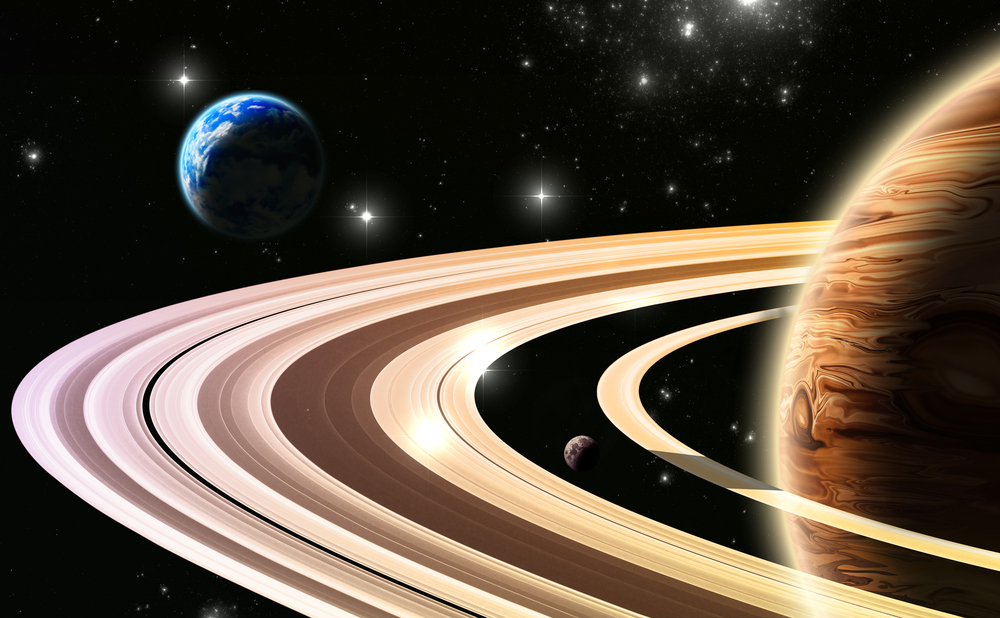
Saturn has the largest and most extensive rings of any planet in the solar system. While every gas giant has some form of rings, most of them are not dense or large enough for them to be visible. The particles that makeup Saturn’s rings range from tiny to huge in size. Some chunks are even meters in size. The rings are primarily made up of pure water ice with an array of small impurities and rocky material. They are one of the reasons that Saturn is visible from the Earth, as the ice is highly reflective and makes Saturn much brighter.
The rings of Saturn are massive, ranging from a distance of 7,000 to 80,000 kilometers away from the surface of the planet. They also range from around 10 meters to a whole kilometer in thickness, with some major gaps in the rings. Saturn’s rings are one of the most beautiful space images that humans have had the chance to observe. They make Saturn quite a unique planet with a completely distinct look.
The rings are so complex and irregular that closer observation has revealed they seem to be made up of several small rings twisted or even braided together. Most researchers believe that Saturn didn’t always have rings and that they have developed over millions of years. However, their prime is long past, and the rings have lost a lot of the material they used to have. Scientists estimate that the current rate of depletion will have the rings completely gone in 300 million years.
5Saturn Has 150 Moons
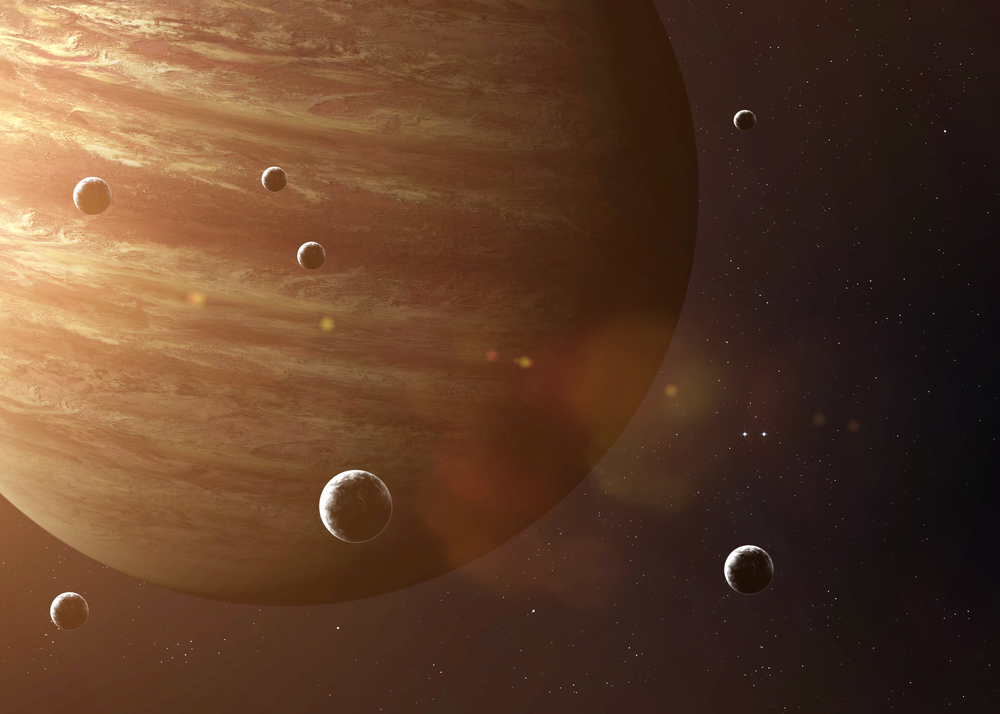
Saturn has a total of 150 moons and moonlets orbiting it. However, only 53 of these moons have been named, and only 63 are officially confirmed. Jupiter is the only planet with more moons in our solar system. Many of Saturn’s moons are quite small and may even consist of pure ice. A number of them are even part of Saturn’s rings!
48 of Saturn’s named moons are less than 50 kilometers in diameter. Earth’s moon is nearly 2,000 kilometers in diameter, so it’s easy to imagine just how tiny these moons really are. Although most of Saturn’s moons are made of ice, there are some unique and mysterious exceptions. Titan was the first moon of Saturn ever discovered, and it is by far the largest. In fact, it is actually the second biggest moon in the whole solar system and even has a larger mass than the planet Mercury. Titan is difficult to research because of the thick, dense atmosphere. However, this very atmosphere also makes for a beautiful and hazy appearance.
Most of Saturn’s moons were also named after Greek and Roman mythological figures. The Titans, for example, were the siblings of Cronus. This massive moon consists of 96% of the mass orbiting around Saturn. The rest of the moons and the rings themselves make up the other 4%. Some of the other larger moons include Mimas, Enceladus, Tethys, Dione, Iapetus, and Rhea. The moons on the smaller end of the spectrum are considered moonlets and usually found in the gaps of Saturn’s rings.
4Saturn Has Had Four Visitors from Earth
Saturn is too far away from the Sun for any human crew to have ever made it there. However, there have been four expeditions made by spacecraft from Earth. Three of these expeditions were made up solely of fly-bys, relatively quick missions that didn’t go into orbit around Saturn. The most recent mission, however, was in orbit around Saturn for several years.
The first time a spacecraft flew by Saturn was back in 1979. Pioneer 11 was able to get within 20,000 kilometers of Saturn’s atmosphere in September and get some rough photos of the planet. It was this mission that identified some of Saturn’s major rings, noticed some gaps in the rings, and measure the temperature of Titan.
The next mission was just one year later in 1980, made by the Voyager I. The probe was able to get much higher resolution images of Saturn and its rings. This fly-by also included a close approach to Titan, which provided a wealth of information about the large moon. Another year later, the Voyager 2 made nearly the same fly-by in an attempt to finish the job. This probe was able to get more images, measure Saturn’s temperatures, and notice several changes in the planet’s rings.
By far the most successful exploration of Saturn was completed by the Cassini-Huygens spacecraft, which was able to orbit around the planet for several years. This probe gained much of the information about Saturn that we know today. It took many high-quality photos, found evidence of water on one of Saturn’s moons, and even discovered a new ring.
3Saturn Is Visible to The Naked Eye
Only five planets in our solar system are visible from all the way down here on Earth- at least with the naked eye. Saturn is one of these planets, and it was first noticed by the astronomer Galileo in the 1600s. In 1610, the astronomer used a crude telescope that allowed him to get a crude view of the planet. The view was so blurry that Saturn’s rings appeared as blobs on either side of the planet.
Galileo initially thought that they might be moons on either side of it. However, when he looked through a telescope years later, Saturn was at a different angle and it seemed as though the moons had disappeared. Of course, what really happened was that he was looking right at the edges of the rings.
The first astronomer to figure out what the mysterious objects were was Christiaan Huygens. He finally realized that they were a system of rings, and he was even the first astronomer to ever observe the moon, Titan. As telescopes were improved, more and more astronomers were able to observe the specific and individual rings around the planet.
Although it is visible in the sky for many months, it’s in full sunlight on specific nights. At this time, the planet is at its brightest and easiest to observe, even among the stars and the light pollution of Earth. With a telescope, anyone is even able to observe the beautiful rings around the planet.
2Saturn Has Unbelievably Fast Winds

One of the most unique characteristics of Saturn is the crazy winds that take place on the planet’s surface and in its atmosphere. The winds in the upper atmosphere of Saturn are by far the speediest- sometimes reaching up to 1,800 kilometers per hour. Earth has never seen any winds stronger than about 400 kilometers per hour, even in the strongest of hurricanes.
The combination of Saturn’s internal heat and these extreme winds creates the classic yellow and gold colored stripes that characterize the planet. The quick rotations of the planet also contribute to these fast winds and make the iconic stripes that Saturn is known for. Like Jupiter and other gas giants, Saturn has a handful of storms that have been raging for years and years.
The wind speeds and storms on Saturn are even more intense than on Jupiter or any other planets in our solar system. Planets further than Mars tend to have much stronger winds than planets that are closer to the Sun. This has confused scientists for years since the lack of solar energy should technically make the winds less powerful.
The phenomenon is explained by the fact that the strongest and fastest winds only take place in the very top layer of the atmosphere. Plus, the layer of intense winds is extremely thin, so it doesn’t require a lot of energy to make it move. Planets like Saturn, which emit more heat and energy than they consume, have an easier time developing strong winds because of this.
1Saturn Is a Gas Giant
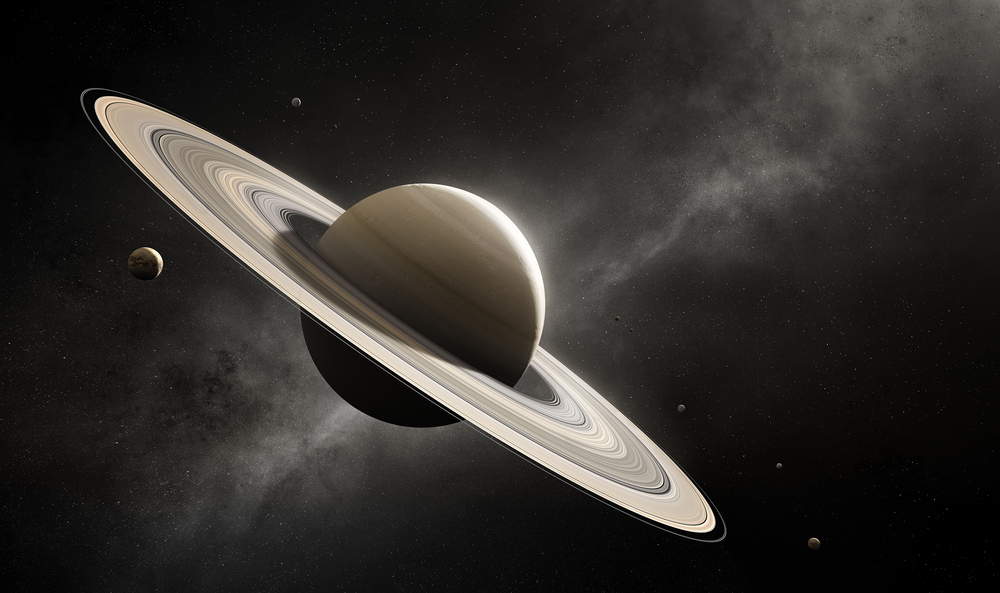
Saturn is classified as a gas giant because of its hydrogen and helium composition and low density. Researchers often refer to gas giants as failed stars, since they are essentially the same thing, just not powerful enough to become actual stars. Saturn and Jupiter are the only two official gas giants in our solar system. Uranus and Neptune are sometimes classified as such, but they are officially ice giants, a different type of planet.
The term gas giant was initially coined just to identify extremely large planets. However, researchers narrowed it down to define this specific type of planet. Both of our solar system’s gas giants are characterized by a metallic hydrogen core- so pressurized that it becomes an electrical conductor. There are actually a number of different types of gas giants. Both Saturn and Jupiter are class I gas giants- meaning they are characterized by ammonia clouds. The other classes include water clouds, alkali-metal clouds, cloudless, and silicate clouds.
Although Saturn is a massive planet, there is also such thing as a gas dwarf. This classification of planet is essentially the same thing, but gas dwarves often have a larger proportion of rocky core and their surface is just made up of the gases. The interesting thing about gas giants is that they are usually so massive and pressurized that they aren’t just in gas form. In fact, the hydrogen and helium usually have no distinction between liquid and gas form since it is above the critical point. So, the name gas giant is slightly misleading.
Conclusion
Each planet in our solar system and in the galaxies around us have their own unique characteristics and defining qualities. As far as we know, our planet is the only one quite like it, able to support human life. Although we do our best to explore space and the unique planets, like Saturn, around us- there are many mysteries that may never be explained.
Currently, the Cassini-Huygens space exploration mission is in the works, aiming to get a little bit more information about the beautiful ringed planet. Saturn is known for its incredible beauty in the form of the massive rings and the bright white spots that exist in the atmosphere. It’s also one of the hottest planets in the solar system, creating even more heat and radiation than it receives from the Sun. NASA has given Saturn the nickname of “The Jewel of the Solar System,” although it is so not solid that it would actually be impossible to even stand on. The planet is almost entirely made of gas and ice, and it would float in water. This is quite unique compared to Earth which is very solid and mostly made of rocks and solid matter.
Because of its distance from the Sun, the days and years on Saturn are very different than those here on Earth. It’s difficult for us to imagine such a different sense of time and such a different type of planet than our own. However, learning about different types of planets and the things that are going on in our solar system is integral to remembering our interesting and unique place in the universe.