On November 22nd of 1963, a massive historic event took place- one that would change politics forever. It was exactly 12:30 pm on that day when President John. F. Kennedy was fatally shot in the head. This event decidedly changed the course of politics and American culture and had a significant impact on Americans. By now, most people know the basics about what took place that day during the routine Dallas campaign visit. John. F. Kennedy was in a motorcade driving by Dealey Plaza when the shots were fired. Just as the motorcade drove by the Texas School Book Depository, the assassination took place and shocked everyone in sight. The street was chock full of people and President Kennedy’s wife; Jackie Kennedy was seated right next to her husband as he was shot. These are the facts that stick with people. These are the facts that schoolchildren learn and that everyone seems to know off the top of their head about the JFK assassination.
The generation of Americans who were alive when this historic assassination took place tends to remember exactly where they were when it happened. It was one of those big world events that shock people to their core and shakes the nation. It’s something that Americans and people of other nationalities remember alike. However, there are many things about the Kennedy assassination that aren’t common knowledge. There are a handful of facts that have been easily forgotten or rarely releases about this significant moment in American history. Let’s take a look at some of these intriguing facts that everyone should know about JFK’s assassination.
10Who Committed the Assassination?
Many people aren’t aware of exactly who committed JFK’s assassination. The man who committed the crime was Lee Harvey Oswald, a former U.S. Marine. Although he was arrested less than an hour after the assassination, it took several government investigations to conclusively prove that Lee Harvey Oswald was, in fact, the killer. When Oswald was released from active duty as a Marine, he defected to the Soviet Union and became a fanatic of Socialism and Marxism. Oswald moved to Russia for several years before returning to the U.S. and settling in Dallas.
When the route of the presidential motorcade in Dallas was announced, Oswald headed to the area with a large paper bag that officials believe contained a rifle. Several witnesses saw Oswald in the Texas School Book Depository before the assassination took place. Oswald denied everything when he was questioned by police. He did, however, admit to being a committed Marxist. Oswald had been involved in political protests in the past, as a member of the Fair Play for Cuba Committee. Most investigators agree that while Oswald did not hold a personal hatred for John F. Kennedy himself, he was trying to make an example of him and push back against the general notion of capitalism. A large part of his motive may simply have been due to personality issues or a cry for attention, though. Oswald’s wife believed that he had no semblance of moral sense and that his ego was a huge and integral part of the problem.
9What Became of Lee Harvey Oswald?
After committing the assassination, Lee Harvey Oswald did not stop there. His description was released to the public, and the police were searching for him. When officer J.D. Tippit approached Oswald, he too was killed. Several witnesses saw Oswald commit this murder, as well. After killing J.D. Tippit, he fled and headed to a local movie theater. The police were quickly notified by witnesses and arrived at the theater to arrest him. Lee Harvey Oswald spent a total of two days in the police station. During this time, Oswald became one of the most hated men in America. Tensions were high, and the police knew that their prisoner was a target. In the midst of a jail transfer, Oswald has fatally shot himself before ever being formally declared guilty for the assassination. It was November 24th when Jack Ruby emerged from a Dallas crowd and shot Oswald point-blank. Ryan was a local businessman who said his motive for the murder was to save Mrs. Kennedy from the pain of a trial.
Because Oswald was already a high-profile prisoner, his jail transfer was being broadcast live. This resulted in the first homicide to ever be broadcast live on television when Jack Ryan shot him. Lee Harvey Oswald was declared dead in the very same hospital that his victim, John F. Kennedy, had been declared dead in. Ironically, all of this took place in a matter of a mere two days. Jack Ruby was sentenced to death for his actions but died in jail of a pulmonary embolism before his sentencing ever took place.
8JFK Wasn’t the Only One Shot That Day
Although the death of John F. Kennedy was clearly the most major outcome of November 22nd, it was not the only outcome of Oswald’s rifle shots. The governor of Texas at the time, John B. Connally Jr., was also in the limo along with the Kennedys and his wife. Connally was shot in the back once, but he later recovered from his gunshot wound. He remembers hearing the first rifle shot and immediately turning around to face the President. He feared that it was an assassination attempt right away, but as he turned his back, a bullet struck him. Initially, Connally thought he was going to die from the gunshot. However, he escaped with his life, as well as three broken ribs and a punctured lung. It was moments after being hit himself that Connally was also sprayed with the blood and brain tissue of the President. At that moment, he recalls believing that everyone in the vehicle was bound to die.
After the events of November 22nd, Connally was cautious to believe the idea that Lee Harvey Oswald was the only killer involved. He strongly believed that there were more than one shooter and more than one bullet. Connally is an often forgotten victim of the events of November 22nd since understandably, most of the focus was on JFK. After the attempt on his life, Connally continued his career in politics, eventually becoming the Treasury Secretary during the Nixon administration and later heading up the Democrats for Nixon organization in 1972.
7Who Became President After the Assassination?
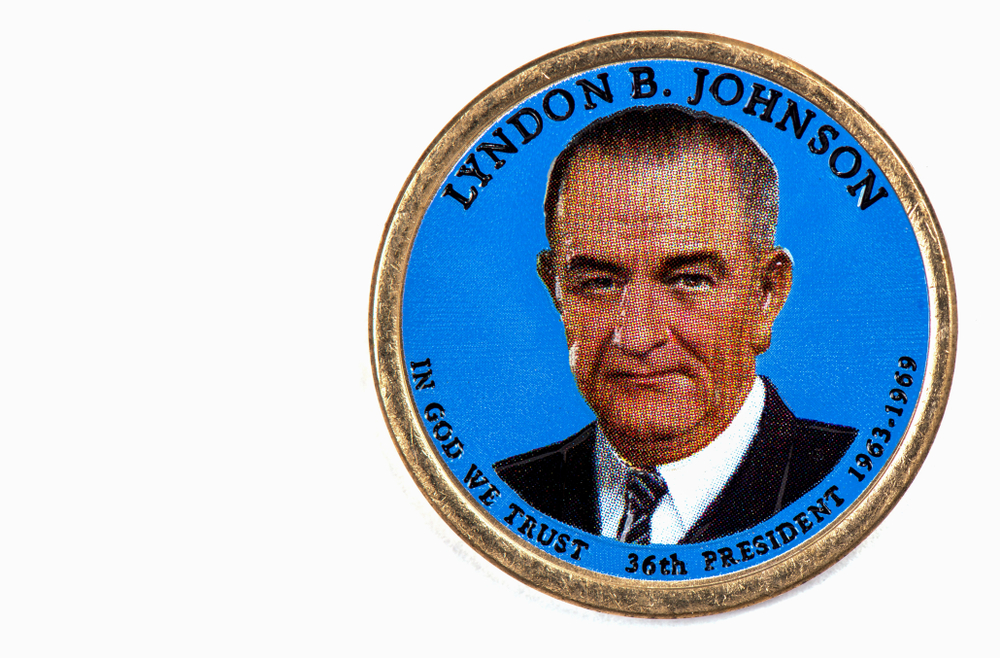
According to the U.S. Presidential Line of Succession, if the President of the United States passes away, the Vice President is to step into the position for the remainder of the presidential term. This was the case when John F. Kennedy was assassinated. At the time, the Vice President of the United States was Lyndon B. Johnson. He was the 36th President of the United States and ended up making some very significant and lasting contributions to politics. After JFK’s death, Johnson had to be sworn in as soon as possible. At 2:38 pm, he was sworn in as the President of the United States. Keeping in mind that the first shot was fired at 12:30 pm, it’s unbelievable to consider just how quickly things changed for the presidency and the country.
Immediately following JFK’s death, the rest of the presidential motorcade, now with a bronze casket in tow, headed back to Air Force One. At Dallas Love Field, aboard the plane before takeoff, Lyndon B. Johnson was sworn into office. The judge who performed the swearing-in cried during the whole thing, and Jackie Kennedy stood bravely at his side for the ceremony. Later, when he made his first official address as President, Lyndon B. Johnson stated, “This is a sad time for all people. We have suffered a loss that cannot be weighed. For me, it is a deeply personal tragedy. I know that the world shares the sorrow that Mrs. Kennedy and her family bear. I will do my best. That is all I can do.”
6What Happened at JFK’s Funeral?
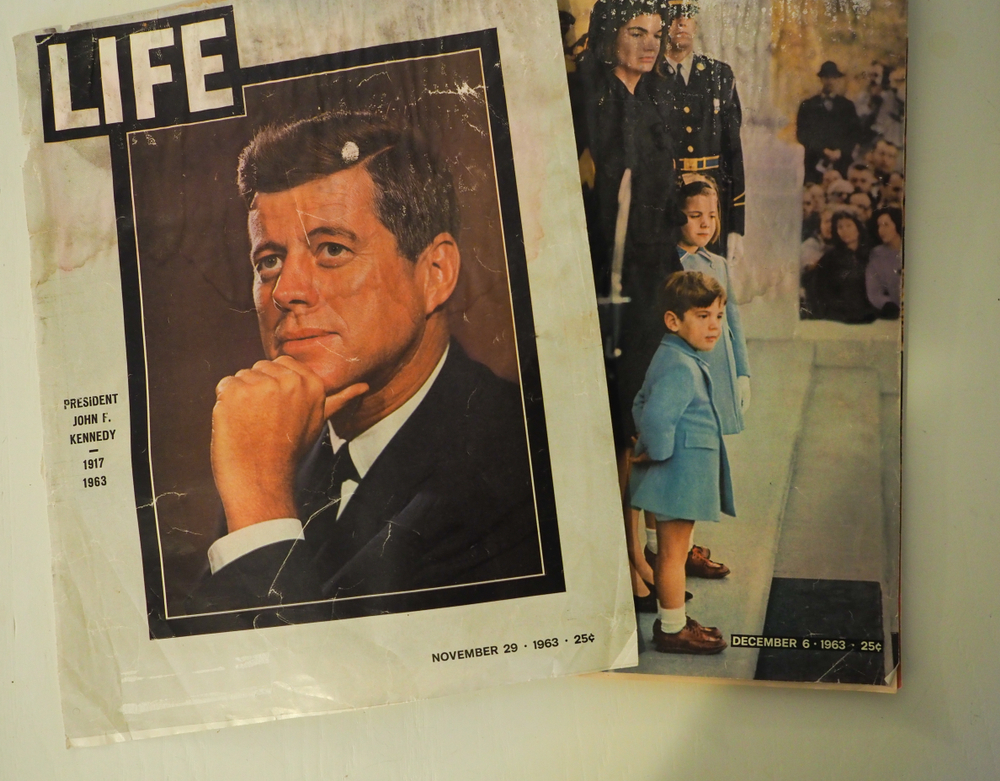
November 25th was declared a national day of mourning for the death of John F. Kennedy. However, the official funeral began on the 22nd and lasted a full three days. Immediately following the assassination, JFK’s body was flown back to Washington and kept in the White House for three days. Afterward, the coffin was brought to the Capitol where hundreds of thousands of people lined up to catch a glimpse. The crowds were so massive that many ended up being turned away, even after waiting for days in the cold.
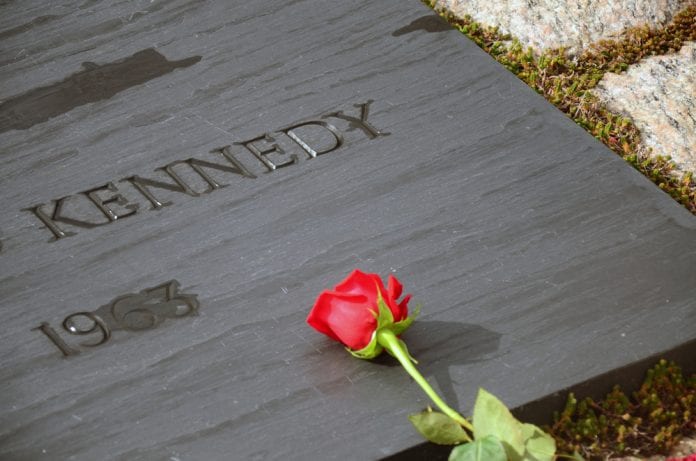
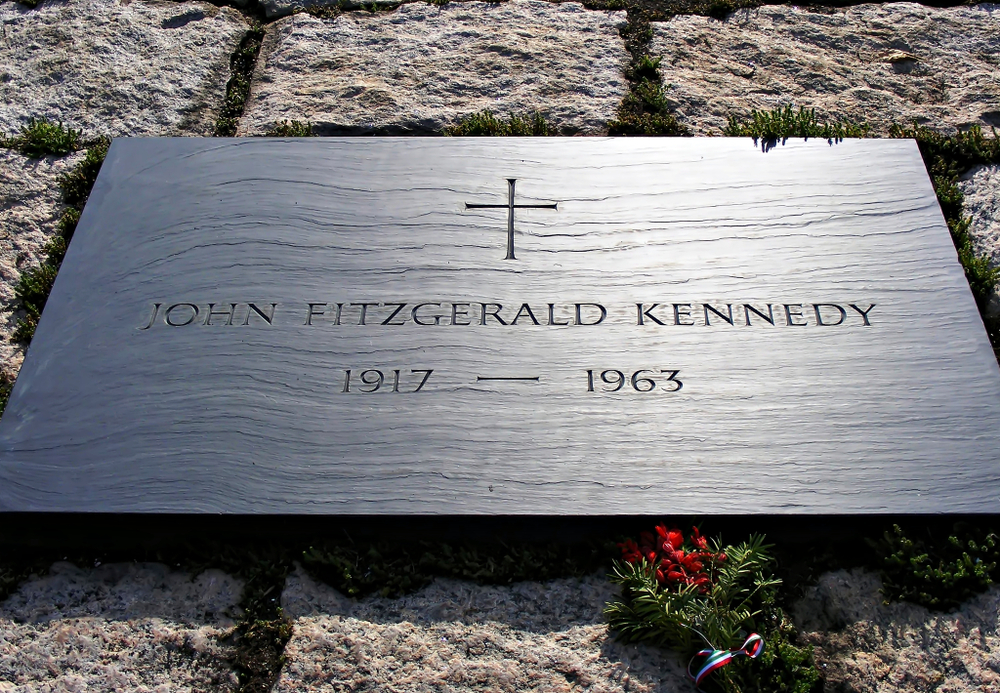
Jackie Kennedy is said to have modeled her husband’s funeral after the funeral of another great American president- Abraham Lincoln. The funeral, at the time, was the largest gathering of its kind- over 250,000 people were able to pay their respects with thousands of others turned away. Jackie Kennedy insisted on keeping the casket closed due to the head injury that JFK had suffered. The nation watched as Jackie and her two children led the mourning procession courageously. Many foreign dignitaries even flew in to pay their respects to the assassinated president. The Soviet First Deputy Premier, French President, Canadian Prime Minister, Irish President, and British President were just a few of the notable arrivals. Many members of royal families around the world attended as well, and security officials expressed their concerns about the number of world leaders to protect in the same place at the same time. After all of the funeral ceremonies, JFK was laid to rest at Arlington National Cemetery. After her death, Jackie Kennedy was buried right next to her husband in the same cemetery.
5Did Lee Harvey Oswald Really Act Alone?
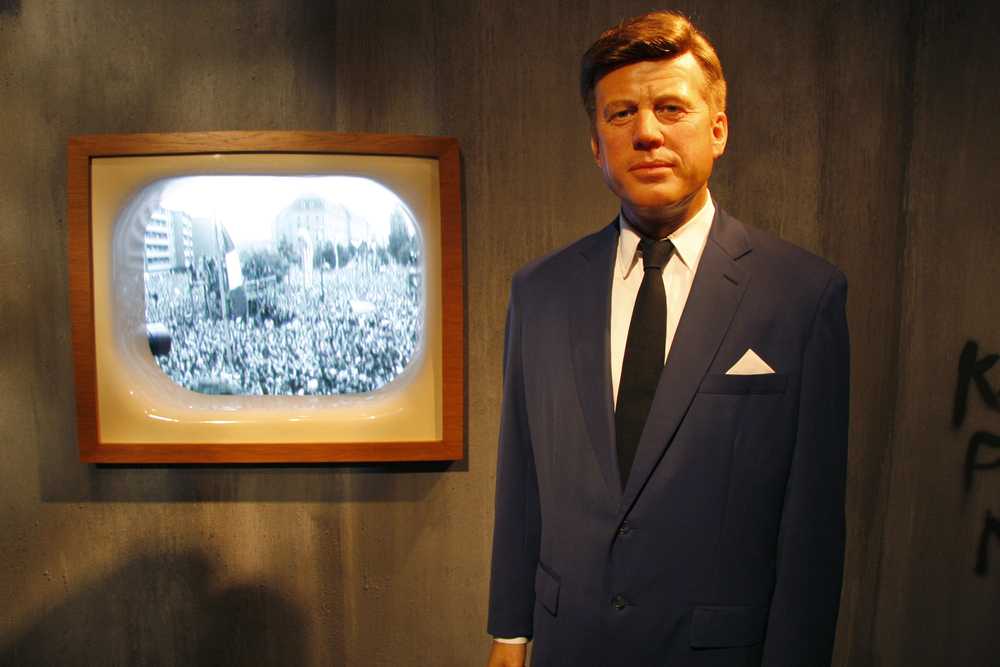
Several investigations into the assassination of JFK took place after the event. The official investigations included one by the Dallas Police, an FBI investigation, the Warren Commission, the Ramsey Clark Panel, the Rockefeller Commission, the Church Commission, the United States House Select Committee on Assassinations, and the JFK Act and Assassination Records Review, Board. Although all official stories state that Lee Harvey Oswald acted alone in the assassination, there has been significant doubt about that conclusion. People initially believed in the story, but the percentages of Americans who thought Oswald acted alone dropped every year after the event. Most of the concerns about the Warren Commission were based upon a large number of conflicting witness testimonies. Not to mention, the film of the assassination didn’t fully support the Commission’s conclusions.
‘The criticisms were the reason that so many investigations took place. People wanted to be sure that another shooter was not still at large and that the shooting was not part of a larger conspiracy or attack. The second committee, the US House Select Committee, concluded that there had in fact been a second shooter who had missed altogether. Even with the back and forth between investigations, the public was still concerned that there was a conspiracy at play to cover up what had really happened. Some people still believe today that Lee Harvey Oswald wasn’t the only shooter, but there has never been another suspect or any concrete evidence to point to that conclusion. Most experts and investigators agree that there was a single shooter.
4Jackie Kennedy Wasn’t Supposed to Be There
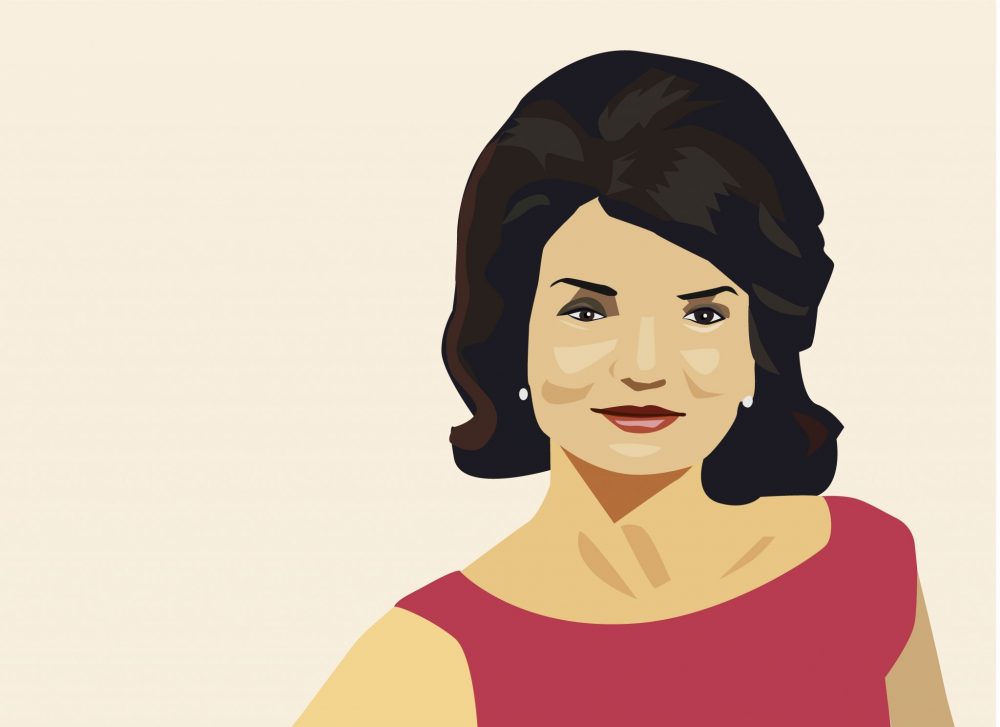
The fact that Jackie Kennedy was alongside her husband on the day of his assassination was an unlikely event. The First Lady rarely traveled with her husband, and her decision to join him in Texas was a last-minute choice. Years later, her packing list for the trip was revealed, showing a solemn reminder of her tragic and unexpected loss. Jackie Kennedy wasn’t really one for politics, and the decision to go to Texas came right on the heels of the tragic loss of her infant son. One of the most tragic and personal aspects of the assassination was the absolute despair and sadness that the First Lady had to go through. Photos and witnesses from November 22nd recall Jackie clutching her husband’s body, draped over him even after the shots had been fired.
It was a traumatic event for everyone in the area, but Jackie Kennedy surely had the worst part to play. The wife of Lyndon B. Johnson later described the ride to the hospital, saying that she remembered a “bundle of pink, just like a drift of blossoms, lying over the back seat.” This was Jackie, lying over her husband’s body in her last moments with him. Although the doctors did what they could, nobody could deny the fact that the President had died almost immediately. Jackie kneeled in the pools of blood to pray, but it wasn’t long before the doctors ceased their movements and declared the President dead. As long as she possibly could, Jackie stayed at JFK’s side, lucky that she had chosen to come to Texas at all and had at least gotten to spend his last moments there with him.
3JFK’s Assassination Was the First Since the Advent of the Secret Service
Nowadays, everyone knows what the Secret Service does. They exist to protect the President of the United States, but this wasn’t always the case. The Service was initially created in 1865, although they did not start protecting presidents until many years later, after the assassination of President William McKinley. In fact, John F. Kennedy was the first President to be assassinated even though the Secret Service was on duty. Clint Hill was the Secret Service agent present on the scene the day of JFK’s assassination. In photos and videos of the event, he is seen scrambling into the vehicle in order to get Jackie Kennedy to safety as quickly as possible.
Clint Hill has been firm about his anti-conspiracy theory views about the assassination, stating flatly that he was there and knows that there was in fact only one shooter. Although he protected both of the Kennedys with his own body as soon as he heard a shot, it was already too late for the President. To this day, Clint says that he regrets not having moved faster. He constantly questions the reasons behind the attack and whether he would have been able to save the President. Nonetheless, his bravery and lack of hesitation to put his life on the line was captured and well noted. The Secret Service agent exemplified his job description perfectly when he jumped into action and ensured that Jackie Kennedy would not also be assassinated on that fateful day. Clint Hill continued to serve as an agent for four other presidents after JFK’s death.
2Jackie Kennedy’s Suit Was Never Cleaned
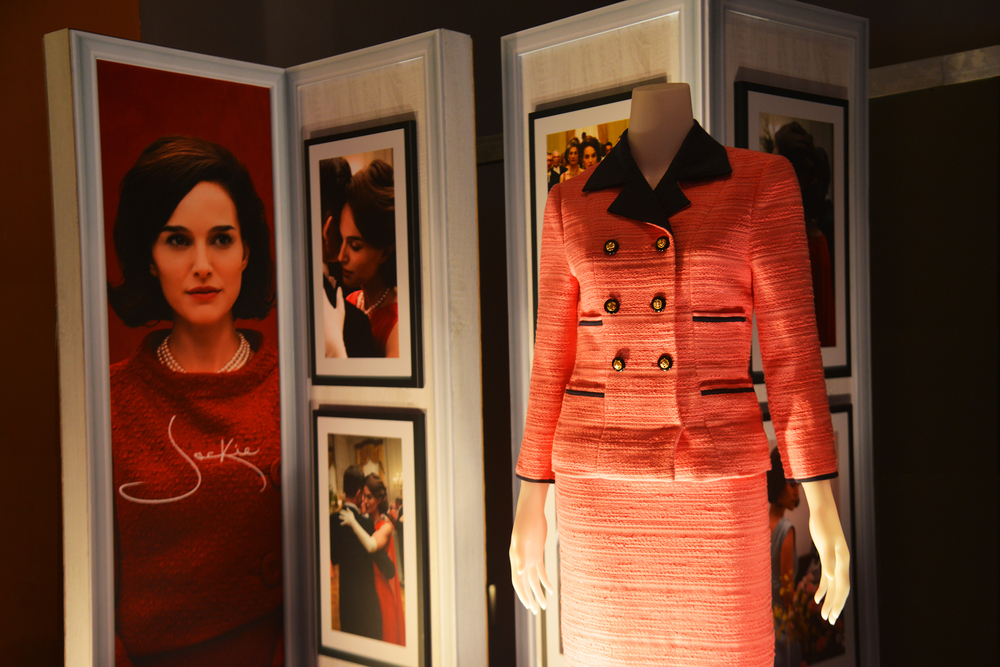
Jackie Kennedy’s pink Chanel suit has become an iconic and unforgettable symbol. The First Lady was already known for her poignant and powerful fashion statements, and this pink suit has gone down in history as one of the most symbolic. Although it was the pink suit that her husband’s dead body slumped over and his blood-stained, Jackie Kennedy refused to take it off right away. She insisted on wearing it to show the world what had been done to her husband. Jackie did not remove the suit until the next morning, and it has not been washed since then. The suit was carefully put away after the assassination and still remains in a secret location, perfectly preserved but out of the public eye. According to a Kennedy family deed, the suit will remain so until at least 2103 when the matter may be renegotiated.
Since JFK’s assassination, the iconic pink dress has taken on a lot of symbolism. Many people associate the image of the proper pink dress covered in spatters of blood as a tragic symbol of losing one’s innocence. The image of Jackie Kennedy standing there with her suit and body covered in her assassinated husband’s blood is one that remains poignant and unforgettable to this very day. The iconic suit cost the First lady somewhere between 800 and 1000 dollars, which would equate to approximately seven or eight thousand today. However, the outfit wasn’t widely recognized or publicized until Life magazine released their JFK memorial issue in color on November 29th.
1The Assassination Was Caught On Tape
Nowadays, nearly everything is caught on tape. Political events are highly recorded and televised, but that was not at all the case in 1963. So, the fact that John F. Kennedy’s assassination happened to be caught on video is quite a chilling and surprising coincidence. Abraham Zapruder was in the crowd the day of the assassination and just happened to bring his video camera. At first, Zapruder didn’t even think it was an event worth getting on tape. However, just before he left to see the motorcade, his assistant convinced him to bring the 8-millimeter video camera with him. He climbed up onto a concrete pedestal in order to get the best possible vantage point of what he believed would be a routine presidential motorcade. Although he was in no way a filmmaker, investigators have noted the impressive way that Zapruder was able to capture the moment from the most useful angle.
In the end, the film was only 26 seconds long and took up 486 frames of film. However, it marked a significant moment in history and contributed to the investigations of the assassinations. From that moment forward, people began documenting more and more events. The film that Zapruder took of the assassination actually caused some controversy and revealed some problems with the initial explanations made by the Warren Commission. Many people believe that if it weren’t for the film, there would not be any controversy over the conclusions of what exactly happened on that day. But as it is, many people still don’t agree about the exact way that it all played out.
Conclusion
The assassination of John F. Kennedy was one of the most impactful and intense events to ever take place in the United States. Because it took place in the midst of the Cold War, the assassination caused widespread confusion and panic, especially in the first hour after the gunshots were fired. All across the United States, people stopped what they were doing to mourn the death of the President. However, as with most things related to politics, it’s difficult to know the full unadulterated truth. That’s why many people don’t know all the facts about what actually happened that day to JFK, who was involved, and what repercussions there were. November 22nd is a day of remembrance across the U.S. and even the whole world. Nowadays, JFK’s assassination is commemorated with displays and memorials in several museums.
The National Museum of the United States Air Force and the Henry Ford Museum each pay homage to the tragedy in their own way. Many of the related items are still found in the National Archives, and the Lincoln Catafalque is still on display at the United States Capitol Visitor Center. Most significant of all the memorials is likely the one that still exists at Dealey Plaza, the actual site of the assassination. The entire area is a part of the Dealey Plaza Historic District, and the sixth floor of the Texas School Book Depository is now a museum and a memorial dedicated to the late President. An X on the street even marks the spot where JFK was shot on that fateful day. One thing is for sure, this was an event that won’t be forgotten.