

Research papers are a simple fact of life for high school and college students alike. No one likes writing them, but they serve to further educate students on the subject matter. Writing a successful research paper can seem like a daunting task, but it doesn’t have to be. Several universal steps can be followed when writing any research paper. By following these steps, you ensure that the final product is high-quality and sure to impress your teacher as well as get you a good grade.
Once you establish a pattern, writing a research paper simply becomes a matter of filling in the gaps. You can use the same basic framework for multiple research papers and save yourself a substantial amount of time. Of course, there is no way to avoid studying the subject matter. While the framework is easy to carry over, the subject matter cannot be used in the same way. This is where a few simple tricks can help save you time and effort while writing your paper. By utilizing the tools at your disposal to their greatest effect, you can develop a system that works for you. There are also a few simple steps that you can take to ensure that your paper is grammatically correct before turning it in. By taking these simple steps, you can make sure your paper is free from simple errors and get a higher grade.
Below are 10 steps to writing a successful research paper:
10Choose a Topic

You may not always have the luxury of choosing your own research topic, so take advantage of it when you can. You should choose a topic that interests you, but not necessarily one that you are already familiar with. Where is the benefit of writing a paper on a topic that you already know?
Try to find a topic that is something that you have been interested in, but never bothered to learn. If you have a list of possible topics, pick the one that sounds the most interesting to you. You are going to be investing a lot of time and effort into this topic, so you should try to make it interesting.
If you get to choose your own topic, it is also important to choose a topic that is well documented. Choosing a topic with little supporting research can make finding good sources difficult and lower the quality of your finished paper. There is an endless list of possible topics with plenty of research behind them, so be sure to choose a topic that helps your paper, not hurt it.
Depending on the subject, it may also be interesting to take an old topic and approach it from a different angle. For example, look at the results of war through the eyes of the losing side, rather than the victors. Change your topic around and see what you can come up with.
9Research

The next step in any research paper is the actual research. When researching a topic, it is important to get your information from good sources, not junk websites. Anyone can make a website and publish anything they want and claim it is true. This is why it is up to you to filter out the junk from the factual.
Thankfully search engines like Google have worked hard to make researching topics easier than ever. Not only do they bring terabytes of information to you at the click of a button, but they have also invested heavily in search filtering. This is to ensure that you only get high-quality results when you do a search. You can still find junk websites, but they are usually buried a few pages deep in the search results.
To find the best resources, it is important to know the different web extensions. Com is used for commercial websites. These websites are not always sales websites, and many are reputable sources. It is best to cross-reference facts with other sources. Net websites are usually run not-for-profit. These websites usually have less funding than com websites and have less credibility. Information from these websites should always be cross-referenced.
Edu and Gov websites are educational and government, respectively. Both of these website types have high authority and can be used to reference as well as a cross-reference. Edu and Gov websites are limited in content, however, and are best used for researching established topics, rather than current events.
8Finding Good Sources

This may seem like an extension of research, and it is. Finding good sources is part of researching your paper, but it merits its own section. Finding quality sources is vital to establishing an opinion as well as being informed in general.
There are a few things that you should look out for when looking for sources. These apply to research as well as news sources, so pay attention to them. First, watch for flashy graphics or catchy titles. Both of these are tactics used for click-bait. Click-bait is ad-driven traffic designed to get you to click on a link, but without providing any relevant content or by using a completely misleading title. The latter is a common strategy of disreputable journalist websites that rely on click-bait ad traffic to fund their operations.
The second thing to watch out for when assessing your sources is that they make bold claims with nothing to back it up. If a website makes broad or absurd claims, it is always best to corroborate that information with another source. Reputable websites provide their sources in the article. Another good source of sources is Wikipedia. No, you cannot use Wikipedia as a source, but you can use the source list provided in the article to compile your own source list. Many of the sources provided on Wikipedia are open source or otherwise freely available online, so you can readily use them. Others are print-only or locked behind a paywall.
7Write a Thesis Statement
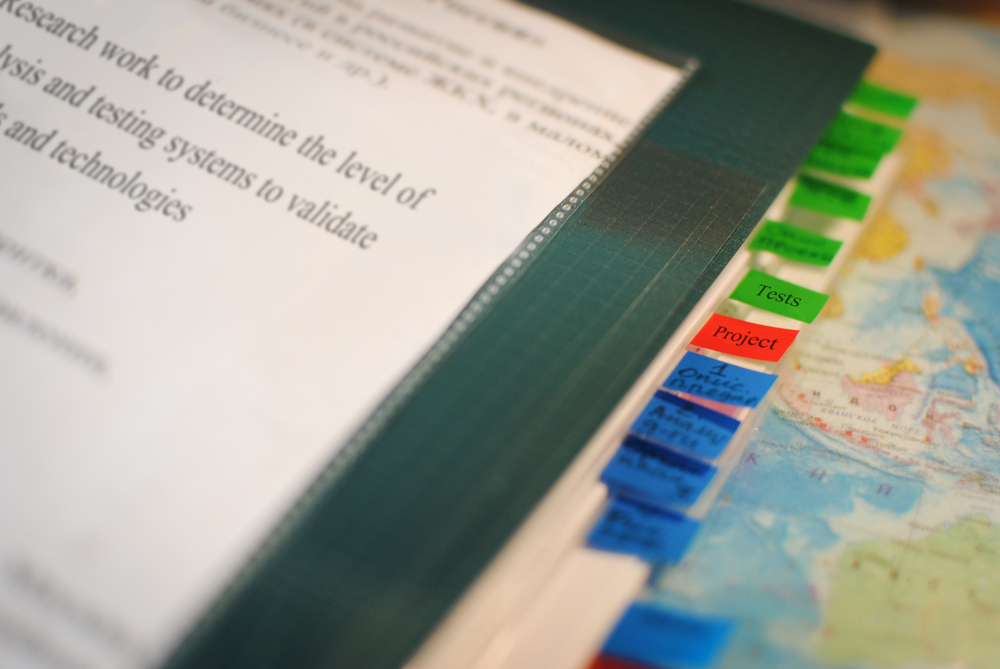
At this point in your research project, you should have a fair amount of material ready to be used in your paper. You should also have formed more than a few of your own opinions regarding the subject. This is the time to write those opinions down.
When writing your thesis statement, you should express your opinion regarding the topic. Any opinions that you have regarding the outcome or approaches used or anything else regarding the subject should be written down. You want to tell your audience why they should read your paper. What is it that you are trying to prove or what statement are you trying to make?
The thesis should walk your reader through the expected path of the paper from start to conclusion, including more details than your outline. Your thesis can be as short as a single sentence, or it could be several pages long. If a single sentence is all that you need to show the reader the purpose of the research paper, then a single sentence is all that you needed. Regardless of the length, your thesis should be concise and well thought out. It should explain the topic without getting off-topic and without going into too much detail. That is for later, in the final draft of your research paper.
6Lay the Framework

A good research paper, like any paper, should be broken down into manageable sections. These sections serve to both keep the reader informed to the general subject matter, but also to help you manage your thoughts while writing the paper. You should always include an introduction as well as a conclusion when writing any paper. From there, you should divide your subject into sections based on content. Each subject should get its own section with separate sections detailing how they interact if needed.
Your initial outline should only include as much information as needed to create a guide. This can include headings and any notes that you want to include for future use. Your headings do not have to be the final heading. Working titles are encouraged, rather than wasting time trying to come up with a section title.
Use this outline to manage your notes and begin crafting your narrative. You can use each section as a timeline of events leading up to the final conclusion. This just leaves you to fill in the gaps later on. As your outline develops, you can begin writing each section separately. Do not worry about transitioning at this point; just write the rough draft of your paper to fill in the gaps. You can clean everything up later when writing the final draft.
5Write Your First Draft

When writing your first draft, you are filling in the blanks from your outline. By now, you should have a well-established outline in place to work from. You simply need to add context and a narrative to the facts in your notes. Since the draft is for your benefit only, it is fine if you have errors. This is your chance to find and correct them.
Your first draft should allow the paper to flow more naturally than your outline. It is acceptable for you to change directions when going from one section to another drastically. The same is true for paragraphs, so long as they are on the same subject. It is important that your sentence structure flow naturally, however.
The first draft should also include all citations for your sources. When writing a research paper, you must always provide a citation for each source used. Your teacher should provide the format for you to follow. Try not to forget any of your citations in your first draft and be certain not to forget any in your final draft. You should print out a copy of your first draft to use for editing. By having a physical copy, you can ask others to look it over and give you notes. You can also use online solutions such as Google Docs that allow you to collaborate with others on documents. These solutions allow both parties to work on the same document together with changes reflecting on both sides in real-time.
4Edit Your Draft

Editing is almost as important of a step as writing. Few people can write a perfect paper the first time, and most require substantial editing to be grammatically correct. The first step in editing is simply reading your research paper. Read your entire paper very carefully, looking for any typos or grammatical errors in the paper. As you find these, mark them with a red pen to make it easy to identify later when you write your final draft.
You should also seek outside help when editing. Friends, family, and tutors can see errors that you may have missed. If you have a tutor or are part of a study group, these are the ideal people to ask to proofread your paper. Take this opportunity to help your classmates with their papers as well. This can allow you to compare your paper to theirs, giving you a better idea of the quality of papers being turned in.
You can also consider hiring an online tutor to proofread your paper and offer notes. Professional tutors often grade multiple papers per day, so they can offer similar insight to what your teacher has to offer. By using this service, you can improve your grade by catching even the smallest mistakes in editing. Even a science or history paper requires proper grammar and punctuation.
3Write Your Final Draft

Once you have completed your editing, it is time to write the final draft. This should be the finished product that you plan to submit for grading. Your final draft should be completely free from any errors, both factually as well as grammatically. Once you have completed your final draft, it is important to reread it again. You should proofread the paper again and have others reread it as well. This is to make sure that there are no final errors that you may have missed.
Your final draft is also where you should make any last-minute changes. This is another reason that the final checks are so important. If you decide to make any last-minute changes, be sure to pay particular attention to these sections when proofreading the revised version. This is also the time to make sure that your paper flows well to the reader. While it is important to be grammatically correct, it is also important that the paper flow well and be interesting to the reader. A research paper doesn’t need to be entertaining, but it should flow well enough to prevent boredom.
You should also use this time to revisit your thesis statement. As your paper develops, it is possible for it to shift away from the original focus that was established in the thesis statement. If this has happened, you should rewrite your thesis to match your paper more closely.
Finally, you should make sure that everything in your paper has a purpose. There should be no wasted resources in your research paper, so make sure that everything is relevant to the topic, not a side note or tangent that has no bearing on the subject.
2Grammar Checker
Even just a couple of decades ago, students had to rely on other people for grammar checks. Yes, people can be very reliable, particularly paid tutors, but there is still room for human error. This is where online grammar checking tools have an advantage. These systems can catch errors that humans may miss, such as the Oxford comma.
There are several online grammar checking tools available. Some of these services are paid while others are free. You can generally expect better performance from the paid solutions. While the paid solutions are typically better than the free ones, neither option is perfect. Both can easily miss obvious errors. This is why it is important that you still reread your paper after using a grammar checker. Many of these solutions even grade your paper based on the grammatical errors it finds on your paper. As you revise your paper, the grade is revised, as well. This allows you to see when you have a perfect or near-perfect score.
The paid options are typically cheaper than hiring a tutor, but they do not offer the other benefits of hiring a tutor. If getting a higher grade is very important to you, it can be worth the investment to hire a tutor as well as purchase a grammar check subscription. Many of these services offer monthly or yearly plans. You can usually save a small amount of money by purchasing a yearly plan, rather than a monthly plan. If you plan to use the service for the entire year, it may be worth paying more upfront. You certainly do not have to use a grammar checker, especially a paid one, but they do offer certain benefits.
1Final Proofread

Once you have written your final draft and done a final grammar check, it is time for the last proofread. This is your last chance to find and correct any mistakes in your paper. Do not skip this step as even online grammar checkers can and do make mistakes. The checkers often miss simple mistakes that a human proofreader can easily spot.
When proofreading your final paper, have a paper copy and a red pen. Use then red pen to mark any errors in the paper. You want to grade your paper in the same way that your teacher is going to. This can give you the best insight into your grade, as well as help you identify errors that you may have missed otherwise. When proofreading a paper, it is best to follow a checklist. The checklist allows you to make sure that you have not overlooked anything before you turn in your paper. It is easy to overlook certain items in the paper, especially by the time you get to the final proofread, so a checklist can help keep you on track.
There are also proofreading services offered online that can help you determine the quality of your paper. These services are similar to grammar checkers, but you are working with a real person rather than a computer program. The proofreaders can offer notes and insight for your paper, allowing you to make those last-minute changes that you may have missed.
Conclusion
As you can see, writing a research paper is easy once you know the process. It can seem intimidating at first, but if you allow yourself enough time to complete these goals comfortably, you can easily write an excellent paper. As with anything, writing research papers gets easier with practice, so the more you use your new system, the easier it can become. It is important to find a system that works for you and stick to it. If you keep changing your process, you cannot establish a pattern.
When researching your topic, be sure to watch out for poor quality sources. Be particularly wary of bold statements made without any proof. If you cannot find anything corroborating it, dismiss the source as unreliable. While Wikipedia is never an acceptable source, the sources used in the articles can be. If you use Wikipedia for research and want to source it, simply use the sources mentioned in the entry. The sources are always listed at the bottom of the page.
The most difficult part of any research paper is the actual research. Thankfully, modern tools such as Google make this task easier than ever. Countless resources are available with an instant search, and even citations are easier than ever, thanks to online tools. Similarly, there are tools available that allow you to collaborate with others on projects as well as perform instant grammar checks.