
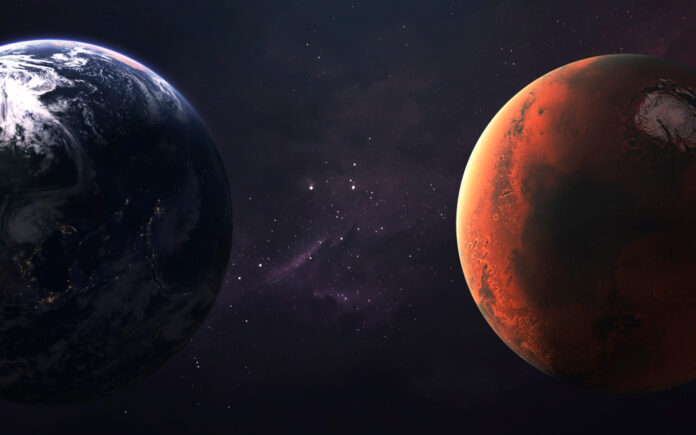
Mars is the fourth planet from the Sun and a neighbor of Earth. It is the smallest planet in our Solar System, and it is named after the Roman god of war. Known as the “Red Planet,” thanks to the high concentration of iron on the surface, which makes it red, Mars can be seen easily from Earth. You can even see the reddish color when looking up into the sky. Mars is solid, a terrestrial planet, and it has a thin atmosphere. The surface is covered with impact craters, kind of like our own moon, and you can see deserts, valleys, and more.
Because Mars is unique thanks to its color and the fact that it is our neighbor, people are naturally curious about it. It truly is a fascinating place, and because there has been a lot of research done on Mars, we know more about it than other planets out there. It also might be possible for people to go to Mars someday, and though there is not a current plan in place, there are several proposed missions from various organizations that could lead the way. These include plans from the United States government and from independent organizations, like SpaceX.
Before we get to Mars, however, you might be interested in learning more about the Red Planet. It truly is a remarkable place, and we have taken the time to do some research on it. So, without further ado, here are the top 10 facts about Mars.
10Mars Has Two Moons
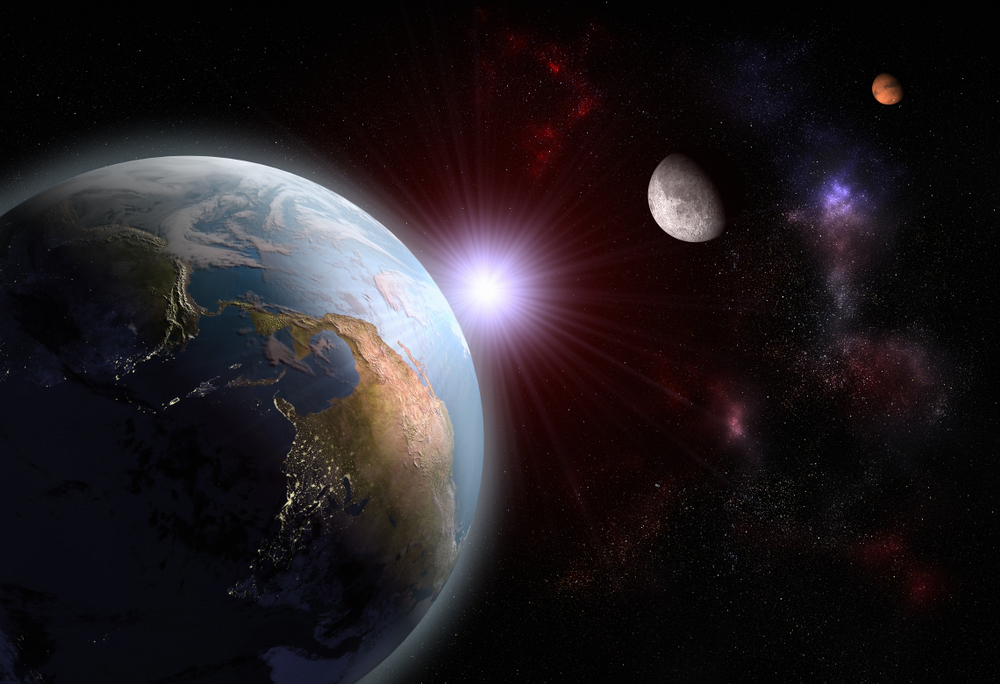
Here on Earth, we only have one moon. On Mars, however, there are two: Phobos and Deimos. Both of them were discovered by the same man, Asaph Hall, in 1877, and were discovered within a matter of days from each other.
These two moons are some of the smallest satellites in our Solar System. Phobos is the larger of the two, and it orbits only 3,700 miles above the surface of Mars, which is the closest of any other moon. Since it is so close, it orbits the planet very quickly and makes it around Mars three times each day. Deimos is much further from Mars, and it takes 30 hours for it to make an orbit.
One of the interesting things about Phobos is that it is slowly moving towards the surface of Mars, and it gets approximately six feet closer to the surface every 100 years or so. That means that one of two things will eventually happen. It will either crash into the surface of the planet, or it will break up in the Martian atmosphere and form a ring.
If you were able to stand on Phobos and look at Mars, the planet would look huge in the sky. It is the hope that someday, we could actually do that, as it could be possible to use these moons as a base for scientists who would study Mars. This would also help to protect people from getting solar radiation and cosmic rays since the atmosphere is so thin.
9Mars Has the Largest Mountain in the Entire Solar System
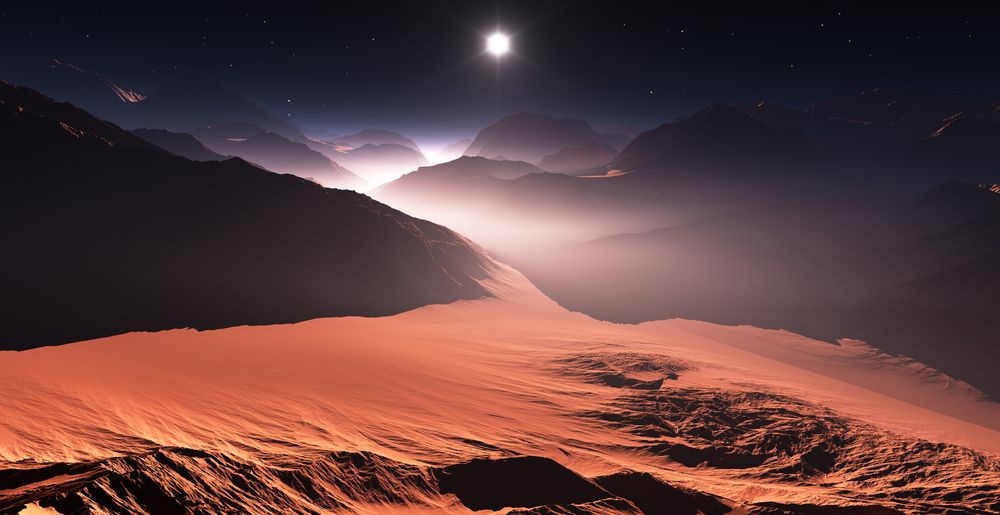
The largest mountain in the entire Solar System is called Olympus Mons, and it is located on Mars. Almost known as a shield volcano, Olympus Mons is about 374 miles in diameter, which makes it about the size of Arizona. It is also 16 miles high. To compare it to something on Earth, we can look at Mauna Loa, the largest volcano on Earth. It is about 75 miles across and 6.3 miles high. The volume of Olympus Mons is 100 times bigger than Mauna Loa, though, and all of the Hawaiian Islands could fit inside of it.
There isn’t much difference between volcanoes on Earth and those on Mars except for their size. The lava flows are much longer on Mars, too, but that is likely due to lower surface gravity and a high rate of eruption.
Why are the volcanoes and other mountains so big on Mars? It’s because Mars’ crust doesn’t move like the ones on Earth do. On Earth, all of the hottest spots under the surface stay in one place, but the plates that make up the crust move over the top of them. This creates volcanos, of course, but over time, the plates move on, and the volcanoes become extinct. On Mars, however, this doesn’t happen. So, the lava that forms the volcanos keeps piling up and piling up until mega volcanoes are formed.
8More Than Half of Our Missions to Mars Have Failed
Historically, to people of Earth have not been very lucky when it comes to Mars exploration. There has been a total of 40 past, present, and future missions to Mars, but only 18 of them have been successful.
More missions have gone to Mars from Earth than to any other place in the Solar System with the exception of the Moon. Some of these great failures took place because we were not experienced enough. Mars was the first planet that people from Earth ever tried to explore, and though we learned a number of amazing lessons, we failed several times. But we have been able to take these lessons and make more modern attempts more successful.
Space exploration is not easy, but we have been much more successful since 1996, where we have had eight missions in motion made up of four orbiters and four missions on the surface. Thanks to those missions, we know more about Mars than we know about any other planet. There are four future missions to Mars planned, with all of them scheduled to take off in 2020. Russia, NASA, United Arab Emirates and China all have plans in motion to send missions in 2020, and all are planned for a summertime launch. NASA, Russia, and China are all planning to send rovers to Mars, while the UAE is planning an orbiter, which will be the first mission from an Arab country to another planet.
7The Biggest Dust Storms in the Solar System Take Place on Mars
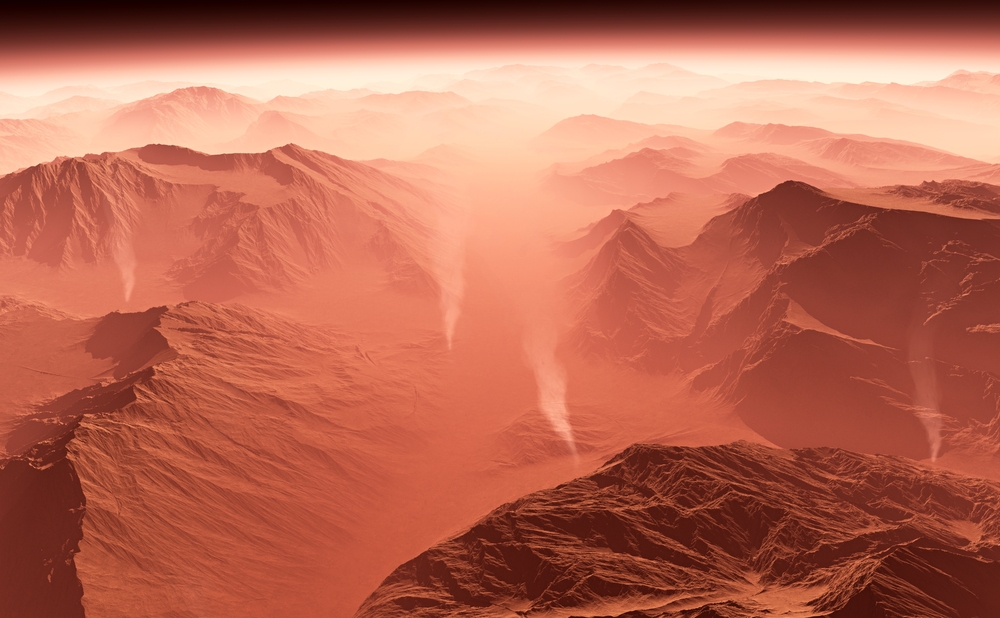
Mars has a reputation for its dust storms, and in fact, the biggest dust storms in the entire Solar System occur on Mars. Some of these dust storms are so intense, that they can be seen by telescopes here on Earth. Usually, there are a couple every year, and about every five years or so, or three years on Mars, there are just huge massive storms that are called ‘global dust storms,’ because they just circle the entire planet.
The average wind speed tops out at approximately 60 miles per hour, which isn’t extreme considering hurricanes on Earth can be double that. The big issue is the dust that these winds whip up. The dust is heavy and red in color, and they also have a small amount of electrostatic, which means it is attracted to, and then sticks, to equipment from Earth like the Curiosity rover.
Any equipment that comes from Earth to Mars must be able to withstand this dust, and an even bigger issue is the solar panels, which power this equipment, can easily get covered in dust. This decreases the sunlight that hits the panels, which make them less energy efficient. There is also the issue that these huge global storms get so large that they push dust up into the atmosphere, which dims the light from the sun, further making dust a challenge on exploration.
6Pieces of Mars has Fallen Down on Earth
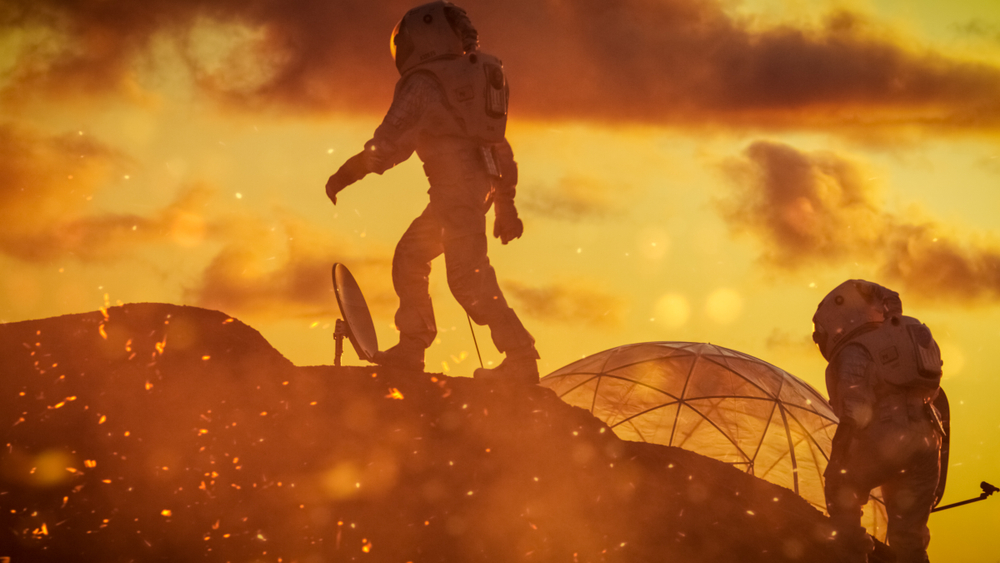
Another amazing fact about Mars is that pieces of the Red Planet have fallen to Earth, and it has actually happened more than once. The most recent incident occurred in July 2011. These pieces were discovered in the desert of Morocco, and it is believed that the pieces came broke off of the Red Planet when it was hit by a meteorite.
This is actually the fifth time that we know of this happening, and both researchers and collectors have taken advantage of it. These pieces are very valuable, with them selling for up to $28,000 per ounce depending on the sample. In total, there have been 220 pounds of Martian rock that has fallen to Earth.
The other instances of pieces of Mars falling to our planet occurred in 1815, 1865, 1911, and 1962. Scientists love these because they are the most pristine samples they can get short of getting them directly from Mars. We can learn a lot about Mars just by studying these samples, including information about the climate and atmosphere. We have also been able to look at these pieces to see if Mars could possibly support life, and thanks to finding organic compounds, we know that it is very possible. In fact, in some of these samples, it’s possible that fossils of life on Mars could be seen. We have also found even more evidence that there is a form of water on Mars thanks to these samples.
5If We Could Live on Another Planet, it Would be Mars
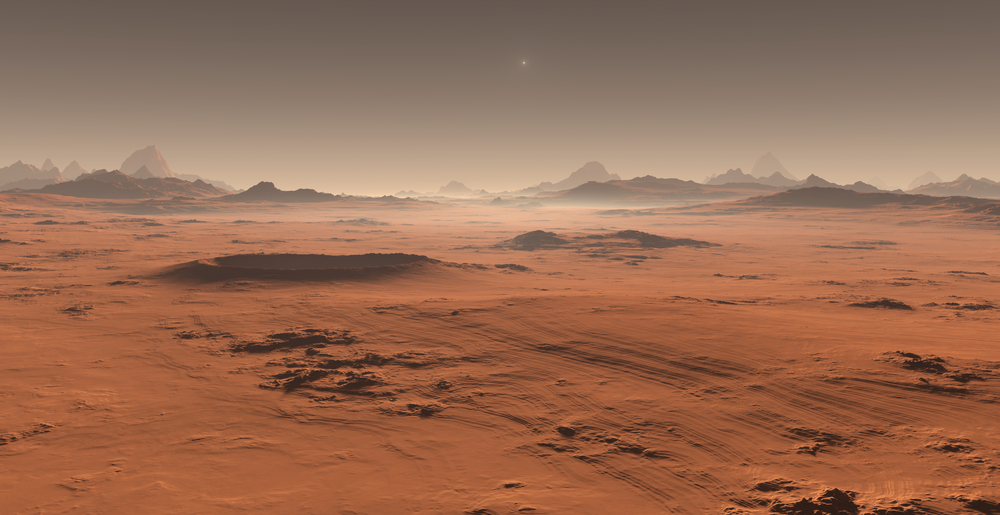
Thanks to many years of research, scientists believe that not only did there used to be life on Mars but that we, as humans, would likely be able to survive on the Red Planet, as long as we made some accommodations. The big question is, would we want to? First, the temperature on Mars could be problematic for humans. It can get very cold, and it’s common to see temperatures of under -100 degrees F. Temps can get up to 70 degrees F, but only near the equator.
There is also the issue of atmosphere to deal with. As you might know, we need oxygen to survive, but our atmosphere is actually only about 21% oxygen. That is still enough for us to breathe and survive. On Mars, however, the atmosphere is only about .145 percent oxygen, which wouldn’t work, so we would have to constantly have a source of oxygen pumping in, and we couldn’t walk on the surface without some type of breathing apparatus.
The issue of landing on Mars is much easier, and probably going to be possible sooner than we think. Our biggest problem would be landing, but scientists and researchers across the world are working on solutions. It would take only about 260 days to get there, but once there, how to we land? Right now, there are four different methods that researchers are looking into, but so far, there hasn’t been anything put into stone.
4Mars Has Seasons, But More Than We Do
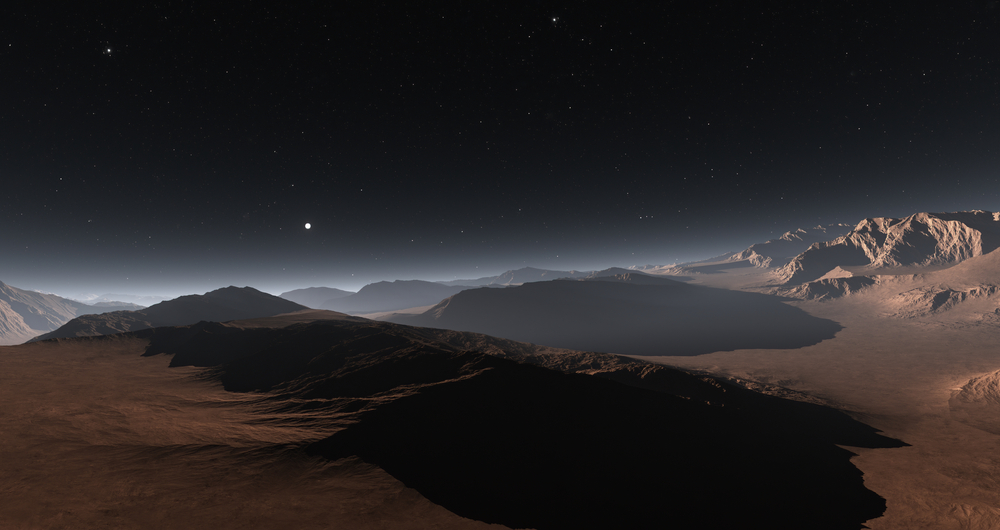
Mars has seasons as we do over the course of the Martian year, which is about double our year on Earth. It has spring, winter, fall, and summer, and these are caused by the tilt of Mars, just like ours our here. However, Mars also has two additional seasons or six in all. These two, perihelion and aphelion, are not caused by the tilt, they are caused by the elliptical orbit of the Red Planet…and more about that, soon.
During the season we call perihelion, the planet is closer to the sun, so it gets about 40 percent more energy from the Sun than it does when it is aphelion. So, are there like a super summer and a super winter?
As on Earth, the seasons on Mars have distinct weather patterns. In the winter, there are storms and thick clouds made of dust. During the summer, the energy from the sun causes large dust storms, and as we have mentioned, these can last for weeks and they can even cover the entire planet. It doesn’t snow or rain on Mars, as far as we have seen, but there are areas that are covered in ice, too, which give it a sort of Mars-ish winter look. It is warmer and windier in the summertime on Mars, but we probably will only be able to experience this from the comfort of a spacesuit.
3Mars Has a Very Weird Orbit
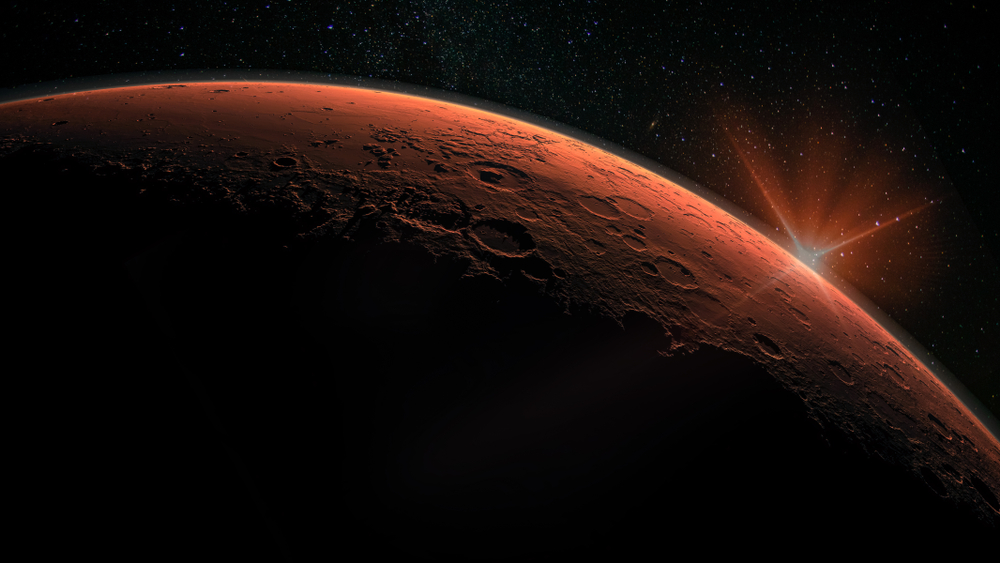
It is easy to compare Mars and Earth. We are neighbors to Mars, both planets are made of solid rock, have ice, tilt similarly on their axes, and have seasons/temperature variations. Both plants also have water, though there is much more water on Earth than on Mars. Here, however, is where the differences begin.
Here on Earth, it takes 365 days to move around the sun. That’s what a year is here, but on Mars, it takes much longer; almost 687 Earth days. This is because Mars is a lot further from the Sun, and because the orbital period is a lot bigger than Earth’s.
The eccentricity of Mars is almost the most pronounced in the Solar System, and only Mercury has one that is larger. However, this wasn’t always the case. Only 1.35 million years ago, the eccentricity of its orbit was almost a perfect circle, but over time, it has become more elliptical than circular.
For approximately the last 35,000 years, Mars’ orbit has changed because the other planets of the Solar System are having a gravitational effect. Eventually, Mars and Earth will get even closer than they are now, as the orbit of Mars continues to change. However, it is estimated that in a million years, things will change again, and eventually, Mars’ orbit will be about what it is right now.
2Future Missions to Mars are Coming Soon
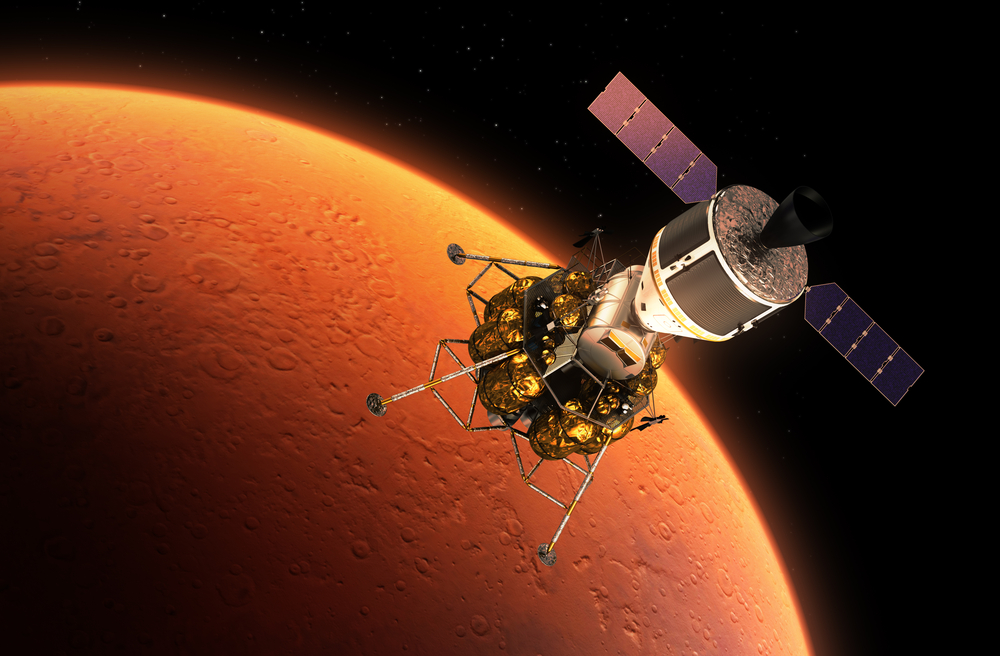
We have already mentioned that there are several future missions to Mars planned for 2020, and they are pretty cool. The first one, as part of the Russian Federal Space Agency, is to send the Rosalind Franklin rover to look for evidence of life, in this case, microscopic life, on Mars.
NASA’s mission to Mars is the Mars 2020 rover, and it is also looking to life on Mars, specifically from an astrobiology standpoint. This is based on the design of the Mars Science Laboratory, and it includes a small robot, known as the Mars Helicopter Scout, to help it collect even more data.
China also has plans to send out a mission in 2020, and it is simply called the 2020 Chinese Mars Mission. It will have a lander, an orbiter, and a rover. Like the other missions, the plan here is to also look for life on the Red Planet, and in addition, the mission plans to look deeper into the Martian atmosphere. The Hope Mars Mission, which comes to us from the United Arab Emirates, plans on sending an orbiter to Mars in 2020, too. For this mission, the main focus is to look at the weather on Mars, and also get more information about the atmosphere.
In 2024, India also has plans to send an orbiter and rover to Mars as a follow up to its Mars Orbiter Mission that launched in 2013. Originally, India was set to do this with France, but after signing a letter of intent, France doesn’t seem to be on board any longer.
1Mars Has Blue Sunsets
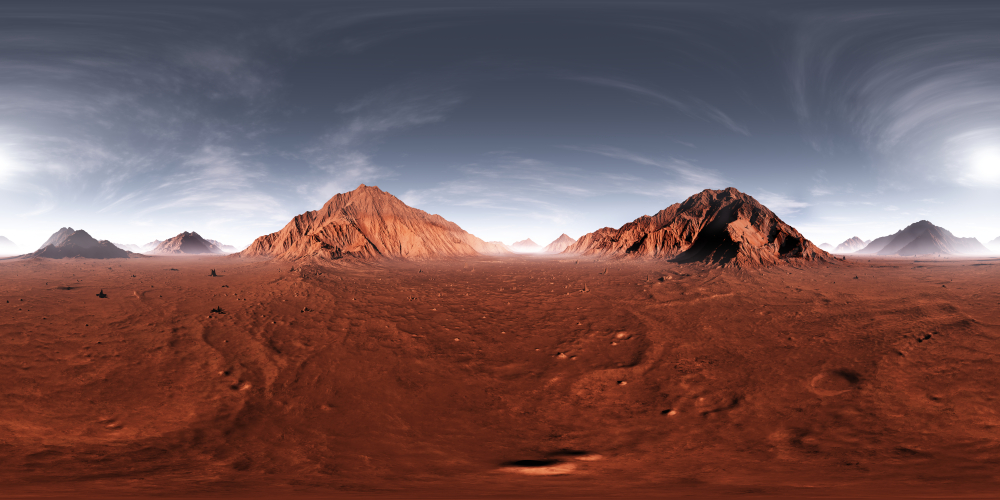
Who doesn’t love to watch the fiery red, yellow, and orange sunsets that we see here on Earth? Well, if you were watching the sunset on Mars, it wouldn’t be red, yellow, nor orange…it would be blue.
If you think about it, that’s kind of the opposite of life here on Earth. We have a blue sky and red sunsets, but on Mars, because of all of the red dust that is always being blown around, the sky is a red color, not blue. The light from the Sun reflects off of what is in the atmosphere. The sunlight is made up of several different wavelengths, and the dust and molecules in the atmosphere only interact with certain waves. So, the light becomes scattered. It is the same here and on Mars, but the effects are different.
The atmosphere on Mars is a bit shaky, and the pressure is only about one percent of the pressure on Earth. It is mostly made of carbon dioxide, and remember, it is filled with red dust. This dust, being red in color, scatters red light. So, it looks red when you look up into the Martian sky. However, that lets blue light through. Again, the same thing happens here, except it’s the opposite.
When the sun sets, both here and on Mars, the light has a longer distance than it has to travel, so it actually scatters more. The light that is left is the light that we see at sunset. Here on Earth, we see different shades of red, but on Mars, it is shades of blue.
Conclusion
Mars is truly a fascinating planet. We know a lot about it, and we are poised to know a lot more as the next few years pass. If there is any other planet in our Solar System that we could probably survive on, it would be Mars, and it’s very likely that forms of life have existed on Mars in the past or even exist on Mars right now. But could we live there? Probably.
As you can see, Mars and the Earth are very similar, yet they are very different, too. There is no other planet out there, that is more like Earth than Mars is, but we definitely wouldn’t be able to live there like we live here. The Martian atmosphere is not breathable for us, and through we could probably grow food like asparagus in the soil, other than that, we would have to set up some type of biodome to have food to eat. The temperature fluctuations would be tough, too, so it would be likely that any colony set up on Mars would have to be near the equator. As we look into the future, all of these questions will be answered, and thanks to these upcoming missions, they could be answered quite quickly.