

One of the most beloved sporting events in the world and considered the peak of athletic achievement- the Olympics Games – are well-known by nearly everyone. Some people drop everything to keep up with the events every Olympic season while others choose not to watch any of them. However, most people are somewhere in between, keeping an eye on their country’s progress and getting in on the fun, festive attitude of the Olympics. The Olympics that we know and love today were based upon the Games of Ancient Greece, held in the city of Olympia. These Games were tests of strength and ability and existed from the 8th century B.C. all the way to the 4th century A.D. In 1894, the modern version of the Olympics began development. The International Olympic Committee was established by a man named Baron Pierre de Coubertin, and the Summer Olympic Games took place just a short two years later.
For years, the Olympics consisted solely of summer sports and activities. However, decades later, the Winter Olympic Games were introduced. Now just as popular as the Summer Games, the Winter Olympic Games began officially in 1924 and have evolved into an integral element of the Olympics. Although they are a sporting event, the Olympics mean much more than just athletic competition. They are historic moments of unity with the entire world, and something that everyone should know a little bit about. Check out this list of important and intriguing things you should know about the history of the Winter Olympics.
10The First Winter Olympics Took Place in France
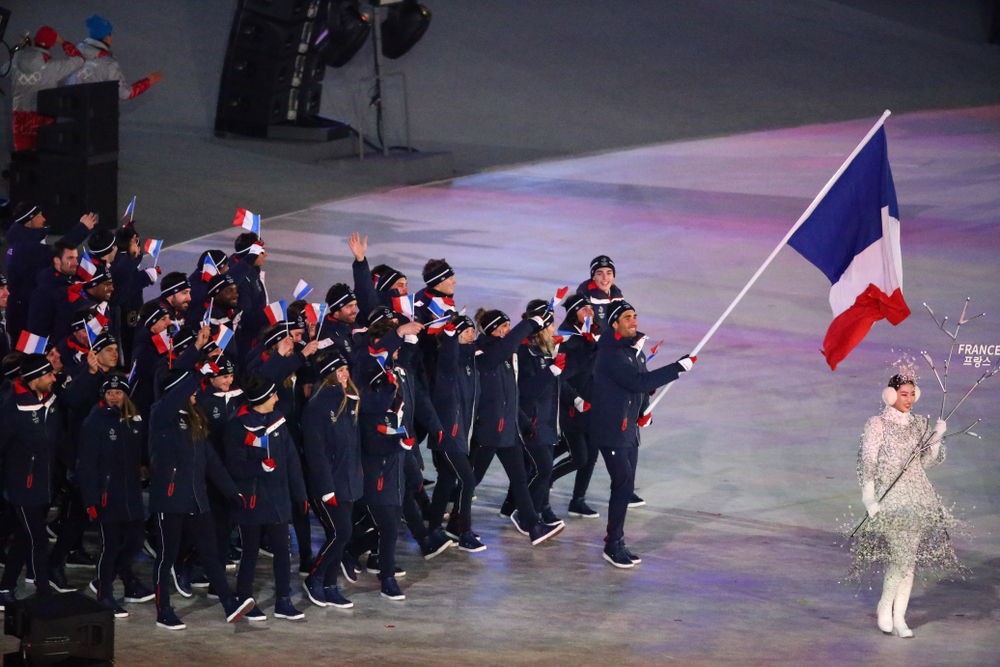
The very first Winter Olympics took place in the year 1924. These games were originally recognized as the International Winter Sports Week but retroactively designated as the first Winter Olympics. The locale for this event was Chamonix, France– held at the foot of the Mont Blanc mountain from January 25th to February 5th. At first, this week of winter sporting events was intended to be a small addition tacked onto the Summer Olympics. However, the event proved to be so successful that it evolved into the official Winter Olympics- a totally separate Olympic event. Involving winter sports at the Summer Olympics had always been an issue due to the season, so this week spurred the idea of holding the events in a totally separate time of year.
During the very first Winter Olympics in Chamonix, many record-breaking events took place. The first gold medal ever awarded at the Winter Olympics was won by an American speed skater by the name of Charles Jewtraw. On the fourth day, a Norwegian 11-year-old figure skater participated in the competition- one of the youngest Olympic competitors to this day. On the eighth day of competition, a Canadian hockey team scored a whopping 85 goals against three teams, without allowing a single goal to be scored on them. Their team is the first and last hockey team to ever win at both a Summer Olympics and a Winter Olympics. Although the event was hosted in France, no French athlete went home with a gold medal.
9There Were Five Original Winter Sports
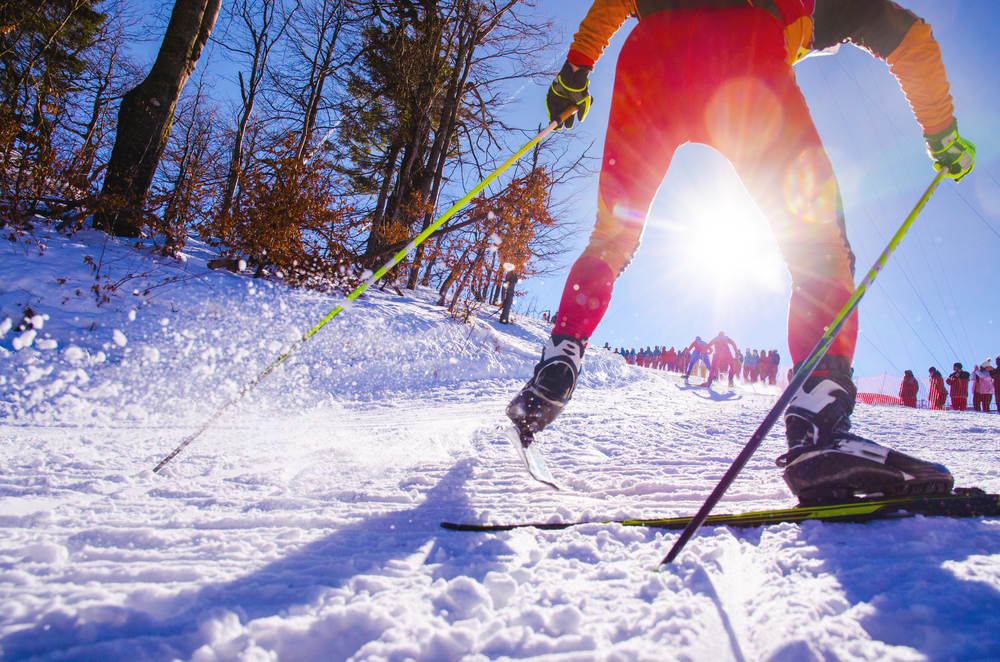
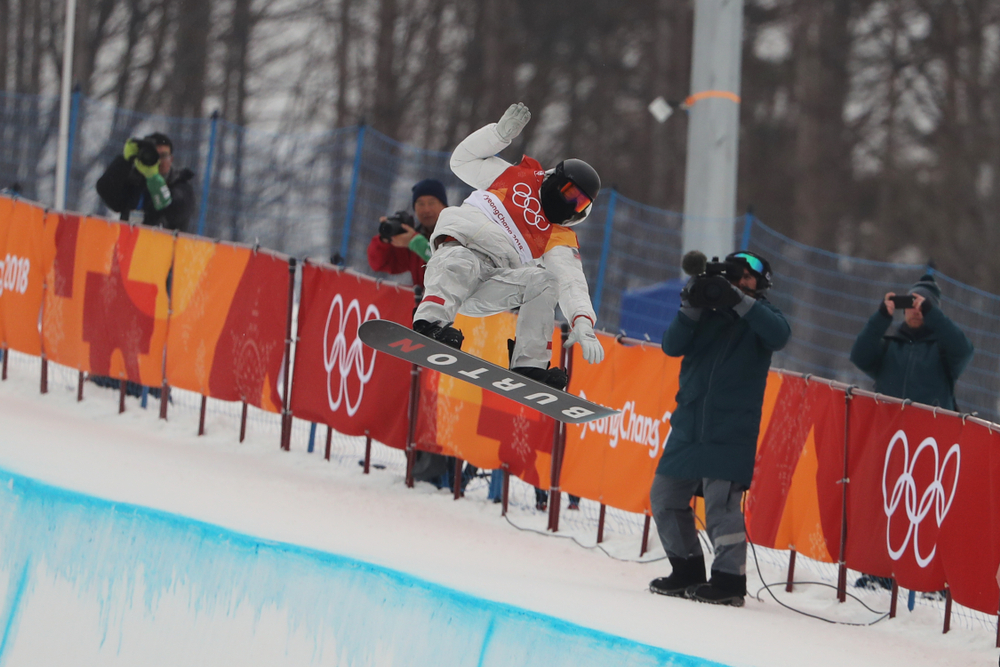
The sports held in the Winter Olympics have changed and varied throughout the years. Essentially, the Winter Olympics are made for sports that take place on snow or ice. In the original Games, there were five sports. Nowadays, the Winter Olympics hosts fifteen different winter sports. At the 1924 Winter Olympics, the events included bobsleigh, curling, ice hockey, skating, and Nordic skiing. Both speed skating and figure skating were competed in. In Nordic skiing, the categories were broken down into military patrol, cross-country skiing, ski jumping, and Nordic combined. Since this initial competition, many sports have been removed, added, or both, from the roster of the Winter Olympics. The only qualification for a Winter Olympic sport, according to the Olympic Charter, is that it must be practiced on snow or ice.
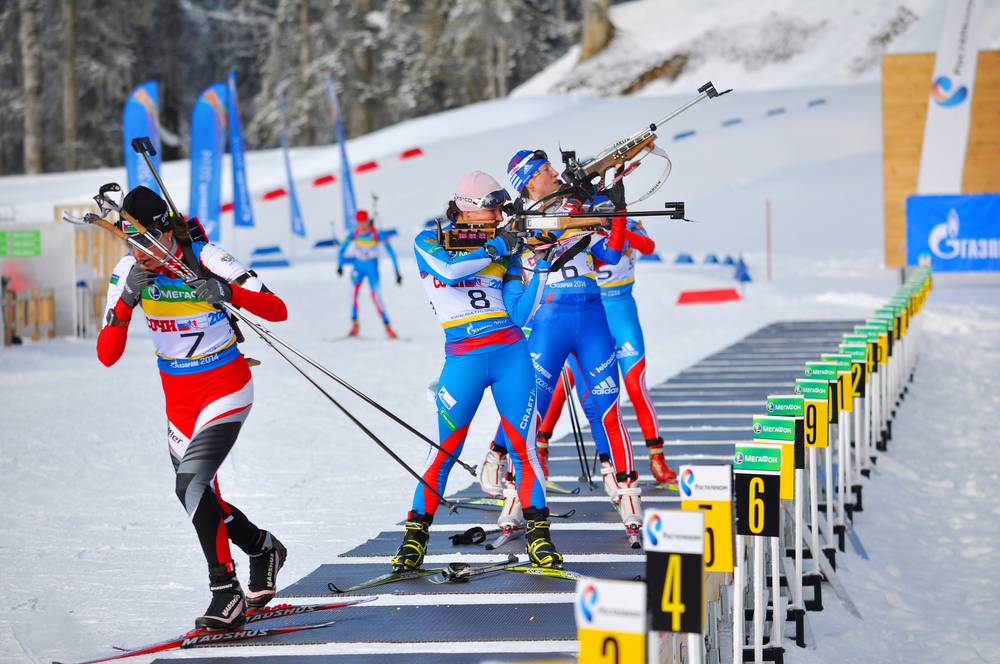
Nowadays, there are a total of 15 sports involved at the Winter Olympics, broken down into many more individual events. These sports are as follows: Alpine skiing, short track speed skating, biathlon, ice hockey, bobsleigh, cross-country skiing, freestyle skiing, curling, figure skating, luge, Nordic combined, skeleton, ski jumping, snowboarding, and speed skating. In a handful of years, the Winter Olympics have included demonstration events- more particular local sports that are not awarded medals. Interesting examples of this include ski ballet, skiing behind dogs, and special figures figure skating. The goal of these demonstration events is to allow the host country of the Olympics show off some of their interesting sports and provide a venue for the competition which may not otherwise be available.
8They Used to Happen the Same Year as the Summer Olympics
Today, the Summer Olympic Games and the Winter Olympic Games take place in alternating four-year cycles. This means that there is an Olympics every two years, alternating between Summer and Winter. However, this was not always the case. When the Winter Olympics were first introduced, they took place in the same year as the Summer Olympics, every four years. This tradition continued all the way until 1992 when the International Olympic Committee decided to switch to the current system. The Winter Olympics began as an event much more closely intertwined with the Summer Olympics. Essentially, they were meant to be a small addition or spin-off of the former. However, the success of the Winter Olympics quickly evolved, and they turned into an entire event in their own right. Historically, this evolution and branch-off are easily visible.
The first Winter Olympics were just a small addition to that year’s Summer Olympics. Afterward, the Winter Olympics became a second Olympics to take place every four years. Now, the decision to alternate between the Winter and Summer Olympics every two years ensures that each version of the international event gets its own focus and commitment. Since the development of the Winter Olympics, both Winter Paralympic Games and Paralympic Games have also been introduced. These take place in the same years as the Summer or Winter Olympics, respectively. They directly follow the Olympic Games and take place in the same host city. Their goal is to allow disabled athletes to compete and display their skills as equally as able-bodied athletes.
7The Games Have Taken Place in 12 Different Countries
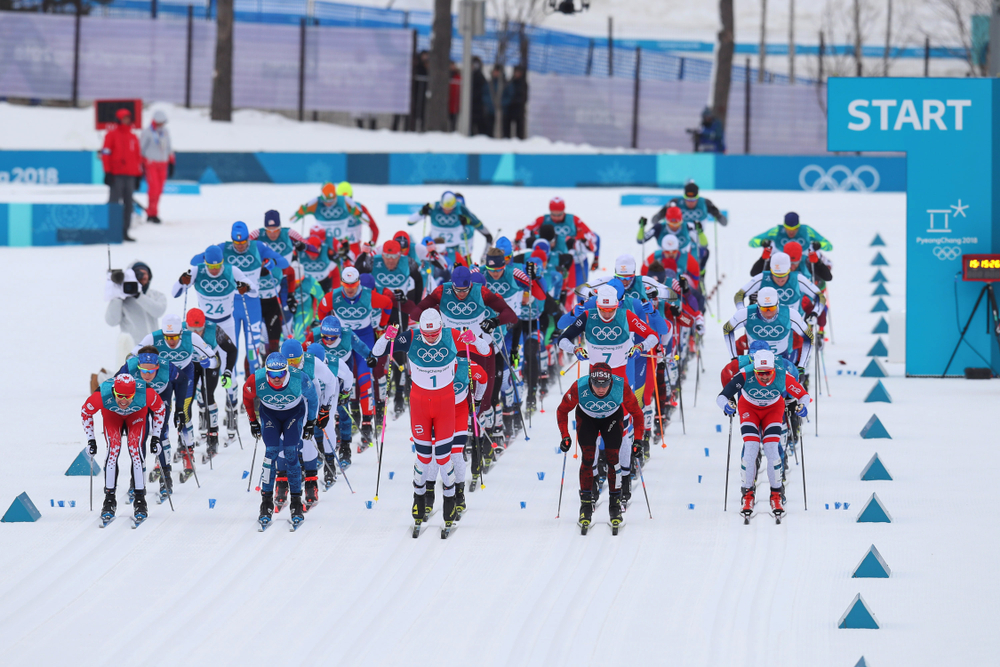
Since the establishment of the Winter Olympics, a total of 12 countries across three continents have hosted the Games. The United States has hosted the Winter Olympics the most times out of all of them. The Games took place in Lake Placid, New York in 1932 and 1980, Squaw Valley, California in 1960, and Salt Lake City in 2002. The Games have also been hosted three times in France and twice in Austria, Canada, Japan, Italy, and Switzerland. Other one-time host countries include Yugoslavia, Russia, South Korea, and Germany. The next Winter Olympics are planned for 2022 in Beijing, China. Beijing will be the first city that has hosted both the Summer Olympics and the Winter Olympics. One characteristic that all the Winter Olympic host cities have in common is their position in the Northern Hemisphere. Due to the climate demands of the winter sports played, no countries in the Southern Hemisphere have ever applied to host them.
Historically, Norway, Germany, and the United States have dominated the Winter Olympics. The host cities for the Winter Olympics are selected very carefully, and even just making a bid to host the event is quite expensive. Cities make their bids to the International Olympic Committee, and they are each evaluated on several rigorous points. The points include the city’s size and capacity to handle such a massive event, the city’s willingness to pay more taxes in order to fund the event, the city’s positive media exposure. Cities that meet these criteria become Candidate Cities and are evaluated further through a 10-month process.
6One Country Has Won a Gold Medal at Every Winter Olympics
The United States is the only country to have won a gold medal at every single Winter Olympic Games since the beginning. There have been a total of 23 Games since 1924, and the United States athletes have taken home at least one gold medal at every one of those Games. In every Winter Olympics to take place, only 12 countries have participated every time- Austria, Canada, Finland, Italy, Hungary, Norway, Poland, Sweden, France, Great Britain, Switzerland, and the U.S. Although, there are usually far more than 12 countries competing. The US is also the all-time Winter Olympics leader in figure skating, snowboarding, and skeleton.
Several American athletes have also made Winter Olympic history through the years. Bobsleigh athlete Eddie Eagan and sprinter Lauryn Williams are two of the only athletes to ever win a medal at both a Summer and Winter Olympic Games. American figure skater Debi Thomas was the first black athlete to win a Winter Olympics medal. More recently, American luger Chris Mazdzer competed in the men’s singles event at the 2018 Winter Olympics. He became the first non-European to ever win a medal in this event.
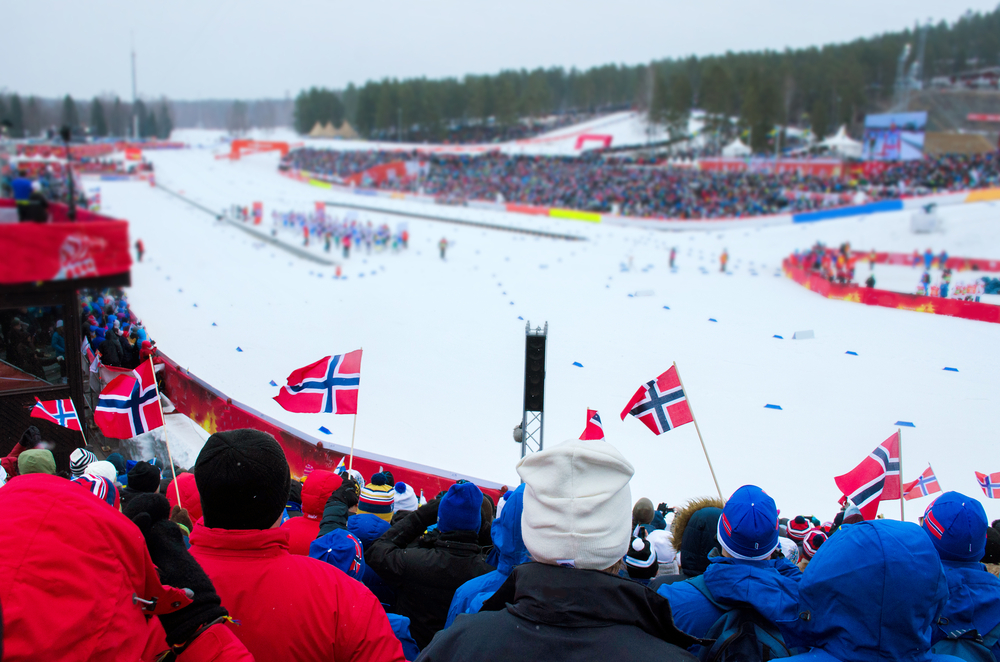
Although the United States has won at least one gold medal each game, they do not have the most gold medals overall. This record is held by Germany, which has the most medals overall and the most gold. Scandinavian countries also tend to perform impressively in the Winter Olympics. In the very first iteration in 1924, Finland and Norway won more medals than all of the other participating countries combined.
5The Winter Olympics Were Interrupted During World War I
Although the Winter Olympics were planned for 1916, they were eventually canceled due to World War I. The Games were to take place in Berlin, Germany, but the worldwide political tumult caused the cancellation. Throughout the next decade, World War I and World War II had a significant effect on the Winter Olympics. After the war, the 1920 Summer Olympics took place in Antwerp, Belgium, but they had several stipulations. Several countries such as Germany, Austria, Bulgaria, and Turkey were banned from competing. Because of this ban, Germany decided to plan their own sports competitions called Deutsche Kampfspiele. Before the first official Winter Olympics, Germany held its winter sports competition in 1922.
Decades later, World War II also had an effect on both the Summer and the Winter Olympics. The 1940 games were supposed to take place in Sapporo, Japan, but this changed drastically when Japan invaded China during the war. The International Olympic Committee decided to rescind this decision and switch the Olympics to Garmisch-Partenkirchen, Germany. However, this quickly changed, too. When Germany invaded Poland in 1939, the IOC decided to fully cancel the 1940 Olympics. Since the war continued for several years, the 1944 Olympics, which were supposed to take place in Cortina D’Ampezzo, Italy, were also canceled. The first Olympics after the war took place in 1948, in the neutral country of Switzerland. Since the Olympics are very much an international event, symbolic of unity and brotherhood, they were significantly affected by these world wars which implicated large portions of the globe.
4Before the Winter Olympics, There Was the Nordic Games
While the Summer Olympics were in full swing much earlier than the Winter Olympics, there were no winter sports on the roster. In 1901, a Swedish man named General Viktor Gustaf Balck organized and oversaw the Nordic Games. This event would eventually transform into what we know today as the Winter Olympics. They were held regularly until 1926- every two years from 1901 to 1905, and every four years thereafter. Although the Nordic Games were not officially affiliated with the International Olympic Committee or the Summer Olympics, Balck was a member of the committee and a good friend of Pierre de Coubertin himself. He was one of the most influential people in the history of the Winter Olympics. Balck tried to convince the International Olympic Committee to add winter sports to the games, but he was constantly denied. That all changed at the Summer Olympics that took place in London in 1908. The committee decided to include four varieties of figure skating competitions to these Games. This was the first time a winter sport was ever included in an official Olympics.
When it was time for the next Olympics in 1912, taking place in Stockholm, the idea to include winter sports was proposed again. However, the committee did not want to step on the toes of the separate Nordic Games. The idea was tossed around for the next few Olympics. Figure skating and ice hockey were included in the 1920 Summer Olympics in Belgium, but by the next Olympics, the committee made a new decision. They created the “International Winter Sports Week” which later became the Winter Olympics.
3What Is the Value of a Gold Medal?

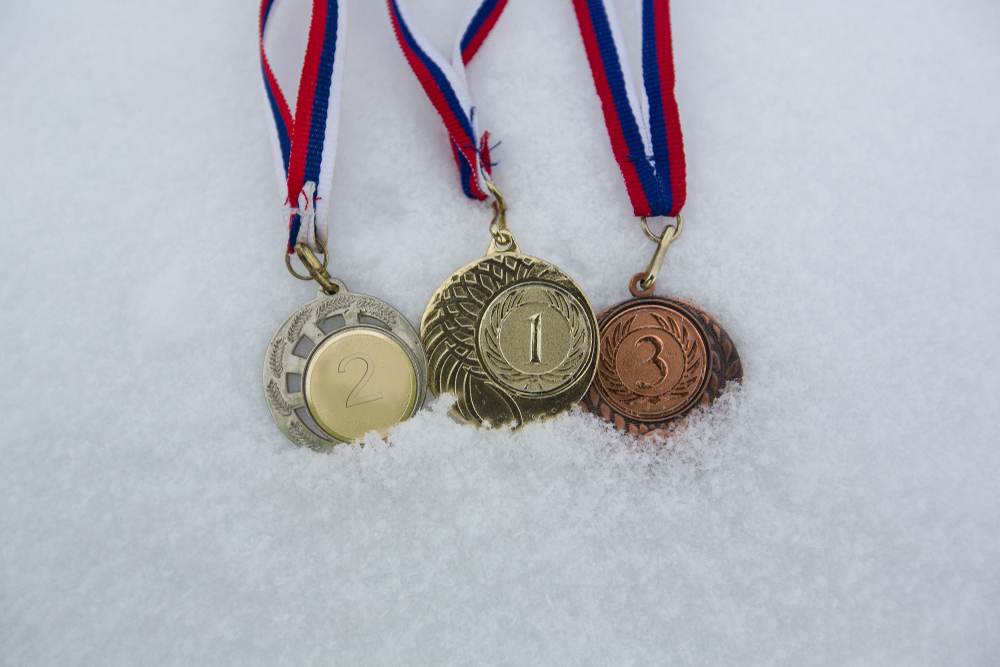
The value of an Olympic gold medal goes far beyond its weight in gold. Olympic gold medals awarded at both the Summer and Winter Games are priceless artifacts and iconic symbols of athletic achievement. However, the actual value of a gold medal has changed significantly over the years. In fact, gold medals are not made out of solid gold- although, they used to be. In 1904, the Summer Olympics developed the gold, silver, and bronze medal system that is so familiar today. At this time, the medals were made entirely out of gold. However, this didn’t last long, and the last solid gold Olympic medals were awarded at the 1912 Stockholm Summer Olympics. Because of this, no Winter Olympics gold medal has ever been made of solid gold.
Nowadays, each host city has the opportunity to design the medals awarded at their Olympic Games. Each year, the gold medals weigh indifferently and appear quite unique. But, the International Olympic Committee does have some requirements. The gold medal must contain a minimum of six grams of pure gold. Usually, the rest of the medal is comprised of pure silver. Often, the gold is just used to plate the medals. Based only on the value of gold and silver, Olympic gold medals are usually worth between 500 and 600 dollars. The actual value is much higher due to the esteem and prestige that goes along with it. Some Olympic medals have auctioned off for over $20,000 dollars. The auction value depends highly on the athlete’s own recognition.
2How Much Do the Winter Olympics Cost?

The Olympics are a costly endeavor for host cities. Hosting the Winter Olympics means being able to host thousands of athletes, fans, families, and visitors. It means heavy media coverage, intense city improvements, and high levels of employment. Although host cities are often better in the long run- benefitting from revenue, tourism, and long-lasting improvements- it is a massive up-front investment to host the Winter Olympics. Although the position of the host city is expensive, cities still bid to do so because it is a huge symbol of progress and development. The initial bid made to the International Olympic Committee in itself is expensive- the bid usually involves millions of dollars invested into consulting, planning, and preparing.
The Winter Games tend to be far less expensive than the Summer Games. While the Summer Olympics include around 300 individual events, the Winter Olympics only hosts about 100. This means that there are far fewer facilities needed for sports and far less attraction from tourists and onlookers. The actual cost of the Olympic Games is usually far more than the estimated costs. The latest Winter Olympics was the second most expensive in history, Pyeong Chang 2018, cost the city over 13 billion dollars. The most expensive Winter Olympics ever held were the 2014 Sochi Olympics. Russia ended up investing around 54 billion dollars into the massive sports event- even more expensive than any Summer Olympics, too. The third most expensive Winter Olympics is significantly less expensive than Sochi or Pyeong Chang, ringing in at 4.36 billion dollars. These took place in Turin, Italy in 2006.
1Something Unique Happened at the 1998 Winter Olympics
Almost every instance of the Winter Olympics includes some sort of record-breaking or historic event. One of the most interesting and endearing of such events took place during the 1998 Winter Olympics, held in Nagano, Japan. One of the main concerns when selecting a host city for the Winter Olympics is the climate. Since every Winter Olympic sport takes place on ice or snow- a sufficiently cold climate is crucial. Several Winter Olympics have even struggled with a lack of snow or a spike in temperatures. The Olympics are often at the mercy of weather conditions. However, the Nagano Olympics were completely different. The 1998 Winter Olympics were actually faced with a totally unique issue- too much snow!
Nagano officials were initially concerned that their city would not have enough snow during the Olympics. That concern quickly turned the other way when snowstorms dumped a foot of snow all over the city during the beginning of February. The unexpected storms forced the postponement of a handful of events and caused even more issues with traffic and infrastructure. The weather problems ended up displaying the commitment of the Japanese people, as thousands of volunteers helped to clear the snow and aid in preparing for the Olympic events. Unfortunately, Mother Nature simply could not be fought. The events still had to be postponed and the Winter Olympics were forced to change their schedule to accommodate the massive and unexpected snowfall. Ironically, Nagano is actually the southernmost host city to ever take on the Winter Olympics.
Conclusion
The Winter Olympics are a wonderful event that millions of people get ready to watch every four years. They have given a chance to athletes who train on snow or ice to showcase their skills on a worldwide platform, just like summer sport athletes. Throughout the years, the Winter Olympics have developed into a symbol of unity and athletic commitment just as strong as their summer counterpart. Some of the strongest and most lasting international relations are formed and developed through the Olympic Games. In fact, the five colorful rings that make up the Olympic flag are meant to symbolize the five major continents. Blue, black, red, yellow, and green were chosen because each country in the world has at least one of these colors on their flag. Although hosting the Olympics may be expensive, and becoming an Olympic athlete may be the final goal for many athletes- the Games are about so much more than just the sports that are played and the competitions that take place.
The Olympics have been a place for a much wider variety of people than just athletes. Almost every type of career and person is represented in the Games. Historically, even artists, writers, and musicians have participated. In the past, even horses and dogs were a part of the Winter Olympics. There is surely a little something for everyone in the Olympics. The many traditions that define the Olympic Games, like the torch relay and the opening and closing ceremonies, have allowed for generations to be connected and for many nations to come together as one.