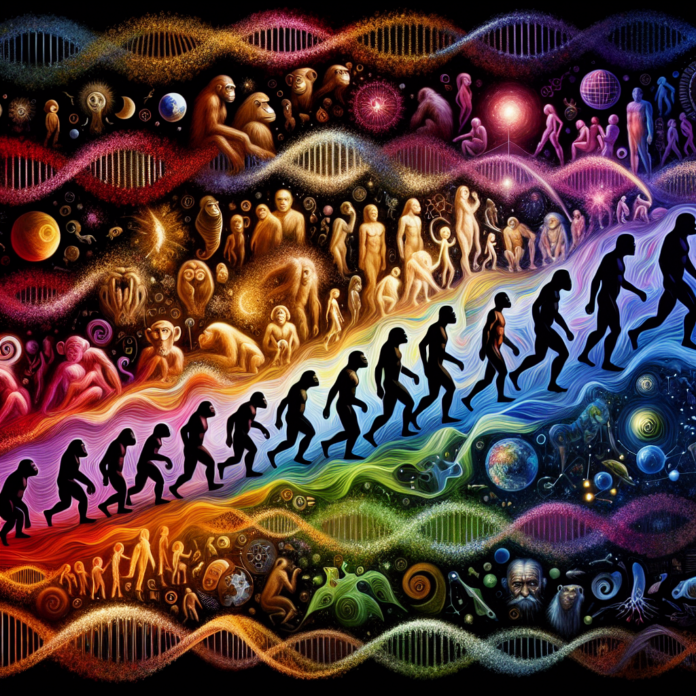
As you traverse through this fascinating article, you’ll find yourself immersed in a world that’s brilliantly enigmatic and teeming with intrigue. The “Top 10 Unexplained Phenomena In Human Evolution” not only ventures into the uncharted territories of human evolution but also unravels the most perplexing mysteries that continue to baffle even the most learned scientists. So prepare yourself for an enticing journey, filled with awe-inspiring revelations about our existence and origins, as you explore these captivating phenomena. The beauty of this list is that it doesn’t just acquaint you with the complexities of evolution but allows you to take part in the enthralling discourse that surrounds it. No need to strap in; it’s time to embark on this intellectual adventure.
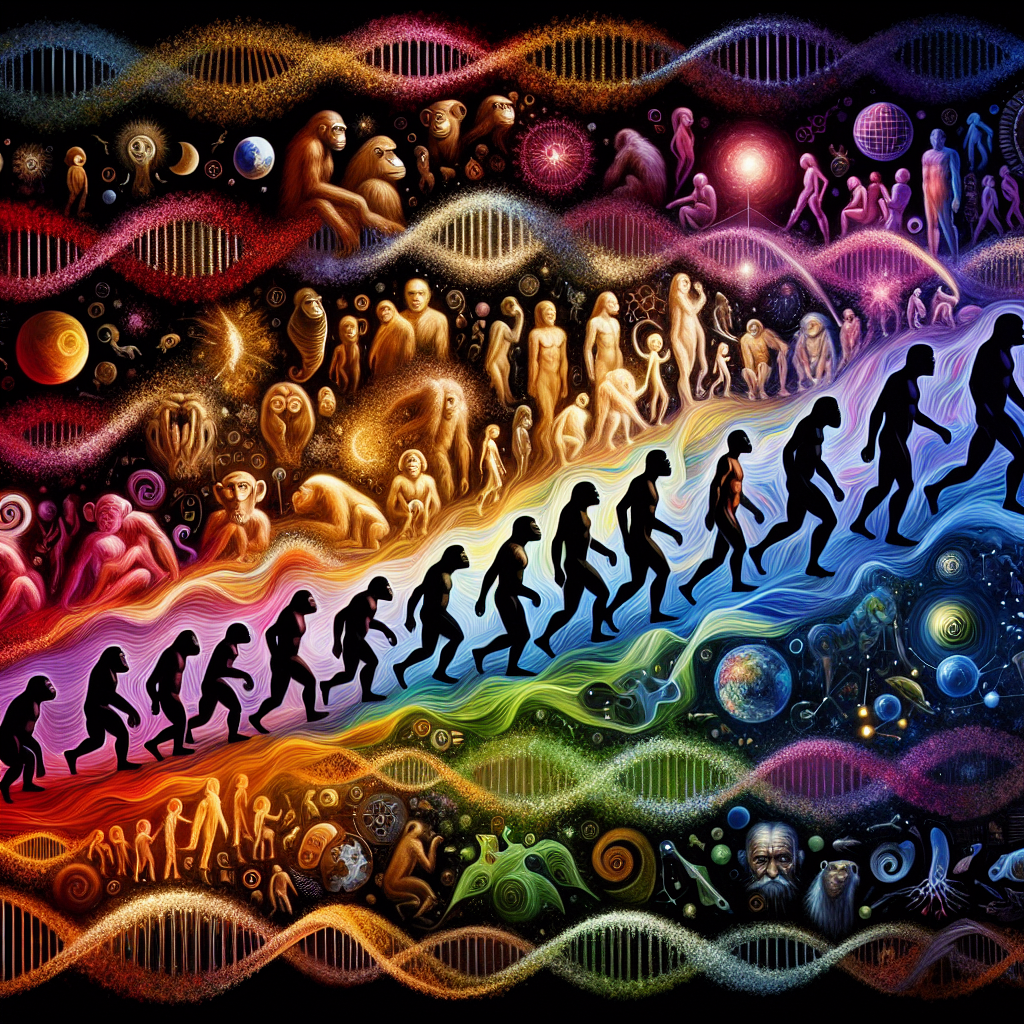
The Evolution of the Human Brain Size
An overview of the increase in human brain size
Ever wonder why we humans act differently compared to our fellow primates? The primary reason is the size and complexity of our brains. Research shows that the human brain has roughly tripled in size over the last 2 million years, making us the representatives of the primate group with the largest brain in proportion to body size. This rapid increase in size has led to many of the advanced cognitive skills that set us apart from other species.
Theories explaining the dramatic increase
There is no shortage of theories on why the size of the human brain ballooned so rapidly. Some attribute it to dietary changes that gave our distant ancestors access to more nutritious food. Others point to the emergence of complex social structures, which stimulated the need for better communication and problem-solving skills, pushing the evolution of an increasingly larger and more powerful brain.
Why this enormous increase remains unexplained
The truth is, however, the exact reasons behind this blitz-scale enlargement remain somewhat of a mystery and a topic of ongoing research. We all agree that a bigger brain played a crucial role in our evolution, but the exact triggers of this process are still up for debate amid the scientific community.
The Existence of the Appendix
Understanding the function of the appendix
The appendix, a small pouch-like sac of tissue located near the intersection of the small and large intestine, has long puzzled scientists. Its function, if any, seems redundant in modern humans. Its most notorious role today is probably causing excruciating pain when infected – a condition known as appendicitis.
Possible explanations for its existence
Several theories have been proposed regarding the existence of this seemingly unneeded organ. Some suggest that it played a vital role in our distant herbivore ancestors, aiding in the digestion of plant material. Others propose that it serves as a storehouse of beneficial gut bacteria, which can repopulate the gut after a severe illness.
Why its role in human evolution is still a mystery
Despite these theories, the exact role of the appendix in human evolution, and why it has persisted in spite of its lack of function, remains a mystery. The response might lie in a deeper understanding of our shift from a plant-based diet and our ongoing relationship with our microbiome.
The Development of Bipedalism
Highlighting the advantages of walking on two legs
Walking upright on two legs, or bipedalism, is one of the most significant distinguishing features of human evolution. This trait facilitates many advantages, from freeing our hands for tool use and food gathering, to increasing our field of view, and even reducing our exposure to solar radiation due to a reduced body area exposed to the sun.
Debates around the transition from quadrupedalism to bipedalism
How and why did we transition from quadrupedalism to bipedalism? Some theories suggest that standing on two legs helped our ancient ancestors get a better view over the savannas and spot predators or prey. Others argue that bipedalism allowed our ancestors to free up their hands for carrying food and young ones, or to use tools more efficiently.
The unanswered questions in this evolutionary leap
Yet, the precise reasons and the behavioural and environmental preconditions for this evolutionary leap remain unresolved. Knowing more about why bipedalism came into existence could deepen our understanding of other aspects of human evolution, including brain size expansion.
The Mystery of Human Longevity
Details of extended human lifespan compared to other primates
Humans, interestingly, exhibit a longer lifespan compared to most other primates. Considering the commonality of our genetics, this difference in longevity poses an evolution mystery. In most other species, members typically live on an average of three decades, while humans often live well beyond this mark, with many living beyond the ripe old age of 80.
Theories on why humans live longer
Some theories propose that our extended lifespan might be an unforeseen result of our bodies being designed to survive and thrive in a variety of challenging conditions. Others link our prolonged life span to favourable social attributes, such as our capacity to care for each other and our younger generations.
Why the exact reasons for prolonged human life span remain unclear
Despite the many theories, the exact reasons why we live longer than our primate cousins still elude scientists. It could well be a blend of biological, social, and environmental aspects that extended our golden years. Unlocking this secret could potentially redefine our understanding of ageing and longevity.
The Rapid Loss of Body Hair
The reasons behind body hair in mammals
Ever wonder why we humans have less body hair compared to most mammals? Most mammals are covered in a thick coat of hair for protection against predators and climate. This hair helps them camouflage from their predators and keeps them warm.
Potential explanations for human hair loss
Unlike most mammals, humans have evolved with only minimal coverage of body hair. Some theories propose that reduced body hair made it possible for our ancestors to sweat more effectively, preventing overheating and facilitating long-distance running and hunting in the hot, open savannahs.
The questions that still linger about this evolutionary trait
Despite these plausible explanations, the exact reasons why and how humans lost their body hair during evolution remain uncovered. Could there be other reasons for this transforming trait that we are yet to unravel? That’s something for our evolutionary scientists to scratch their heads over!
The Evolution of Complex Speech
The importance of speech in human evolution
Speech is one of the defining features that separate us from our fellow primates. Our capacity for complex speech has allowed us to communicate elaborate thoughts and ideas, facilitating cooperation, teaching, and the sharing of knowledge across generations, thus driving our species’ rapid progress.
Theories on how human speech developed
Several theories seek to explain how human speech evolved, from the idea that it started with our early ancestors’ simple gestures to theories about a possible “language gene”. Some suggest that the evolution of complex speech is deeply interrelated with the increase in brain size, pointing towards the neural complexities required for speaking and understanding language.
Why the origin and evolution of complex speech is still unexplained
Yet, the precise chain of events and circumstances leading to our ability for complex speech is still shrouded in mystery. Unravelling this mystery could help us comprehend how we came to develop this unique, significant trait setting us apart from other species.
The Persistence of Wisdom Teeth
The problems caused by wisdom teeth today
Wisdom teeth, those late-blooming molars at the back of our mouth, often cause discomfort, pain, and even serious health issues leading to their frequent removal. Given their dubious benefits, why on earth do humans evolve to have them?
Possible historical uses of wisdom teeth
Our prehistoric ancestors likely used these back teeth to help grind down plant tissue. As human diets changed, smaller jaws gradually evolved, yet wisdom teeth persist to this day.
Why wisdom teeth continue to grow in despite being functionless
The exact reason why these seemingly redundant teeth keep emerging well after they cease to be of any use remains in doubt. Perhaps our understanding of the genetic and evolutionary mechanisms driving this phenomenon is still in its infancy. Regardless, wisdom teeth remain one of those peculiar footprints of our evolution that many would rather see disappear.
The Appearance of Blue Eyes
Tracing the first occurrences of blue eyes
Did you know that about 10,000 years ago, everyone’s eyes were brown? The existence of blue eyes traces back to a genetic mutation leading to an alteration in the OCA2 gene responsible for pigmentation. But why did this mutation persist and become more widespread?
Theories surrounding the appearance of this trait
Different theories try to provide answers to this puzzle. Some attribute the prevalence of blue eyes to environmental factors, such as the advantage in certain geographical areas due to light scattering or even the perceived attractiveness of blue-eyed individuals.
Why this particular eye color phenomenon remains unresolved
Yet, much about the evolutionary explanation of the blue eye colour phenomenon remains unexplained. As of now, it still stands as one of those quirks of human evolution that adds more color to the mystery of our species’ evolution.
The Occurrence of Menopause
Understanding the uniqueness of menopause in humans
Menopause, the cessation of female fertility, is a uniquely human phenomenon among primates, with only a few other species experiencing something similar. Why is this, and what does it tell about our evolution?
Potential evolutionary benefits of menopause
Some theories suggest that menopause could have evolved due to the benefits of investing in existing offspring and grandchildren, also known as the “Grandmother hypothesis”. Put simply, it’s suggested that grandmothers can help to ensure their genetic success by helping to care for existing progeny rather than producing more of their own.
Why the reasons for menopause in human evolution are still a puzzle
However, this fascinating aspect of our reproductive life remains puzzling. Could there be other reasons why menopause emerged in our species? Does it point to a deeper understanding of female reproductive health and survival during the primitive era? The answers remain elusive.
The Existence of Rh Negative Blood
The rarity of Rh Negative blood type
The occurrence of Rh Negative blood, one of the less common blood types in the human population, is another intriguing mystery in human evolution. Only about 15% of the world’s population has this blood type, and even less among certain ethnicities.
Possible explanations for the evolution of this blood type
Many theories hypothesize on the reasons for the evolution of this rare blood type. Some suggest it could be linked to resistance to certain diseases or parasites, while others propose that it could be due to a random mutation that has managed to persist.
Why Rh Negative blood’s evolutionary origins are still not clearly understood
However, the reasons for the occurrence and persistence of Rh Negative blood in humans are not clearly understood, making it another of the many fascinating puzzles in the field of human evolution.
In conclusion, human evolution is filled with many unexplained phenomena that continue to baffle us. As we continue to unlock our species’ evolutionary history, we understand more about ourselves and our place in the natural world. However, this list serves as a reminder that there remain many unanswered questions that make the journey of discovery complex, intriguing, and endlessly exciting.