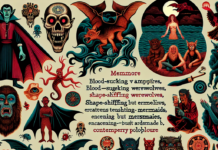
Prepare to embark on a fascinating journey through tales and legends as we explore the Top 10 Mysterious Mythical Creatures in Folklore. Whether whispered around a campfire or recited in ancient texts, stories of these enigmatic beings have fascinated people for centuries, and they continue to pique our curiosity today. These mythical wonderments come from various cultural folklores worldwide and, while they might not physically exist, they certainly inhabit a larger-than-life presence in our collective imagination. So brace yourself, and let’s traverse through the captivating shadows of folklore to discover these intriguing mythical creatures that have stood the test of time.
Bigfoot
Origins of Bigfoot
Let’s kick off our exploration of creatures of folklore with Bigfoot, a larger-than-life figure originating from North American legends. This hairy giant, also known as Sasquatch, is thought to roam remote forested areas, leaving behind oversized footprints as evidence of its existence, hence the name ‘Bigfoot’. Native American tribes have long shared stories of this elusive creature, which they often describe as a nocturnal, curious, but generally peaceful being.
Sightings and Evidence
Ever since the early 19th century, there have been numerous reported sightings of this mythical creature. The evidence, though, often boils down to blurry photos, unreliable eyewitness accounts, and questionable footprints or other physical traces. Despite the lack of concrete scientific proof, belief in Bigfoot remains strong among many.
Popular Bigfoot Tales and Influence on Culture
Bigfoot’s influence on popular culture is undeniable. Bigfoot has been the subject of numerous films, documentaries, novels, and TV shows, often depicted as a misunderstood outcast or a formidable creature. This cultural interest undoubtedly contributes to keeping the Bigfoot legend alive today.
Loch Ness Monster
Origins of the Loch Ness Monster Stories
Next, we dive into the murky waters of Scotland’s Loch Ness to seek the infamous Loch Ness Monster, affectionately called ‘Nessie’. Stories of Nessie date back to the 6th century, where Saint Columba supposedly banished a water-beast into the Loch.
Key Sightings
Our fascination with Nessie truly ignited in the 1930s following a series of reported sightings and a flurry of inconclusive photographs. Despite numerous searches and scientific investigations over the years yielding no definite proof, the elusive Nessie continues to capture the world’s imagination.
Influence on Scottish Folklore
The legend of the Loch Ness monster is deeply ingrained in Scottish folklore. Even today, Nessie maintains a significant role in Scotland’s cultural identity, drawing tourists annually to the scenic Highlands in hope of catching a glimpse of the mythical creature.
Dragons
Origins of Dragon Mythology
Dragons, arguably some of the most universally recognised mythical creatures, have roots in various ancient cultures. Whether it’s Chinese legends recounting the wisdom and power of celestial dragons or European tales speaking of the bravery it took to slay these fearsome, fire-breathing beasts, dragons pervade our collective imagination.
Common Themes Across Cultures
Despite their origins in different cultures, dragons share certain commonalities. They are often portrayed as powerful, intelligent creatures with a connection to the world’s basic elements – fire, water, earth, and air. They may have potential for good or ill, often guarding vast treasures or wielding destructive power against villages and kingdoms.
Significance and Symbolism
Dragons symbolise different things across cultures. In China, dragons are revered, symbolising power, strength, and good luck. Whereas, in western cultures, they often symbolise chaos, destruction, and malevolence. Dragons’ presence in literature, films, and video games testify to their continued-cultural significance.
Unicorns
Origins of Unicorn Myths
The legend of the Unicorn, a horse-like creature with a single, spiralling horn, has its earliest roots in the chronicles of the ancient Greeks. However, they described them as fierce, monstrous animals living in far-off lands, different from the gentle, magical creature we imagine today.
The Unicorn in Medieval and Renaissance lore
During the medieval and Renaissance eras, unicorns evolved into symbols of purity and grace, their horns believed to possess healing properties. Art and literature of the time often portrayed them as a creature so wild and free that only a virgin maiden could tame it.
Unicorns in Modern Literature and Arts
Modern culture has embraced the unicorn as a symbol of magic, beauty, and mystery. Whether it’s through children’s books, films, or even in the form of colourful, unicorn-inspired products – the fascination with these mythical creatures endures.
Chupacabra
The Chupacabra Legend
‘Chupacabra’, meaning ‘goat-sucker’ in Spanish, comes from the creature’s reported habit of attacking livestock, especially goats, and draining their blood. This relatively ‘new’ creature first emerged in Puerto Rico in the mid-90s and has since been integrated into Latin American folklore.
Major Sightings reported
Sightings of this beast, typically described as a heavy creature, the size of a small bear with a row of spines down its back, are primarily from Puerto Rico, Mexico, and the U.S. But, like our previous creatures, empirical evidence is scant.
Impact on the Latin American Culture
The Chupacabra story has greatly influenced Latin American culture, seeping into popular culture such as films, books and music. It’s even used as a boogeyman threat by parents to get their kids to behave!
Vampires
Historical Background of Vampires
No creature of the night is as universally feared and featured in folklore as the vampire. They’ve haunted our nightmares since ancient times, with tales stemming from various regions, most notably Eastern Europe.
Legend and Myths across Cultures
Across cultures, vampires share common characteristics – immortality, aversion to sunlight, and a particular dietary preference for drinking blood. However, how one becomes a vampire, their strengths, weaknesses, and appearance, vary by region and tradition.
Vampires in Fiction and Popular Culture
Vampires have permeated popular culture, from classic novels like “Dracula” to modern sagas like the “Twilight” series. Whether depicted as romantic figures or gruesome monsters, vampires remain a fascinating aspect of our cultural mythology.
Werewolves
Origins of Werewolves Myths
The belief in werewolves, humans who transform into wolves, goes back to ancient times. These legends are scattered across global cultures, most notably in Europe.
Common Themes and Variations
Traditionally, werewolves are linked to the full moon, with transformations often depicted as agonising and uncontrollable. Many tales tell of a curse, sometimes inflicted as divine punishment or transmitted via a werewolf’s bite.
Cultural Impact of Werewolf Myths
Werewolves continue to run rampant in our imagination and media, featured in countless books, films, and TV series. Their symbolic ties to the primal, wild parts of human nature and the struggle between our civilised and savage selves make them compelling figures in storytelling.
Mermaids/Mermen
Mythological Origins of Mermaids and Mermen
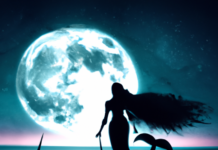
Mermaids and mermen, half-human, half-fish sea creatures, have splashed through our folklore for centuries. With their earliest roots in ancient Mesopotamia, these captivating creatures have a place in the folklore of virtually every coastal culture.
Biblical References and Middle Age Tales
Featured in the Bible and medieval tales, mermaids were often portrayed as perilous creatures who lured sailors to their death with their enchanting music and beauty. Mermen, on the other hand, were less frequently described, usually depicted as wilder and uglier than their female counterparts.
Mermaids and Mermen in Modern Folklore
In modern times, the narrative around mermaids has shifted towards a more benign and romantic image. Disney’s Ariel, the ‘Little Mermaid’, and other modern adaptations offer a more positive, alluring portrayal of these watery beings.
Phoenix
Ancient Greek Origin of Phoenix
The Phoenix is a bird of great significance in Greek mythology, renowned for its vibrant plumage and its extraordinary life cycle of rebirth. This legendary bird was said to live for hundreds of years before perishing in flame and being reborn from its ashes.
Resurrection and Immortality Symbolism
The Phoenix’s unique cycle of death and rebirth symbolises regeneration, immortality and renewal, making it a powerful spiritual symbol in various cultures. This myth has been used to convey the victory of life over death and the enduring nature of the spirit.
Phoenix in Modern Culture and Literature
Today, the Phoenix’s symbolism of rebirth and transformation resonates in our cultural narratives and personal metaphors alike. This mythic bird continues to inspire contemporary literature and film, such as J.K. Rowling’s Harry Potter series, lending a sense of hope and rebirth.
Minotaur
Greek Mythology Origins
Lastly, we venture into the labyrinth of Greek mythology to meet the Minotaur – a fearsome creature with the body of a man and the head of a bull. King Minos of Crete, angered by Poseidon, was cursed with the birth of this dreadful creature whom he kept in a labyrinth, feeding it yearly with seven girls and seven boys.
Symbolism in the Myth
The Minotaur, the embodiment of fear and death within the labyrinth’s twists and turns, is seen as a powerful symbol of our struggles with our monstrous inner selves—raw instincts and irrational impulses.
Retellings in Modern Times
Modern retellings of the Minotaur myth, such as in popular video games and novels, frame it metaphorically, using it to examine themes like man versus beast, personal identity, or the fear of the unknown. The Minotaur’s enduring presence reinforces our captivation with the dangers and mysteries lurking within our psyche.
Whether it’s the elusive Bigfoot or the fearsome dragon, mythical creatures have left indelible footprints on our cultural histories and narratives. Even in an age of science, the allure of these fantastic beings continue to spark our imaginations and curiosity, pushing us to explore and marvel at the many mysteries this world holds. Happy monster hunting!