
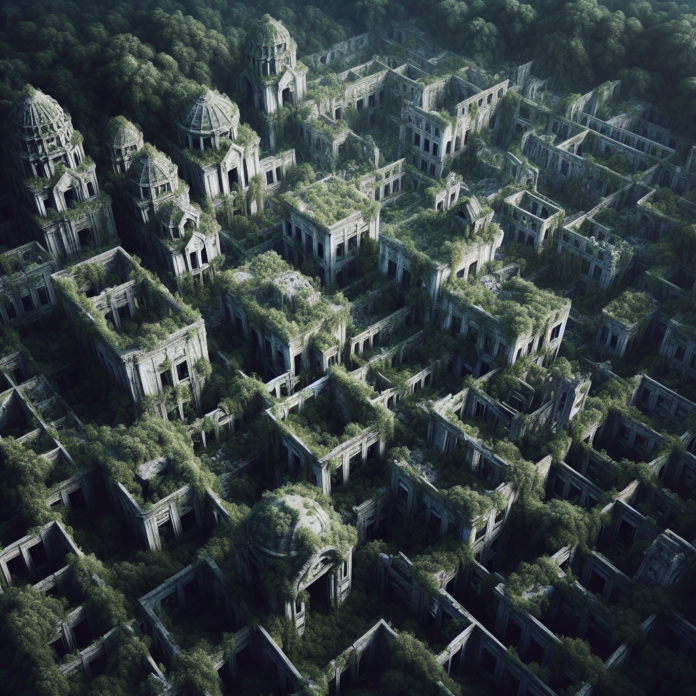
Embark with me on an exploration of the world’s most enigmatic deserted urban landscapes! Prepare to tread on the eerie silence of once-vibrant squares, wander through vacant skyscrapers echoing with bygone chatter, and peek into the spookily empty dwellings of humans who left their footprints behind. This vivid journey unfurls the tale of the top 10 mysterious abandoned cities, their chilling histories and the lingering quest to unearth what led to their downfall. So, buckle up for this virtual tour through the silent echoes of the human race’s most puzzling examples of urban desertion.
Machu Picchu, Peru
Historical background of Machu Picchu
Machu Picchu, dubbed as the “Lost City of the Incas,” is undoubtedly one of the world’s most famous abandoned cities. Nestled in the Eastern Cordillera of southern Peru, this awe-inspiring city was built in the 15th century under the reign of the Incan emperor, Pachacuti. Once a thriving metropolis, it was a nerve center of the Incan Empire, complete with an intricate network of stone structures, terraces, and temples.
Circumstances leading to abandonment
The sudden abandonment of Machu Picchu is steeped in mystery. One popular theory is that its population was decimated by an outbreak of smallpox, brought by the Spanish Conquistadors. Still, there’s no concrete evidence to support this. The city could have also been deserted following the Spanish conquest of the Inca Empire in the 16th century.
Current state and conservation efforts
Today, Machu Picchu is a UNESCO World Heritage site that attracts millions of visitors. Conservation efforts are in full swing to maintain its grandeur and minimize the impact of tourism. The site’s management focuses on protecting its unique architecture, followed by the preservation of its natural surroundings.
Petra, Jordan
Early establishment and cultural significance of Petra
Petra, meaning “rock” in Greek, was once the thriving capital of the Nabataean Empire from the 4th century BC. Its unique architecture, carved directly from the region’s vibrant red sandstone cliffs, is testimony to the builders’ remarkable abilities. Moreover, Petra’s strategic geographical location made it an essential crossroads for trade routes, linking China, India, Egypt, Greece, and Rome.
Possible causes of population exodus
Despite its might, Petra could not escape its fate. Continuous earthquakes, compounded by a shift in trade routes, led to Petra’s decline and eventual abandonment. It lost its economic significance and could not sustain itself, leading its inhabitants to leave.
Current preservation measures
Petra’s remarkable beauty and legacy have made it a UNESCO World Heritage Site. While decades of neglect took a toll on the city, extensive restoration efforts seek to preserve its unique architecture. Visitor management and regulations aim to balance out the tourism industry’s demands and the preservation of this archaeological gem.
Angkor, Cambodia
Rise of Angkor as a center of power
Angkor, with its iconic Angkor Wat temple, stood as the majestic capital of the Khmer Empire. From the 9th to the 15th centuries, it was an unrivaled powerhouse, with over a thousand temples spread across its landscape. Splendid architecture, coupled with a sophisticated irrigation system, made it a symbol of prosperity and power.
Theories behind its abandonment
The downfall of Angkor is ensnared in speculation and intrigue. Overpopulation, coupled with unsustainable irrigation practices, may have led to its downfall. Moreover, relentless invasions by the Thai and Chams, along with a shift in religious practices, also contributed to this loss.
Impact and presence in modern times
Today, Angkor stands as an awe-inspiring sight for tourists from across the world. It compels us to admire the genius of the Khmer civilization that meticulously carved each stone to perfection. Archaeological studies and conservation efforts are ongoing to learn more about this enigmatic city and protect it from further deterioration.
Pompeii, Italy
Pompeii’s role in the Roman empire
Pompeii, nestled along the western coast of Italy, was once a bustling trade hub and serene vacation spot for Rome’s wealthiest in the 1st century AD. Owing to its proximity to the sea, Pompeii became an essential commercial centre, offering a relaxed life replete with theatres, temples, and public baths.
Effects of the Vesuvius eruption for the inhabitants
The story of Pompeii came to an abrupt halt in 79 AD when a cataclysmic eruption from Mount Vesuvius buried the city under a thick layer of volcanic ash. This catastrophic event killed its inhabitants instantly, preserving their final moments in a macabre tableau.
Exploration and studies of Pompeii in present day
The rediscovery of Pompeii in the 18th century opened a fascinating window into Roman life and culture. Continuous archaeological work and preservation efforts have helped minimize damage from exposure and combat looting. Today, Pompeii stands as one of the world’s most famed archaeological sites, reminding us of the destructive power of nature.
Chaco Canyon, New Mexico, USA
Significance of Chaco Canyon in Native American history
Chaco Canyon, located in the remote desert of New Mexico, was the cultural epicenter of the pre-Columbian Native American civilization in the 11th century. This grand city boasted multi-story buildings and complex infrastructure that reflected the ingenuity and strengths of the indigenous people.
Speculation about the city’s abandonment
The causes behind the abandonment of Chaco Canyon remain a mystery. Some theories suggest prolonged drought periods and overuse of the land as potential reasons. Population growth, social upheaval, and migration to the flood plains could have also contributed to Chaco Canyon’s decline.
State of preservation and exploration today
Today, Chaco Canyon is a National Historical Park and a UNESCO World Heritage site, attracting anthropologists and tourists alike. Preservation efforts focus on maintaining its ancient structures and unraveling the mysteries of its history. The site also stands as a testament to the rich indigenous culture that once flourished in North America.
Tikal, Guatemala
Tikal’s marks as a Mayan city
Tikal, located in the lush rainforests of northern Guatemala, was a pivotal city during the reign of the Mayan civilization. From 200 to 900 AD, it was a thriving city with vast plazas, towering pyramids, and dynamic populations. The intricate symbols and glyphs inscribed on various structures provide a glimpse into Mayan lives.
Factors that may have led to its desertion
The exact reasons for Tikal’s abandonment remain a well-debated question amongst historians. However, the two most plausible hypotheses point towards long periods of drought and the exhaustion of natural resources due to overpopulation.
Aspects of conservation and tourism today
Today, Tikal is a UNESCO World Heritage site that draws attention from around the world. The Guatemalan authorities, in conjunction with global conservation groups, are working tirelessly on this site’s preservation. Also, visitor regulations emphasize sustainable tourism that respects and cherishes this magnificent city’s sanctity.
Pripyat, Ukraine
Establishment of Pripyat in the Soviet era
Pripyat, built in 1970, was a model city instituted by the Soviet Union. It was home to the workers of the Chernobyl Nuclear Power Plant and their families. With a thriving population, modern architecture, and amenities, Pripyat showcased the success of the Soviet system.
Impact of Chernobyl disaster on Pripyat
In 1986, the catastrophic Chernobyl nuclear disaster led to the evacuation of Pripyat. The explosion released a massive amount of radioactive particles, making the city uninhabitable. The city’s residents had to leave behind their homes and belongings, resulting in an eerie ghost town.
Continuing effects and conditions in the present day
Pripyat remains abandoned to this day, with radioactive levels too high for permanent human habitation. However, the city has become a dark tourism hotspot, with guided tours offering a glimpse into the lives disrupted by the nuclear disaster. The ghost town stands as a stark reminder of the catastrophic consequences of nuclear accidents.
Hashima Island, Japan
Industrialization and livelihood in Hashima Island
Off the coast of Nagasaki, Hashima Island was once a bustling center for coal production. With towering apartment buildings and bustling markets, it was the most densely populated place on Earth. The residents eked out a hard existence, mining coal from the seabed.
Reason for the sudden abandonment
The island was abruptly deserted in 1974 following the decline of the coal industry and the shift towards petroleum. The sudden desertion has left an eerie concrete jungle in the middle of the ocean, frozen in a bygone time.
Current state of the Island and its global recognition
Hashima Island, or Battleship Island as it is commonly known due to its shape, is now a major tourist attraction. The haunting, decaying buildings serve as poignant reminders of Japan’s rapid industrialization era. In 2015, it received global recognition as a UNESCO World Heritage Site.
Great Zimbabwe, Zimbabwe
Historical importance of Great Zimbabwe
Great Zimbabwe, dating back to the 11th century, was the capital of the Kingdom of Zimbabwe during the late African Iron Age. An architectural marvel and an important trade center, it left a rich cultural and historical legacy.
Probable explanations for its disappearance
Historians believe that the depletion of the region’s gold mines and increasing commercial competition led to the city’s abandonment. It could have also been due to over-farming, resulting in ruinous soil erosion.
Relevance and conservation status today
Despite centuries of neglect, Great Zimbabwe imparts a strong sense of cultural identity and pride for the people of Zimbabwe today. The Zimbabwean government and global heritage bodies are making significant efforts to preserve and restore this ancient city for future generations.
Mohenjo-Daro, Pakistan
The city’s prominence in the Indus Valley Civilization
Mohenjo-Daro, translating to the “Mound of the Dead Men,” was one of the world’s earliest urban settlements. As a key city of the Indus Valley Civilization, its advanced city planning, sanitation systems, and vibrant art and culture set it apart.
Mysterious events leading to its abandonment
The reasons for Mohenjo-Daro’s abandonment are shrouded in mystery. Speculations range from dramatic climate changes, natural catastrophes, to invasions by foreign civilizations. Despite numerous hypotheses, none has yet gained unanimous acceptance.
Current state and findings about Mohenjo-Daro
Today, the ruins of Mohenjo-Daro reveal an organized society with impressive engineering capabilities. As archaeologists continue to unearth its secrets, efforts are underway to minimize damage from weathering and elevation of the groundwater. As one of the world’s UNESCO Heritage Sites, Mohenjo-Daro serves as a reminder of our vibrant past.
In conclusion, these ghost cities, spanning different times and cultures, paint a vivid picture of our shared human history. Each bears testimony to the ruthlessness of time, the change of fortunes, and the unforgiving hand of nature. Yet, in their decay, they continue to fascinate and educate us on where we come from.