
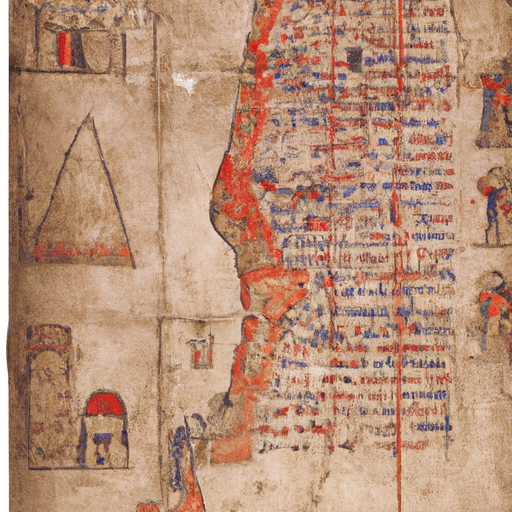
Have you ever been intrigued by the mysteries of the past that seem impossible to explain? This article dives deep into an exciting exploration of the top 10 unexplained archaeological discoveries that leave scientists, historians, and archaeologists scratching their heads. Stick with us as we uncover some truly mind-boggling finds that have yet to be fully understood.
Imagine uncovering a 2,000-year-old computer in the depths of a shipwreck, or stumbling upon giant stone spheres with no known purpose or origin. That’s right! There are so many extraordinary finds tucked away in the corners of history that continue to puzzle experts and spark curiosity amongst the public. Over centuries, numerous archaeological endeavors have unearthed objects and structures that seem out of place in their time, challenging existing historical narratives and our understanding of technological advancements.
From the cryptic Voynich Manuscript, and the perplexing Antikythera Mechanism, to the baffling Baigong pipes and the mysterious Nazca Lines – these discoveries defy conventional explanations. As you delve deeper into this article, you will encounter an array of archaeological enigmas that bear testament to the endless surprises our past holds. Isn’t it fascinating to know that there are still so many secrets waiting to be deciphered?
So why not take a leap into the unknown, and join us on this marvelous and mysterious archaeological adventure? Who knows what you might discover? And with every unexplained find, remember that it brings us one step closer to understanding the complexity of human history and the mysteries of our captivating world. It’s time to unleash the archaeological detective in you! Ready to start unravelling secrets from the dustbin of history? Let’s get started!
Top 10 Unexplained Archaeological Discoveries
Our world is full of mysteries that seem to defy explanation and challenge our understanding of history and civilization. From intricate ancient devices to massive stone structures, these puzzling archaeological discoveries have left scientists and researchers scratching their heads. Let’s explore some of these most fascinating and unexplained archaeological finds.
Antikythera Mechanism
Incredible complexity of the device
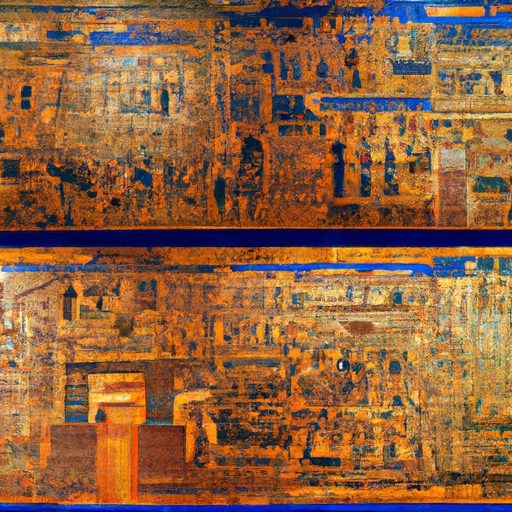
Imagine holding a device that predates modern machinery by over a thousand years. That’s the Antikythera Mechanism. Its complex network of gears and dials is awe-inspiring and speaks to the absolute genius of its ancient creators. It’s akin to finding a smartphone in medieval Europe; it’s simply that far ahead of its time.
Significance in Greek history
The Antikythera Mechanism holds a high significance in Greek History. The mechanism was found in a Roman-era shipwreck, but its design and function firmly place it in the Greek realm. Its link with celestial cycles provides us a unique glimpse into Greek astronomy’s advanced nature.
Theories about its use and origin
Even after a century of discovery, theories around its origin and use abound. The most accepted theory is that it was used as a celestial calendar, predicting the positions of stars and planets. But who made it and how they could build such a complex device in ancient times remains a mystery.
The Voynich Manuscript
The indecipherable text
Next on the list is the infamous Voynich Manuscript, a book filled with a strange, indecipherable language and bizarre illustrations. No one has been successful in deciphering the text, making it one of the most intriguing and frustrating ancient puzzles.
Physical description and content
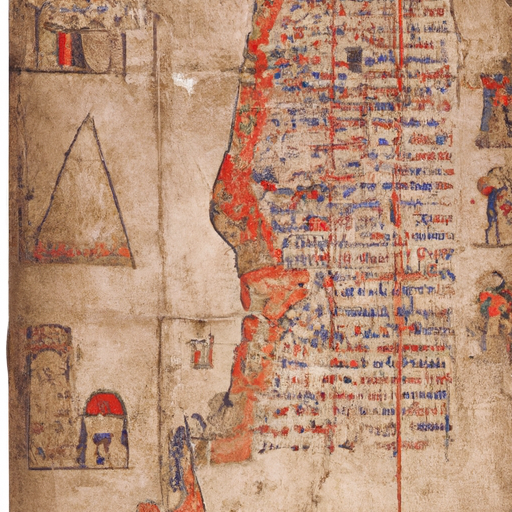
The Manuscript itself is physically fascinating, made of soft, uneven pages of vellum filled with an unknown script. Its content, from astrological diagrams to unknown plants, is puzzling and holds no parallels in known texts.
Proposed hypotheses about its meaning
Many theories have sprung up about the Voynich Manuscript’s meaning —from the work of a medieval con artist to the record of an alien civilization. However, these remain theories, and the manuscript’s true purpose continues to baffle us.
The Piri Reis Map
Accuracy of the geography
One of the most startling unexplained archaeological discoveries is the Piri Reis Map. Despite being crafted in the 16th century, the map depicts the coastline of Antarctica free of ice, a fact only recently confirmed with modern technology.
Possible source materials used
The Piri Reis Map claims to have used sources from Alexander the Great’s time, possibly explaining the map’s startling accuracy. However, how these ancient cartographers could have envisaged such accurate geography is a mystery that is yet to be solved.
Speculations about its creator
Piri Reis, a famous admiral of the Turkish fleet, is known to have created the map. However, the techniques and resources that he used to create such an impressively accurate map continue to be speculation, adding to the unearthly charm of this enigma.
The Great Pyramids of Giza
The unparalleled precision of construction
The Great Pyramids of Giza, with their grandeur and precision, have baffled humanity for centuries. The amazing precision with which these pyramids align to the cardinal directions and the stars speaks volumes about the sophistication of their architects.
Debate over the construction methods
The construction methods of the pyramids are a subject of fierce debate among archaeologists and historians. Building such massive structures with such precision, using primitive tools and methods, seems almost impossible by today’s standards.
Mysteries of the internal chambers
The pyramids’ internal chambers add another layer to the mystery. Many chambers are still inaccessible, and what they hold – whether treasures, tombs, or something else entirely – remains a tantalizing puzzle, waiting to reveal its secrets.
Nazca Lines
Aerial views required for full appreciation
The Nazca Lines of Peru – enormous geoglyphs etched into the desert — are so huge that their full magnificence can only be appreciated from high up in the air. What’s most mysterious is how a culture without the ability to fly could create such large-scale aerial art.
Variety and scale of the designs
Its designs, from hummingbirds to monkeys, span across miles. This sort of grand-scale artwork, without the ability to see from above, points to a level of planning and execution that is simply mind-boggling.
Controversial theories about their purpose
The mysteries of their purpose continue to fascinate us. While theories of the Nazca Lines being astronomical calendars, to other-worldly landing strips, are numerous, no clear consensus exists, and the purpose of the lines remains an enigma.
Baalbek Megaliths
Incredible size and weight of the stones
The Baalbek Megaliths in Lebanon, with their enormous stone blocks, some weighing over a thousand tonnes, provoke wonder and disbelief. How ancient people transported and placed these massive stones remains one of archaeology’s greatest puzzles.
Unknown methods of construction
Without the use of modern cranes or other machinery, it seems practically impossible to move such enormous stones. Yet, they stand there, a testament to the ingenuity and willpower of a people lost to time.
Ancient lore and surrounding mysteries
The local folklore surrounding the site enhances its mysterious aura. From giants of old to tales of celestial beings, these stories, while unproven, spice up the history of the site, drawing intrigue and amazement from all over the globe.
Yonaguni Monument
The debate of its natural Vs man-made origin
Under the waters off the coast of Japan, the Yonaguni Monument, a massive underwater rock formation, has sparked a debate: is it a natural formation or the ruins of an ancient civilization?
Mysterious carvings and formations
The monument, with its sharp angles, parallel edges, and what appear to be intricate carvings, seems too extraordinary to be natural. Yet, the debate continues, with each camp providing compelling arguments.
Theories about its purpose and the civilization that created it
If man-made, theories about the monument ranging from a lost ancient civilization to remnants of the mythical Atlantis. However, without definitive proof, these theories remain in the realm of speculation, surrounded by the deep mystery of the seas.
Tecaxic-Calixtlahuaca Head
Out of place artifact controversy
The next mystery, the Tecaxic-Calixtlahuaca Head, makes us question the widely accepted timeline of cross-continental contact. This small terracotta head, clearly of Roman style, was found deeply embedded in a site in Mexico, thousands of miles from any known Roman influence.
Physical characteristics and material
The artifact, made out of terracotta, shows all the characteristics of Roman art, with its distinctive style not found in the local art forms of the period. The mystery deepens when consider that it was found in a layer dating back to several centuries before Europeans set foot in America.
Implications for understanding intercontinental contact
The implication here is massive. If authentic, it could mean that the Romans reached America way before Columbus, which would turn the history of human exploration on its head. However, without further evidence, it continues to be a subject of intense debate.
Gobekli Tepe
Advanced age of the site
Claimed as the oldest known temple in the world, Gobekli Tepe in modern Turkey, dated back to the 10th millennium BCE, predates Stonehenge by thousands of years. It challenges the established narrative of the birth of civilization, effectively rewriting our understanding of human history.
Complexity and sophistication of the carvings
Despite its incredible age, the temple is complex, featuring massive stones carved with detailed relief. The sophistication of the construction and carving contradicts the hunter-gatherer existence of people in that period.
Implications for understanding the history of civilization
Gobekli Tepe stands as a testament to the capabilities of our early ancestors, far beyond what we previously thought possible. It forces us to rethink our history, compelling us to acknowledge that complex societies might have existed earlier than we thought.
Giant Stone Spheres of Costa Rica
Mastery required for their creation
The giant stone spheres of Costa Rica, perfectly round and larger than an average human, are an archaeological marvel. The skill and knowledge required to shape these perfect spheres from rough stone is astonishing, hinting at a sophisticated understanding of stone-working.
Unknown purpose of these spheres
What were these large, spherical stones used for? Were they status symbols, celestial models, or used for some other purpose entirely? With no written records or folklore, their purpose remains a mystery, making them even more intriguing.
Theories about the culture that produced them
Who made these spheres, and how? Were they the product of a lost civilization, or are they the remains of a culture yet to be discovered? They’re a puzzle waiting to be solved, tantalizing in their silence.
Conclusion
Comparison and commonalities between the discoveries
All of these unexplained archaeological discoveries, whether it’s the intricate Antikythera Mechanism or the massive stones of Baalbek have one thing in common – their existence pushes the boundaries of what we thought was possible in the ancient world. They all speak to the ingenuity and sophistication of our ancestors, challenging our understanding of history.
Implications for understanding our past
These ancient enigmas force us to continually reassess our understanding of the past. They highlight that there is still much to learn about our ancestors, pushing us to dig deeper, to question more, and to continually strive for a better understanding of our past.
The future of archaeological exploration
The future of archaeological exploration is filled with promise. As technology advances, so does our ability to explore and analyze. Each of these mysteries holds the potential to unlock game-changing insights into human history. Each day might bring a new discovery, or a novel interpretation of existing ones, paving the way to a better understanding of our mysterious and fascinating past.
As you journey through these chapters of our shared history, remember that every puzzle is also a doorway, and beyond each doorway, a world – ancient, mysterious, and waiting to tell its story.