Halloween is the favorite holiday for many children and adults in several countries around the world. Not only do they get to dress up and play some of their favorite characters or personas, but they also get to treat themselves to delicious candy as they encounter new faces in their communities.
Activities associated with Halloween include trick-or-treating, attending costume parties, apple bobbing, and playing pranks. For the most part, these activities are aimed at having some harmless fun. The holiday is observed on October 31 each year, however, it is usually foreshadowed for seemingly the entire month of October as people begin getting ready. You can feel the Halloween vibe as media, stores, and homes all start adopting eerie themes. One of the most popular decorations that contribute to this is the jack-o-lantern, which for some is the face of the holiday.
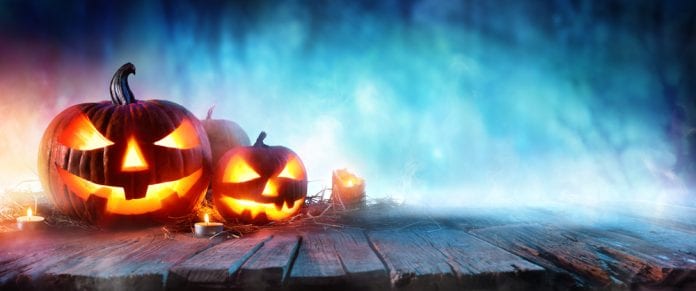
Jack-o-lanterns are created using pumpkins. The pumpkins are carved to create two eyes and a jagged mouth. They are then cleaned, made hollow, and a light source is inserted. The result is a scary-looking face with seemingly glowing eyes and a glowing mouth. They are usually placed outside homes and other buildings and lit at night to give the desired ominous vibe. Like any other holiday, there is a lot associated with the origins of Halloween. With so many different customs and traditions, one must assume that they all originated somewhere, right? Therefore, this article looks at 10 things you should know about the history of the famous holiday.
10It Originated from a Religious Festival
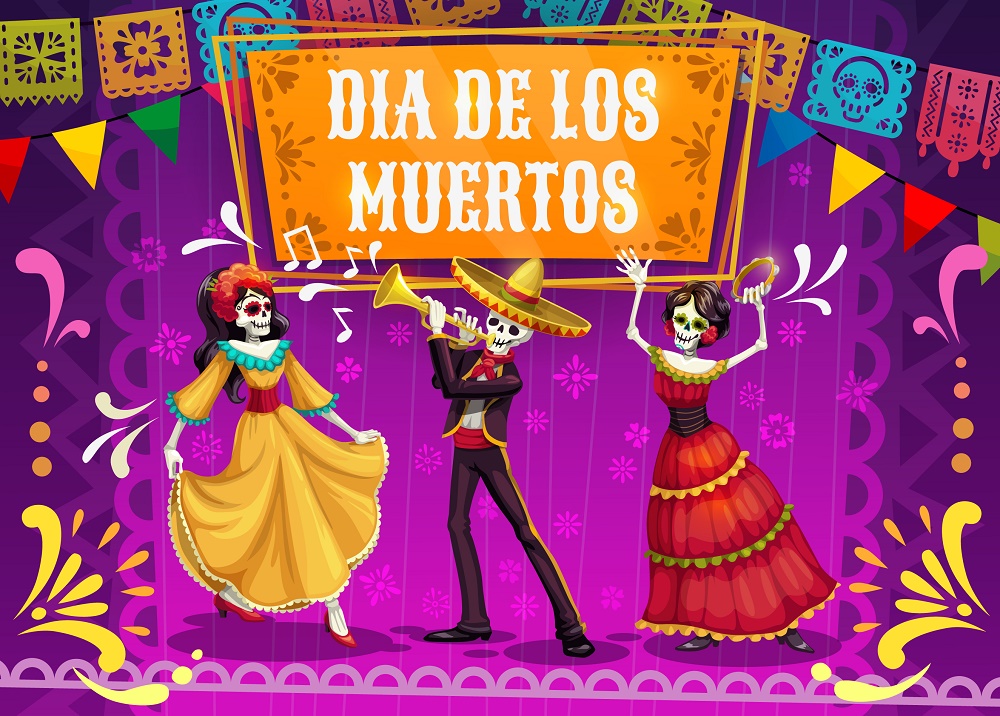
Though Halloween has existed as far back as most people can remember, it was not always that way. The holiday now known as Halloween was born out of an ancient pagan Celtic festival known as Samhain. The word Samhain is Gaelic and is, therefore, pronounced “sow-win.” Samhain began out of Celtic spiritual customs. From October 31 to November 1, the festival is held as a symbol of the world’s transition into the year’s dark half.
Partakers in the tradition believe in the existence of a spirit world that is affectionately referred to as the “Otherworld.” To them, there are barriers that normally exists, which prevents normal interactions between those of the physical world, and those of the spirit world.
It is believed that during Samhain, these barriers are weakened or removed. The result is that the various denizens of the “Otherworld” and humans can more freely interact. This festival had much significance to the Celts. It was one of four fire festivals, which took place quarterly each year. Samhain was billed as the most significant of these festivals as it took place halfway between the fall equinox and the winter solstice. Various monsters were associated with the festival for which Celts prepared offerings. Anyone who committed crimes during the festivals received a death sentence for disrespecting the gods.
Festival activities included burning hearth fires, lighting a community fire using a wheel, cattle sacrifices, alcohol consumption, and prayers. A military aspect of the festival also existed. Commanders of soldier has holiday thrones prepared for them.
9There Is Christian Influence on Halloween
The aesthetic and the air of Halloween has caused many to believe that the holiday has purely dark influences. However, it is widely believed that the religion of Christianity also has a hand in the holiday’s customs. The day following Halloween (November 1) is when Christians celebrate the holy day known as All Saints’ Day or All Hallows Day. This festival honors all saints, whether they are known or unknown.
October 31 is, therefore, known as All Hallows’ Eve in Christianity. It is a time when Christians pray for the dead as it is believed that the souls of the departed have not completely crossed into the afterlife. By the 12th century’s end, Christians began engaging in the practice of “Souling.” This is the baking and sharing of soul cakes for christened souls. Trick-or-treating in Halloween is said to have been born from this practice.
Traditionally, Christians believed that departed souls did not leave earth on All Saints’ Day. This meant that All Hallows’ Eve provided one last chance for them to get revenge on their enemies ahead of their inevitable departure to the afterlife. Therefore, people wore masks and costumes to disguise their identities just in case any of these souls were seeking revenge on them. This is believed by some to be the origin of the costume-wearing practice that is associated with Halloween.
The days of October 31 to November 2 are collectively known as Allhallowtide to many Christians. It begins with All Hallows’ Eve, then goes into All Saints’ Day, and concludes with All Souls’ Day on November 2.
8“Trick” Wasn’t an Empty Word

These days, the practice of trick-or-treating is one in which participants are treated to various candies. However, there was a time where the tricks were more prevalent than the treats. Pranks are still a part of the holiday to some extent, however, that aspect has been greatly toned down.
In the late 1800s, pranks were very commonplace and well established as a part of Halloween. In Canada and the United States, these pranks included the egging of houses, opening farmers’ gates, and tipping outhouses. While the pranks had a mild start, they got progressively worse. By the time the 1920s rolled around, the tricks began to get more serious and the vandalism became a dangerous problem, as well a point of concern.
It is believed that in response to pranks getting so out of control, town leaders and parents searched for a solution that would encourage partakers to shift their focus from causing mischief. The result was the encouragement of dressing up and trick-or-treating. In addition to the Christian influence mentioned above, some people believe that this is the reason costumes became a mainstay in the celebration of Halloween. Trick-or-treating gained a lot of popularity, especially considering the tasty rewards that accompany it. While pranks are still played around Halloween, they are more mild, fun, and manageable than they were almost a century ago.
Some celebrators of Halloween that enjoy the pranking aspect came together and adopted October 30 as the day for pranks. This is only seen in some areas though, and the pranks are still mild.
7It Wasn’t Always Practiced in America
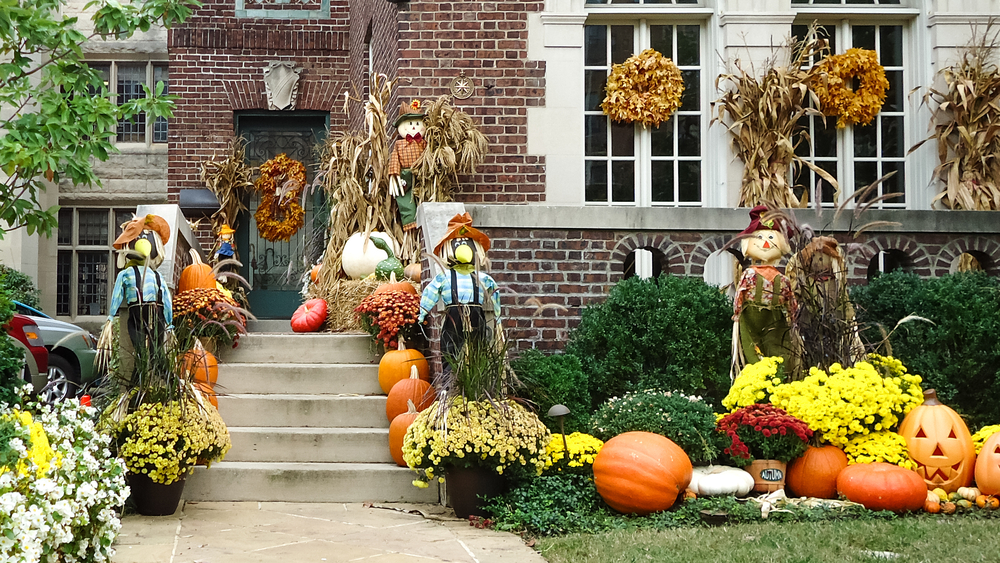
It is hard to think of a country more synonymous with Halloween than the United States of America. Other countries fully or partially practice the holiday, but it seems like a mainstay in the USA more than it does anywhere else. However, this was not always the case as there was once a time when the holiday didn’t exist very much in the country.
Colonial New England has stringent Protestant belief systems, which played a huge role in the establishment of what the populous could do. This belief system is the reason that the Halloween celebration was very limited. Currently, however, Halloween was very prevalent in both the southern colonies and in Maryland.
As time passed, traditions and beliefs of the American Indians and various European ethnic groups began to merge. Not only did this result in a more widespread celebration of Halloween, but it also resulted in a version of it that was unique to America. Initial celebrations included public events in which fortune-telling, storytelling, dancing, and singing took place. These events were referred to as “play parties.”
Ghost stories and pranks were a staple in Colonial Halloween festivities. In the mid-19th century, the annual practice became commonplace, however, the holiday was yet to be celebrated across the entire country. The second half of the 19th century brought new immigrants with it who were mostly Irish. The Irish were looking for a place for refuge as they were fleeing the Irish Potato Famine. They played a key role in the popularization of Halloween celebration nationally.
6Halloween Owes Its Name to a Poem
“Halloween” is not your typical English word, so it is not uncommon for people to wonder how such a name was chosen for the celebration. In 1785, a Scottish poet named Robert Burns created a poem named Halloween, which is credited with helping to popularize the word.
You may be wondering how he came up with such a word and if you are, it is not as complicated as you may think. Based on etymology, the word is somewhat a compound one, consisting of two words. The first of the two words is “Hallow.” Hallow refers to a holy person and is a reference to the saints who are honored by Christians on All Saints’ Day. The second segment, “een,” is a contraction of the word evening, which translates to “the evening before.” This meaning of “eve” is why it is used in terms such as Christmas Eve and New Year’s Eve.
Even though the name of the holiday has a religious origin, the Catholic church does not recognize Halloween as a religious holiday. In modern times, Halloween has been connected to dark themes such as witchcraft and devil worship. The Catholic Church also does not approve of these connections. Therefore, the word “Halloween” translates to mean “The evening before holy people are celebrated.” This is fitting as Halloween takes place the day before the celebration of All Saints’ Day (also referred to as All Hallows’ Day).
So, the next time you say the word Halloween, just remember it has a deeper meaning that you can share with the world.
5Trick-or-treating Is an Adopted Tradition
Trick-or-treating is one of those activities that are a staple of Halloween in the United States, but it did not originate in the country. It is a borrowed custom that has roots in both Irish and English traditions.
In America, it began as an alternate version of what it is known as today. Dressing up in costumes was still a large part of the activity, however, it was not always sweets that people were expecting. Initially, persons went door to door asking for food and money before the practice evolved into the trick-or-treating of today, where they go for sweets and play a fun trick if none are received.
Young ladies who wanted a glimpse of the future did tricks with mirrors, yarn, or apple parings as they believed that these activities could give insight into the physical features or the name of their future husbands. Around the late 1800s, community leaders and the papers encouraged parents to filter the more intense horrific elements out of the celebration. This move caused Halloween to transition into a more sociable holiday. Instead of being about scares, pranks, and the dark arts, community get-togethers became the focus. This caused a shift to more festive costumes and it also resulted in a greater focus on Halloween themed foods and games.
By the time that the 20th century rolled around, celebrators of Halloween had all but forgotten the darker and the religious elements that were previously synonymous with the holiday. Today, the most commonly accepted method of celebrating Halloween is through parties for adults and children.
4There Are Halloween Specific Foods
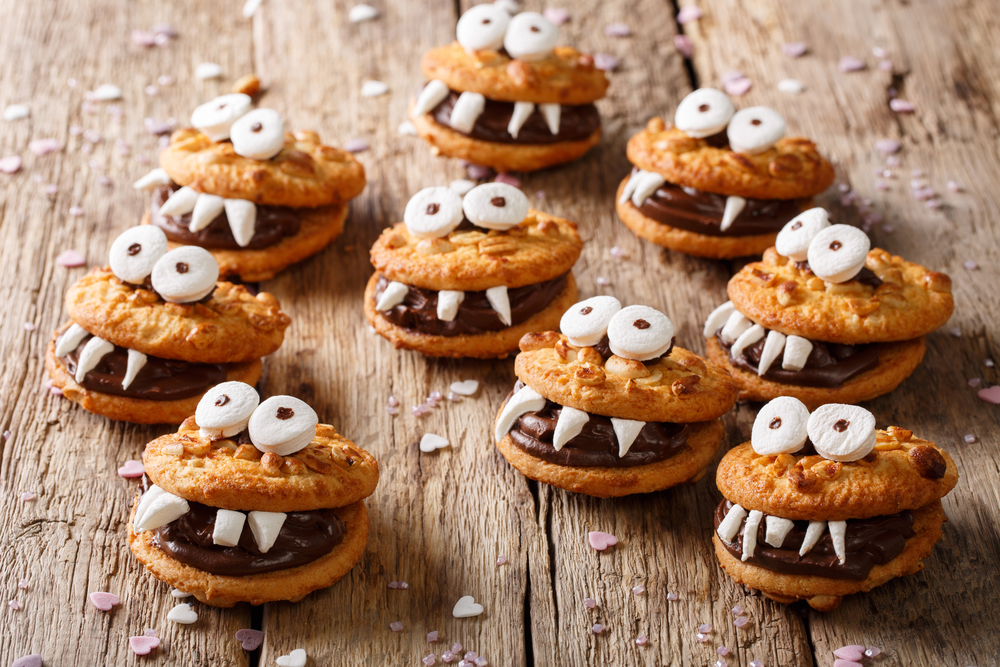
Though Halloween has evolved over the years, the influence of history is present in the foods that are consumed during the celebration of the holiday.
Candy apples (or toffee apples) are some of the most common Halloween treats available. This began with the Northern Hemisphere (specifically Great Britain and Ireland) because the yearly apple harvest takes place around the time that the holiday does. These treats are made by dipping and rolling apples in high fructose syrup. Some people add a subsequent layer of flavor by rolling the syrup coated apples in nuts.
In the past, candy apples were even more common than they are now, as they were regularly given to children. Though they were enjoyable treats, the practice of giving them to children began to lessen in the United States because of tales that pins and razor blades were being placed in the treats.
For the most part, these tales were no more than rumors. There is evidence that there were a couple of cases, however, it was very rare and never resulted in any serious injury. The fear of these occurrences was created purely through media reporting, however, parents wanted to keep their children safe and so the practice started to become discouraged.
In fact, when the stories were the most rampant, hospitals conducted x-rays to check the apples, and when there was tampering, it was usually by the parents. Apart from candy apples, Halloween themed foods from historical influences include Bareback (Ireland), Bonfire toffee (Great Britain), and Colcannon (Ireland).
3There’s a Dark Secret behind Jack-o’-lanterns
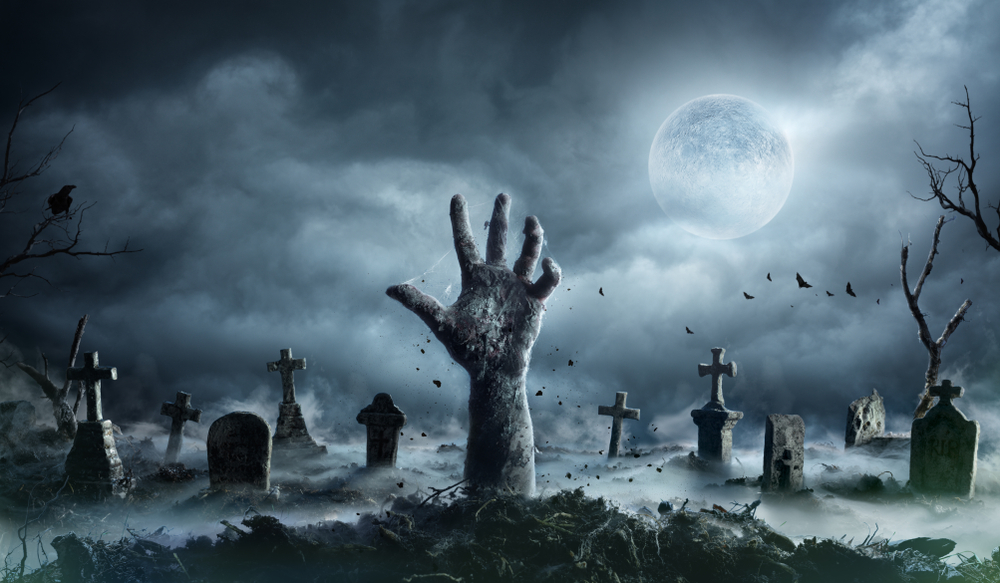
The look of the carved pumpkins/turnips, and the name “jack-o-lantern” didn’t emerge from thin air. The jack-o-lantern comes from a dark Irish folk tale. The tale surrounds a character of Irish legend named “Stingy Jack.” He was also referred to as Jack O ’Lantern.
In the tale, Jack is described as a conman. It is said that he tricked the devil on several occasions. The prank that the tale focuses on, however, is one in which Jack made the Prince of Darkness agree to never claim his soul. How did Jack do this? Well, he trapped the devil in a tree by carving a cross symbol into the bark.
In Christian belief and pop culture, the devil and his denizens are unable to touch crosses. Satan wanted to climb down, so Jack made the deal and the devil agreed. After the encounter, Jack continued his conman ways and lived a horrible life. Upon his death, Jack thought that the devil’s inability to claim his soul meant that he had a free ticket to heaven. He learned that this was not the case as God did not allow him into paradise because of his behavior on earth.
Dumbfounded, Jack tried to go to Satan, however, the devil kept his agreement and did not accept his soul. Instead, he threw blazing coal from hell at Jack. As he had nowhere to go, Jack put the coal in a turnip and used it as a lantern as he was then doomed to wander to find somewhere to rest.
2Haunted Attractions Are over a Century Old
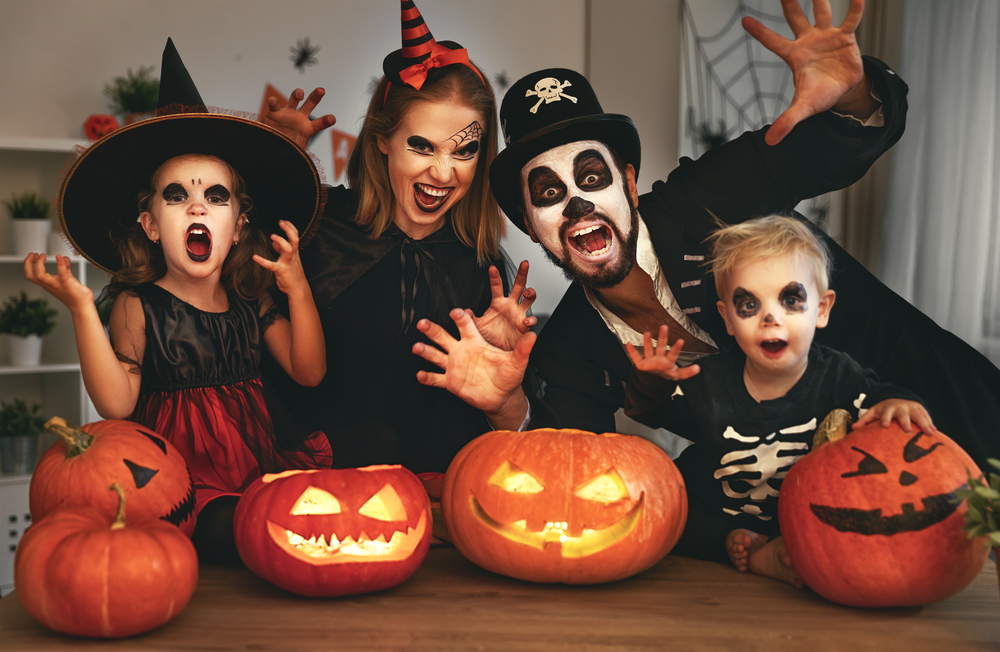
There is no denying that some horror elements are great sources of entertainment. This is one of the reasons why the shift from a darker, more prank-based version of Halloween caused the holiday to become as widely accepted as it is today.
Haunted attractions are a big part of the celebration because of the mystique of the unknown that surrounds them. Therefore, many companies construct these spooky locations to provide a source of entertainment to those taking part in the Halloween festivities.
Purpose-built haunted houses are widely thought to be a modern trend, however, the tradition started over 100 years ago. The first such recorded attraction was opened in 1915 and it was situated in the large English village of Liphook. The attraction was steam-powered and has a similar look to a carnival funhouse. The house still stands to this day as a part of the Hollycombe Steam Collection.
Haunted houses began to catch on in the 1930s in the USA, which was around the time that trick-or-treating began to gain popularity. Over two decades later, in the 1950s, the houses began to take shape as a major Halloween attraction. The first of these was in California. This was the San Mateo Haunted House. It began operations in 1957 and was aimed at children. More haunted houses have opened since, and they now even form a part of theme parks such as Disneyland and Six Flags.
1Halloween Symbolism has Diverse Roots
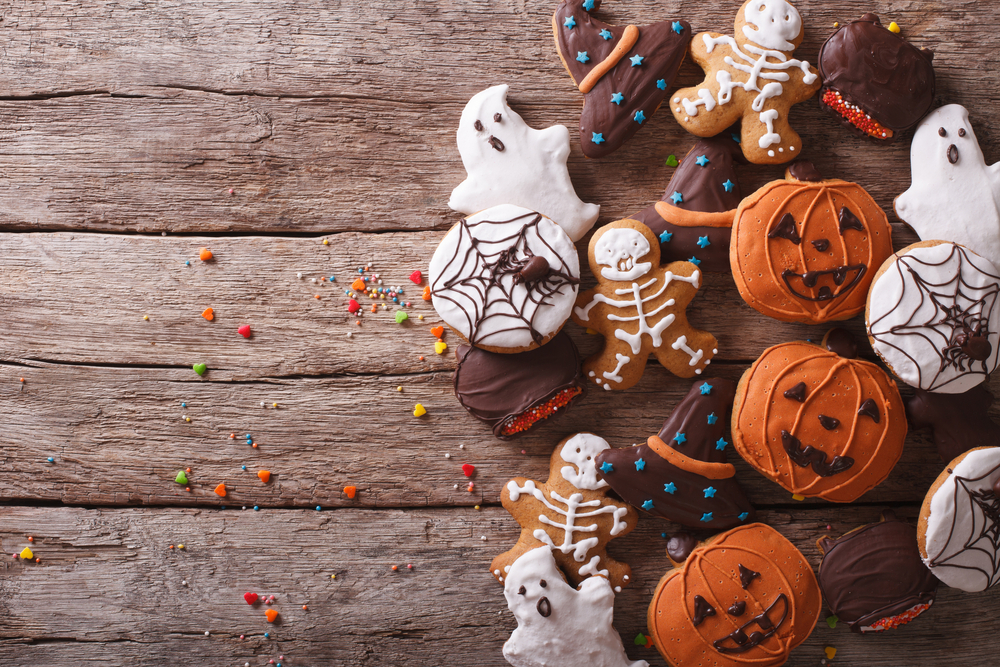
A part of what gives Halloween its unique identity is the various symbols associated with it. Many of these symbols have been developed over the years and they all have backstories with origins in different parts of the world.
The jack-o-lantern, for example, is a symbol with Irish influence as noted above. While the Irish and Scottish use turnips to make them, Americans use pumpkins as they are both larger and easier to carve. Another big part of Halloween symbolism is artifacts that imply death or the existence of an afterlife. Depictions of the Last Judgement, in addition to graves and zombies, are examples of such symbolism. Much of this has its roots in Christian eschatology, which is a branch of Christian study that deals with things of the end times.
Beings such as the Frankenstein monster and vampires are also a mainstay in the holiday. These are references to various Gothic and horror pieces of literature such as the “Frankenstein” and “Dracula” novels. Skulls are another commonplace part of Halloween and are usually used as decorations or costume accessories. The integration of the skull is a Golgotha reference. This is a Christian term, which is a reminder of death and the fact that human life transitions to an eternal form.
The traditional colors of Halloween are black, orange, and sometimes purple, and themes associated with the holiday tend to be around mythical beings, death, and evil. This ties into the various cultural and religious beliefs surrounding the afterlife and the spirits that wander the world.
Conclusion
Halloween is a staple in not only the United States but also in many countries around the world. Many people believe that the holiday is historically American, simply because it is so prevalent in many US TV shows, movies, and cartoons. However, its roots can be traced back to a Celtic festival known as Samhain, which happened at a time where celebrators believed that barriers between the physical and spiritual world were removed. While the festival is largely responsible for what is now known as Halloween, there are numerous influences on the identity that the celebration has today. The customs, food, apparel, and environmental components can be attributed to religions such as Christianity, as well as to various countries such as Ireland and Great Britain.
These influences came in various ways such as rituals, recipes, or even folk stories. One of the best examples of this is the popular jack-o-lantern, which can be classified as an environmental component or an apparel accessory. Its origin lies within a dark Irish folk tale.
Halloween tends to revolve around somewhat dark themes such as death. Even so, these themes are incorporated in a fun way as opposed to a sinister one, and they blend well into elements of costumes and decorations. While the holiday is now one based on community involvement and fun, there was a time when there was a much darker focus and there were dangerous pranks, which made it a very off-putting event. Through good advice and community effort, however, the holiday was transformed into what it is today.