

Driving is part of the American way of life. Americans drive more than citizens of any other country. Despite the popularity of driving, it is actually one of the most dangerous modes of transportation available today.
Driving is so dangerous that each year, 1.25 million people are killed in car accidents around the world. An additional 20-50 million are wounded or otherwise disabled in car accidents. Regardless of these numbers, millions of Americans jump right into their cars in the morning and begin their drive to work without a second thought. Regularity makes people complacent, and complacency can feel like safety.
Compare this to flying, which many people have an irrational fear of, which results in, on average, fewer than 1000 deaths per year. In addition, most of these deaths do not occur on commercials flights. Most airplane-related deaths occur in ‘bush planes’ which serve as a lifeline to remote areas, particularly in Alaska and Canada. Bush planes are small, lightweight aircraft that usually have a single-engine and are used to deliver supplies and people to remote areas that lack road access.
With advancements in car safety technology, auto deaths are on the decline, but it could take decades for the world to see noticeable results due to the slow replacement of older cars that lack these innovative solutions.
Not every danger can be solved by improving the design of the car, however. Some roads are in areas where the mere existence of a road presents a danger to those who choose to drive on them. Whether it is the threat of landslides, boulders, flash flooding, or simply hugging a cliffside, these are 10 of the most dangerous roads in the world.
Fairy Meadows Road: Pakistan
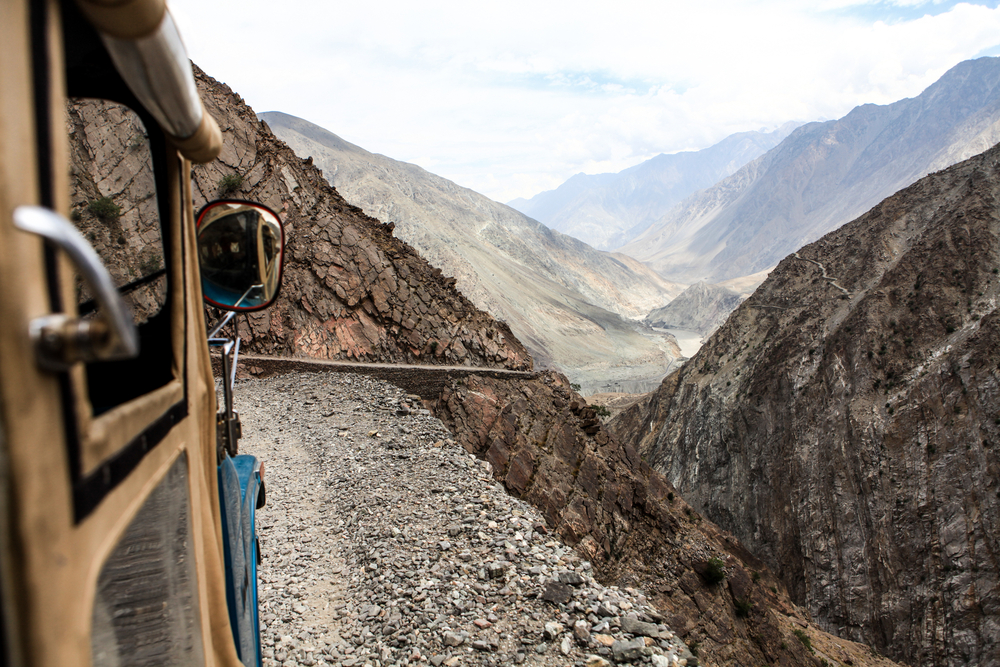
If you judge this road based solely on the name, you may get the impression that this is a pleasant, backcountry road that winds through rolling hills and green pastures. You would also be entirely wrong in that assumption. It is indeed a beautiful drive, but Fairy Meadow Road is consistently ranked as one of the most dangerous roads in the world, and for a good reason.
Several factors contribute to the extreme danger of driving on Fairy Meadows Road. First, the gravel surface is completely unmaintained by the Pakistani state or local governments. This means the chances of sliding on loose gravel are extremely high.
The second aspect of this road that makes it so dangerous is the elevation which reaches over 10,000 feet. At this elevation, the oxygen in the air becomes thinner, making it difficult to breathe. While most healthy people can handle the lower oxygen levels without any problems, those with respiratory issues risk light-headedness and even fainting at times.
Even if you ignore the loose gravel and thin air, this is still not a safe road. It is so narrow that only the smallest SUVs can drive abreast. Anything larger than a Jeep Wrangler or 1990s model compact pickup cannot pass on this road. If you do attempt to pass, you risk falling off the side of a cliff onto large boulders. Some of the boulders at the base of the mountain can be larger than a double-decker bus. To reduce fatalities, Fairy Meadows Road closes to travel during the winter.
Karakoram Highway: Pakistan to China

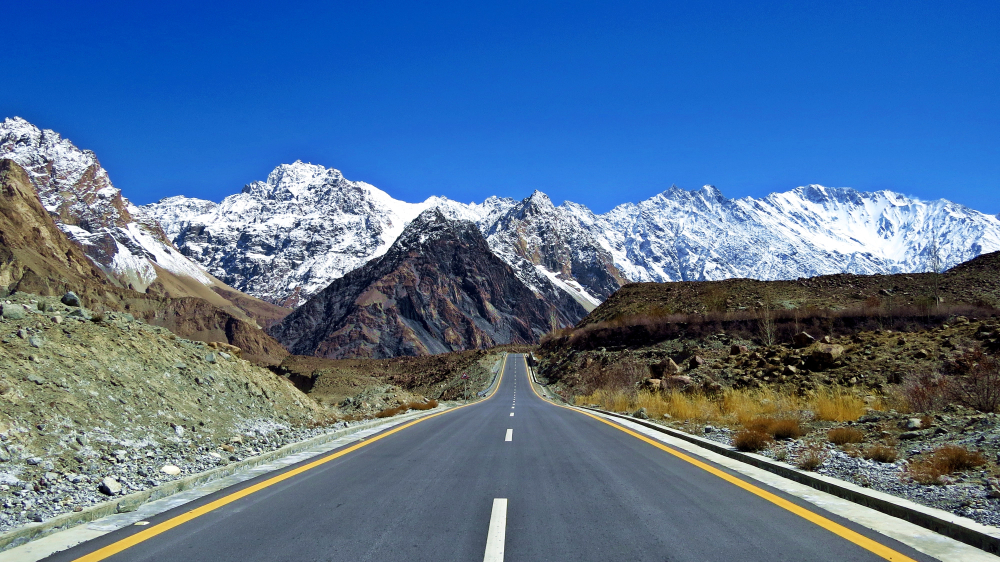
The Karakoram Highway serves as a vital backbone between Pakistan and China. This highway is over 800 miles long and prone to avalanches, landslides, flooding, and extreme snow conditions. The Fairy Meadows Road mentioned above is actually an off-shoot section of this much larger highway.
There are many dangers along this seemingly endless stretch of road. It is not uncommon for large vehicles like busses to slide off the road and tumble down into the valleys that line the road, or for landslides to knock cars off the road.
When you combine the narrow road, steep cliff faces, and often icy conditions, it is no wonder that the Karakoram Highway is one of the deadliest roads in the world. One aspect of the road that does contribute to reducing the danger is the fact that the highway is paved. Unlike many other roads in the area, including the Fairy Meadows Road, the Karakoram highway is paved from start to finish, lacking the gravel sections that you would expect to see.
Not only is the Karakoram highway extremely dangerous to drive, but it is also one of the deadliest construction projects in modern history. Construction began in 1956 and took 20 years to complete. During this time, around 800 Pakistani workers and 200 Chinese workers died building it.
North Yungas Road: Bolivia

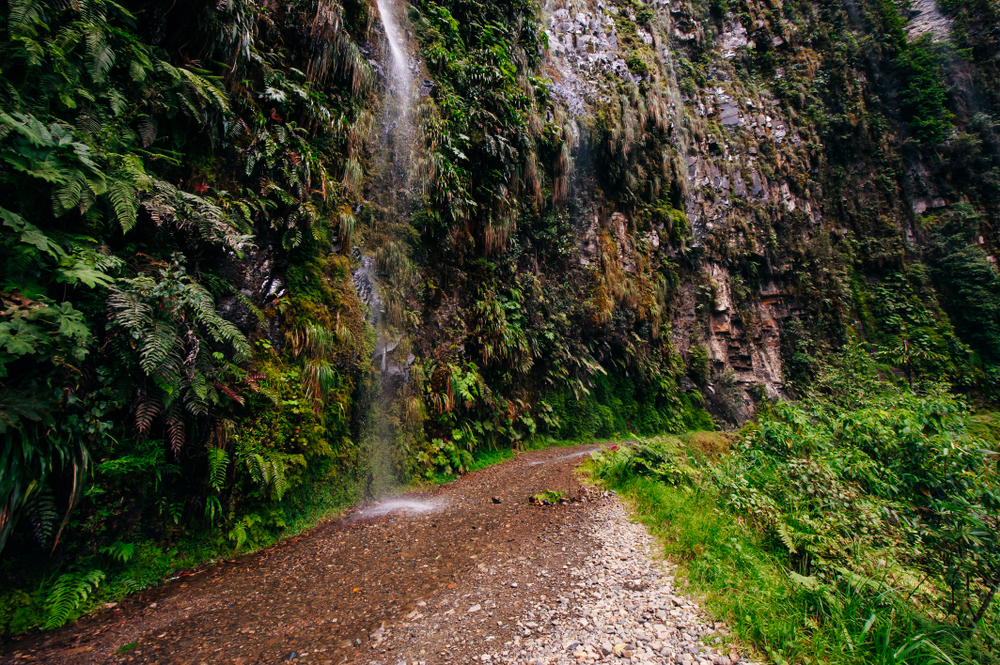
As one of the deadliest roads in the world. The North Yungas Road in Bolivia has certainly earned its nickname of “Death Road.” The road is so dangerous that between 200 and 300 people die along its route each year. With numbers like this, it is easy to see how it got its sinister nickname.
Danger is all around when driving the North Yungas Road. To start, the elevation ranges from 4000 all the way up to 15,000 feet above sea-level. At these elevations, it is not uncommon for clouds to form along the road, greatly reducing visibility. In addition, rain can move in in a matter of minutes, making the road slick and reducing visibility even further.
The road is also incredibly narrow, at only 12 feet wide in most sections. This makes passing oncoming traffic a difficult and dangerous task. Adding further danger, the road has no guard rails as it runs through the mountains. One wrong move and there is nothing to stop you from careening down a cliff. Currently, only cyclists are allowed on the road. There is no word right now if the government plans to reallow motor vehicles to access the road in the future. It is unlikely that the road can reopen in its current state.
Dalton Highway: Alaska

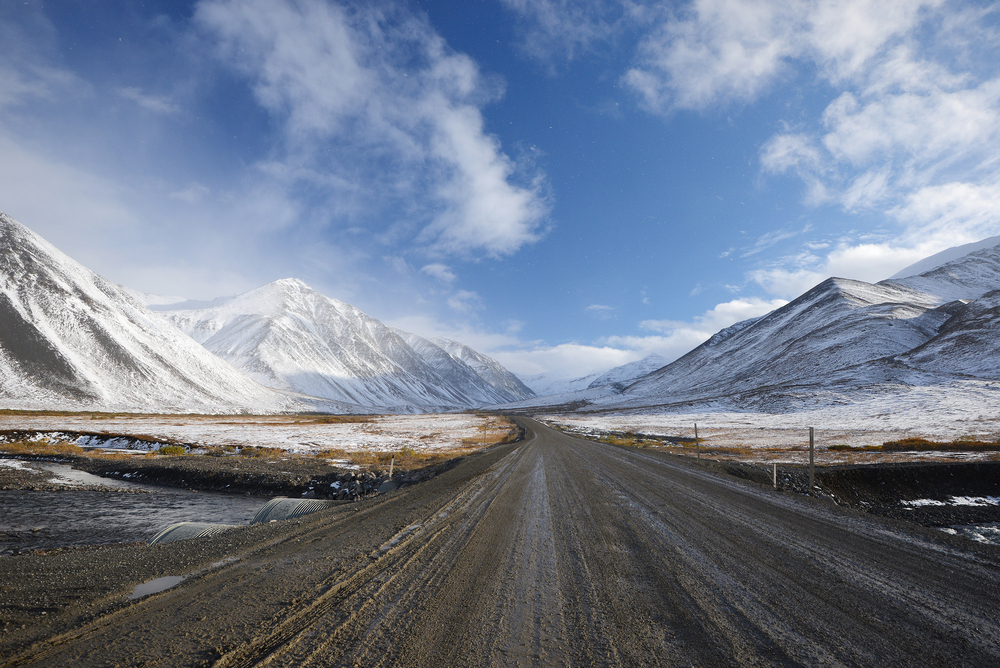
Here is one that is a little closer to home, though not as close as you might think. In fact, even though this road is in the US, the closest you can be to it while in the continental US is almost 2,200 miles away.
The Dalton Highway serves as a vital lifeline to the town of Deadhorse and the Prudhoe Bay oil fields. Without this stretch of road and the brave truckers who dare to challenge Mother Nature herself, these towns would starve within weeks.
If you choose to drive this road, you can expect to see natural wonders that you cannot find anywhere else in the world. From frozen swamps to towering peaks, the Dalton Highway passes through several biomes. You can even see the tree line, the point at which no trees can grow. What makes the tree line interesting is that it is a natural and complete barrier where all trees simply stop.
The road does have some paved sections, but most of it is gravel and shale. While gravel is generally safe to use for roads, shale is sharp and can easily puncture tires. Add to this the fact that there is a 240 mile stretch between gas stations or any type of service, and it is easy to see why this road is so dangerous. The real danger, however, is during the winter when not even ice-road truckers are willing to risk driving it.
Stelvio Pass: Italy
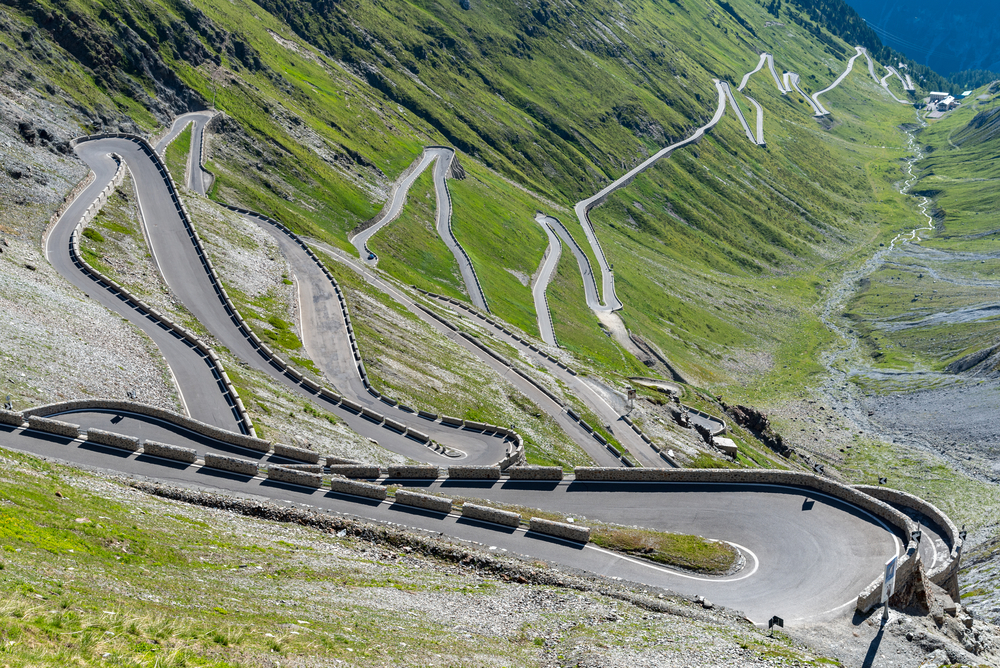
When you think of the Italian countryside, you probably picture picturesque vineyards, rolling hills, and old-world charm. Stelvio Pass certainly has these in abundance, but that does not reduce the danger of driving this road. Stelvio Pass is a snaking road that elevates 9,000 feet in just a few miles. It accomplishes this with a series of very sharp turns going up the side of a mountain.
The pass contains a total of 48 turns, some of which are a full 180-degrees. In addition to the sharp turns, there is little in the way of safety. The only safety feature the pass has to offer is a low concrete barrier to prevent you from falling several thousand feet down the side of the mountain.
The problem is the mountain conditions make the road impossible to drive for 10 months of the year. Also, the turns are too sharp and narrow to allow commercial vehicles to drive along the route. The end result is that the primary users of the pass are sports car and motorcycle enthusiasts who want the thrill of making sharp turns at high speeds.
Zoji La: India
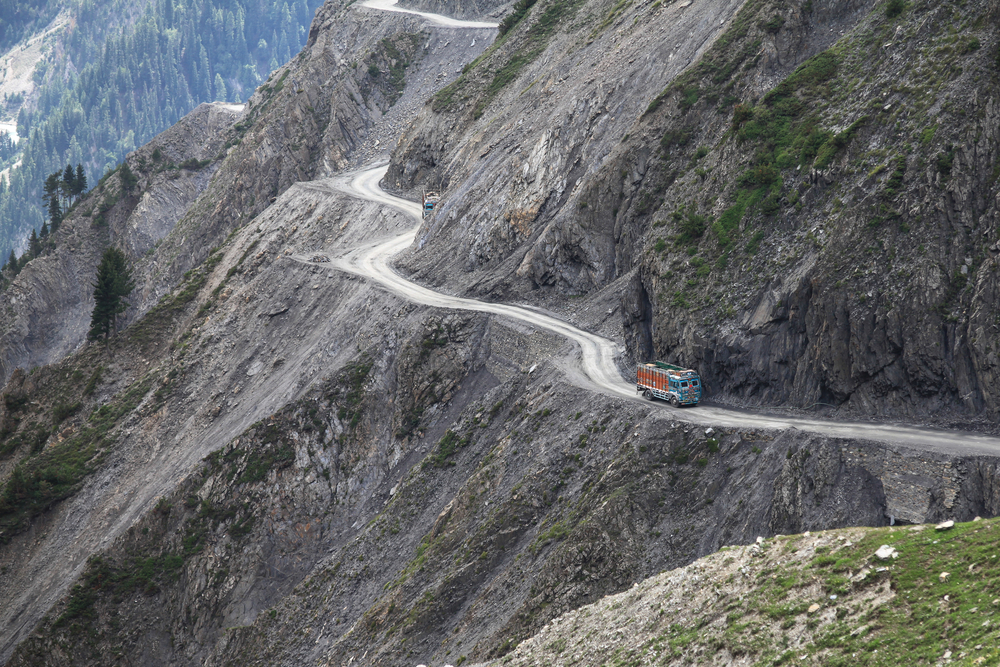
Zoji La, or Zoji Pass if you prefer the English version is a road in India that crosses through the Himalayan Mountains. The pass reaches heights of up to 11,575 feet above sea level. The views from this road are truly breathtaking, but you don’t want to see them if you are driving. The height of the pass can easily disorient drivers, causing them to mess up and tumble down the mountainside.
The pass, like the North Yungas Road in Bolivia, lacks any form of guard rails or safety features to prevent you from falling.
The pass is also poorly maintained with large stretches simply being dirt or gravel. The poor maintenance means that you likely need a four-wheel-drive vehicle even to make an attempt at driving the pass. During the wet season, heavy rains can make the pass impassible, even for large 4×4 trucks and SUVs. The uneven terrain also leads to the difficulty of this incredibly treacherous route.
The nearly 20 mile stretch of road is one of the most important mountain roads in all of India. The government is working to extend the amount of time this vital pass is open each year, but the treacherous mountain terrain and often unpredictable weather patterns make road improvements difficult and dangerous.
Commonwealth Avenue: Philippines

So far, this list has focused on roads that are dangerous to drive due to treacherous conditions or poor maintenance. Commonwealth Avenue in the Philippines, however, is a modern road in the heart of a major city. So, why is it on the list? Simple, hit and runs.
Commonwealth Avenue is also known by the nickname “Killer Highway.” This stretch of road is nearly 25 miles long and has an astounding 18 lanes. Being a modern road in a modern city, you would expect it to be relatively safe. The problem is that traffic regulations in the area are virtually non-existent. To add to the danger, the few traffic laws that are in place are loosely enforced by police, if at all.
What all of this means is that this stretch of highway is incredibly dangerous, but not often for drivers. The most common victims on the road are pedestrians and cyclists. Careless drivers are responsible for nearly 7,000 deaths annually making this road truly one of the deadliest in the world.
Making the road even more dangerous, numerous street gangs reside in the area and often target tourists. These gangs have been known to murder and rob people throughout the year, but they mainly focus on tourists. This is largely because local law enforcement tends to ignore cases involving foreigners and only provide minimal help to citizens.
BR-116: Brazil
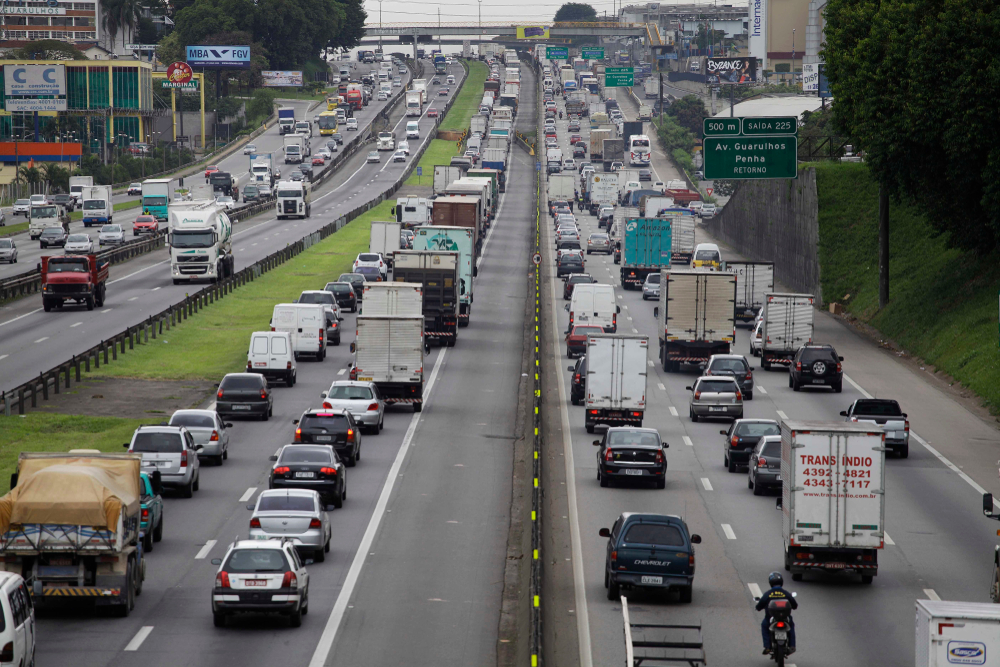
BR-116, more commonly known as the Highway of Death, is the second-largest road in Brazil. It is also one of the most important. BR-116 connects the farmlands of Brazil, responsible for large portions of the world’s corn and soybean, to the port city of Santos, on the Atlantic coast. The road is over 3000 miles long and receives very little maintenance, despite its importance.
The most common vehicles on the road are semi-trucks hauling goods to and from the port. These trucks regularly exceed 70 tons and do untold damage to the road. In addition to the countless potholes, there are sections of the road that are a single lane with traffic going both ways. This makes passing a hair-raising experience as trucks fly by each other, mere inches apart.
Thanks to the terrain of Brazil, there is simply no way to get from the heartland to the coast without passing through the mountains. As you approach the port city of Santos, the danger becomes less about the road and more about the bandits that reside in the area.
There is a lack of parking closer to the coast, but stopping on the side of the road is simply not possible. In addition to the danger of traffic, this is what the bandits in the area look for. Stopping on the side of the road is almost guaranteed to get you hijacked once you get into the mountains.
Sichuan-Tibet Highway: China

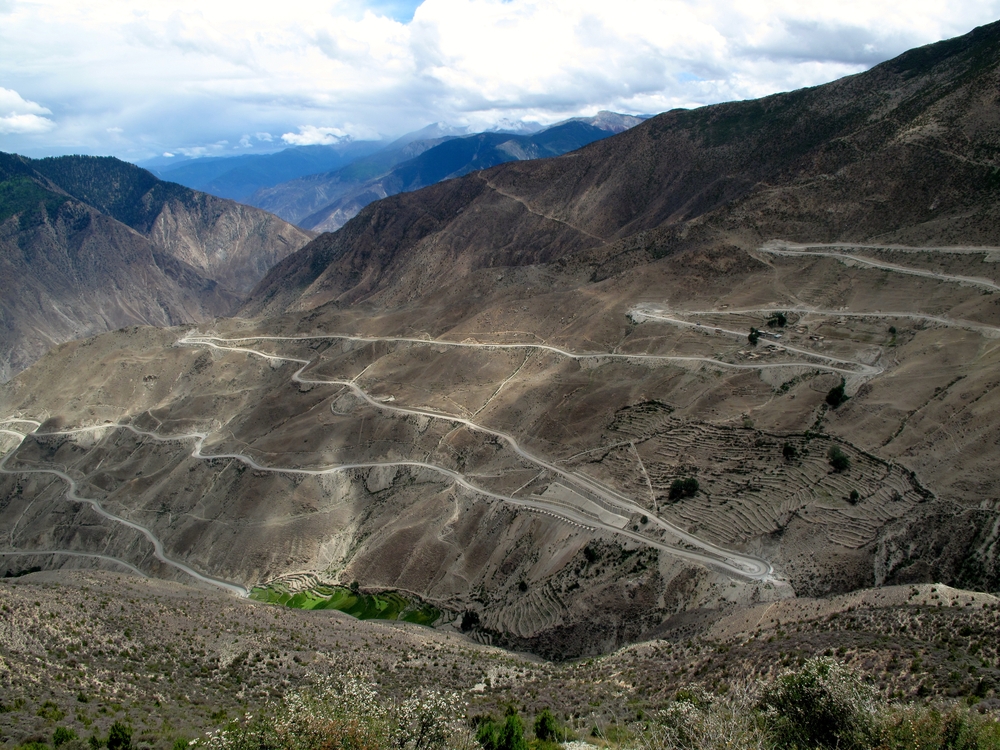
The Sichuan-Tibet Highway was originally built to be a trucking road to connect the eastern Sichuan area to western Tibet. The road is over 1300 miles long and can take up to 15 days to complete thanks to poor road conditions. Due to the remoteness of the road and its focus as a shipping road, the government pays little attention to maintenance; thus potholes and crumbling sections of the road are common.
Another aspect of the road that makes it dangerous is the series of hairpin turns located throughout. Turns regularly make a full 180-degree rotation in a matter of feet. Landslides are also a common occurrence, particularly during the wet season when heavy rains can cause loose dirt and rock to dislodge and consume the road and anyone unfortunate enough to be on it at the time.
The highway passes through a total of 14 mountains as well as some of the oldest remaining forests in the world. It is truly a breathtaking drive, literally. Due to the elevation, oxygen levels are only about half of what they are at sea level. This means that you must be vigilant and watch for signs of oxygen deprivation.
Kabul-Jalalabad Road: Afghanistan

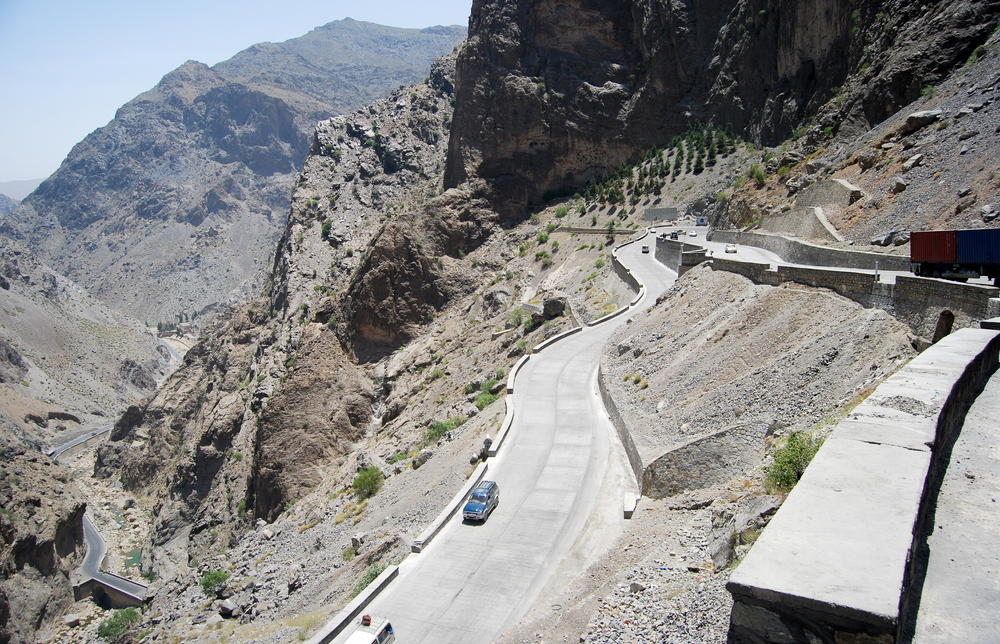
The most dangerous road in the world is located in Afghanistan. The Kabul-Jalalabad road is a small, two-lane road that is barely wide enough for two cars to pass, but drivers routinely drive this road at high speeds, resulting in multiple collisions per year. To make matters worse, trucks struggle to climb the steep incline, resulting in careless and dangerous passing that all too often result in head-on collisions.
The dangers of this road do not stop at the terrain. The road is also a common location for extremist forces to attack. Suicide bombers and kidnappings are a regular occurrence. Travelers should avoid the Kabul-Jalalabad road at all costs if visiting the area. While most of the locals are friendly, the extremist forces in the area are anything but and do not hesitate to kidnap foreigners. Sadly, the route itself is breathtakingly beautiful, but it is simply not worth the risk to drive.
There is little in the way of safety on the road. A foot-high barrier is all that separates cars from a sheer cliff face on one side. On the other side, the rock is nearly vertical. Turns are so tight in areas that it is impossible to see around the corner and know if the way is safe. This is where the children come in. Children from nearby villages often stand on the roadside using old green bottles as signals to alert drivers when it is safe to proceed. Despite this, drivers do not proceed slowly and regularly fly by, endangering both themselves and the children.
Conclusion
Ironically, many of the world’s deadliest roads are also some of its most beautiful. From scenic mountain passes to endless plains, gorges, and fjords, the world truly has something to offer everyone, if you are willing to take the risk. These drives are certainly not for everyone, and you must be confident in your driving abilities as well as trusting of those around you to attempt them.
If you are considering driving one of these routes, remember, the locals who drive these routes make up the bulk of the fatalities. That means that most of the people who die along these routes have experience in driving them, so do not overestimate your abilities.
You must also be aware of the social climate in the region. In Afghanistan, in particular, Americans should be cautious. While the locals are friendly towards outsiders and likely welcome the money they bring, the risk of extremist bombings and kidnappings is very real.
Others are dangerous for completely different reasons. In the north, you could easily freeze to death during the winter if you run out of fuel or your car breaks down. There is also the risk of sliding off of the road on a patch of ice and getting stuck. If this happens, your only hope is that someone else may be passing by and spot you. Precautions are necessary. Always alert local law enforcement to your plans and expected arrival so that a rescue party can be sent if you do not make it. A satellite phone is also a worthwhile investment.
So, are you willing to challenge death by driving one of the 10 most dangerous roads in the world?

