
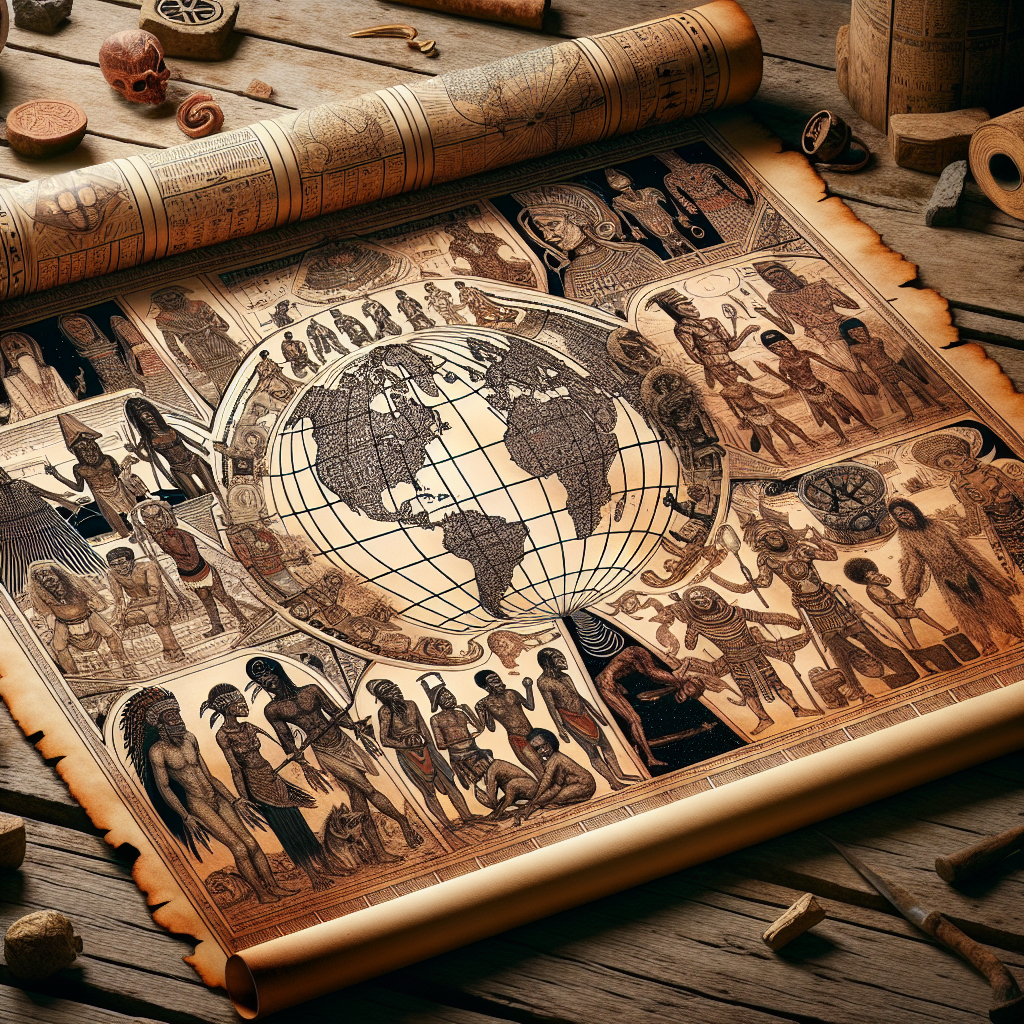
In the enchanting journey of human history, the practices of various ancient cultures are definitely worth exploring. This article spins the wheel of time backward and takes you on an intriguing voyage through the ‘Top 10 Unusual Ancient Rituals and Their Origins.’ The enigmatic corners of human civilization are rich with peculiar practices and fascinating customs that have shaped societies over countless generations. From far-flung tribes hidden in dense jungles to sophisticated civilizations of grand old cities, this list captures a diverse array of rituals that are sure to pique your curiosity, and possibly boggle your mind. So, brace yourself as you buckle up for this riveting ride into antiquity.
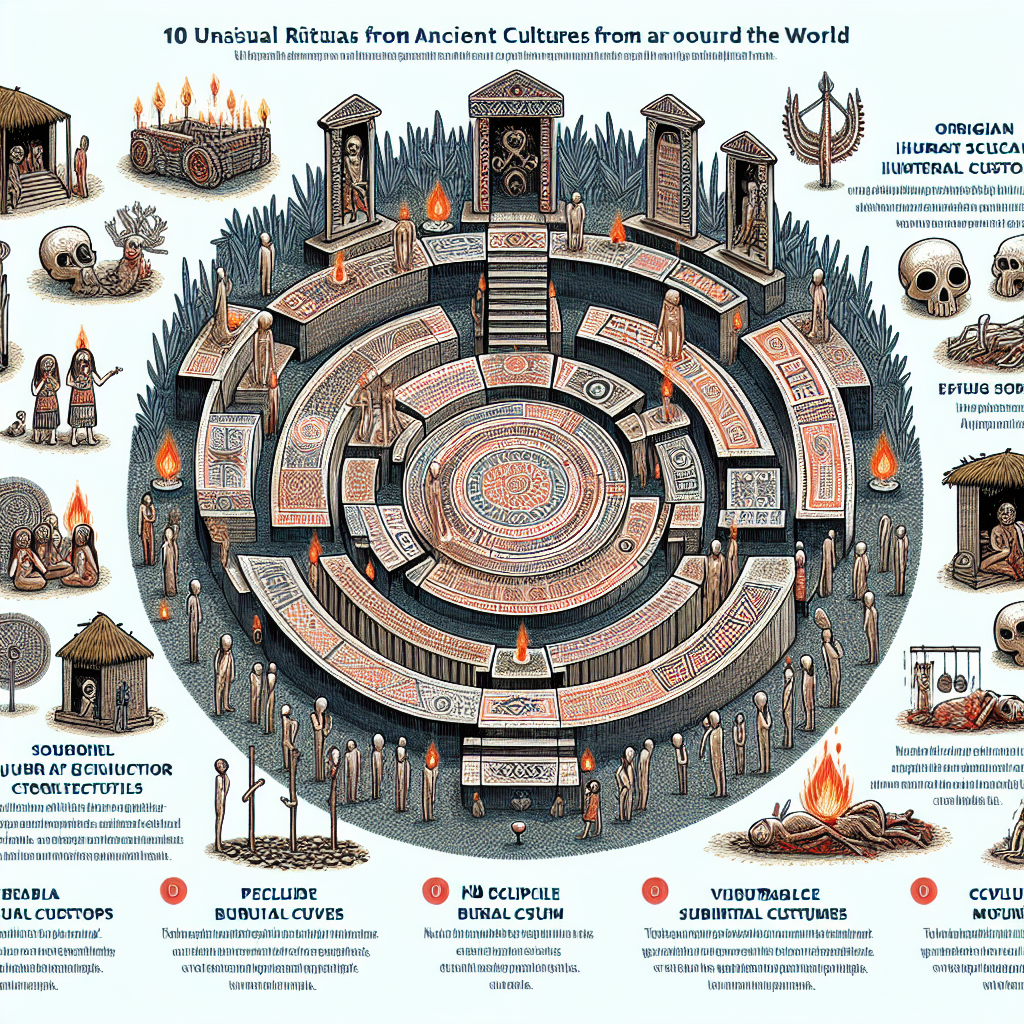
Ancient Egyptian Death Rituals
There’s a unique mystique surrounding ancient Egyptian death rituals, captivating our collective imaginations for centuries. Let’s dig deeper into understanding the Egyptians’ views of death and the afterlife.
Detailed Process of Mummification
The process of mummification, a distinct feature of ancient Egyptian culture, was a long and arduous process that often took over 70 days. It began with the removal of the internal organs, each preserved separately in canopic jars. Afterwards, the body was dried using natron salts, filled with linen or sawdust, then wrapped in hundreds of yards of linen strips. Over time, this procedure grew increasingly sophisticated and ceremonial, with the inclusion of amulets and prayers in the process. The whole objective? To ensure the deceased’s safe passage to the afterlife.
Beliefs Behind the Rituals
To the Egyptians, death was not an end but a transition to a new existence in the afterlife. Hence, the rituals performed weren’t merely for the deceased rather they were seen as essential rites that would guarantee a successful rebirth in the afterlife. The Egyptians believed in the concept of ‘Ka’, a spiritual double born with every man. Death occurred when the ka left the body and to ensure its survival, the body needed to be preserved – hence, mummification.
Influence and Legacy of the Practices
Ancient Egyptian death rituals have had an enduring legacy that influences our understanding of their society and culture. Today, when we think of ancient Egypt, mummies, pyramids, and tombs come to mind. These rituals reflect their complex belief system, their reverence for the afterlife, and their advances in science.
Mayan Ball Game Ritual
The Mayan ball game or ‘pok-a-tok’ was a significant part of the Mayan culture and had various ceremonial implications.
Purpose of the Game
The game symbolized the Mayan belief of the struggle between the forces of life and death. It was more than just a competitive sport; it was a ritualistic event meant to honor the gods and maintain cosmic balance.
The Rules and Consequences
Two teams vied to keep a hard rubber ball in the air using only their hips, shoulders, and heads. The game could last for days. However, the stakes of the game were high – the losers were often killed as offerings to the gods.
Religious Significance
The ball game held religious significance as it symbolized the Mayan creation myth. The rubber ball represented the sun, and the game enacted its journey through the underworld. This ritual was considered essential in ensuring the continuity of life.
Roman Gladiator Games
Gladiator games emphatically symbolize Roman power and the grandeur of its empire.
Origins of the Games
The practice initially began as funeral games to honor the dead. However, by the late Republic, it had become a form of mass entertainment.
The Role of Gladiators
Gladiators were often enslaved individuals, criminals, or captured soldiers, chosen for their physical attributes. Despite their lower societal status, successful gladiators attained fame and glory, earning the public’s admiration.
Symbolism and Societal Function
The games were the epitome of mortal struggle in ancient Rome and symbolized their power. It also served as a tool for social control by showcasing Roman authority and the consequences of challenging it.
Aztec Human Sacrifice
To modern eyes, the Aztec practice of human sacrifices may seem brutal, but it held significant meaning in their society.
Rationale Behind Human Sacrifices
The Aztecs believed in the concept of divine debt. They thought that the gods had sacrificed themselves to create the universe, and human sacrifices were necessary to repay them.
Methods of Sacrifice
The victims were usually prisoners of war. The methods of sacrifice ranged from decapitation, heart extraction, burning, and even ritual cannibalism.
Impact on Aztec Society and Culture
While undoubtedly brutal, these rituals were integral to their religious and societal structures. It showcased their fervent piety and their belief in cosmic balance.
Celtic Wicker Man Ritual
The mysterious Celtic ritual of the Wicker Man continues to intrigue us.
Details of the Ritual
The Celts constructed large effigies made of twigs and straw called ‘Wicker Men’. They placed animals and humans inside these structures and set them on fire as a sacrifice to their gods.
Historical Accounts of its Practice
This ritual was documented by Julius Caesar in his account of the Gallic Wars. However, as is the case with most ancient practices, the truth may be embellished.
Mythology and Interpretation
This ritual symbolizes the Celts’ reverence for nature and their animistic beliefs. The Wicker Man is often interpreted as a representation of the Celtic god.
To be continued in the comment section due to character limit.

