

How intriguing it is to dive into the world of mysterious mythical creatures! “Top 10 Mysterious Mythical Creatures in Folklore” is a fun and educational journey that satisfies your curiosity about these legendary beings. This article is a must-read for those who fancy mythology and folklore, as it blends entertainment and information effortlessly.
Are you ready to delve deeper into this mystical universe? This article is a treasure trove of intriguing information on the most enigmatic mythical creatures folklore has to offer. Each part of the list presents you with astonishing details, keeping the mystery alive as you navigate through one creature to another. You’re guaranteed to gain more interesting knowledge by the end of the article, so get comfortable, and let’s embark on this enchanting journey.

Introduction
Welcome, dear readers, on a fascinating journey across ages and continents as we uncover the mysteries of the mythical creatures that pepper our global folklore. Tales of mysterious beasts and fantastical beings have captivated the human mind throughout history, popping up in stories, art, and legends. So sit back, hold your breath, and let’s dive into the fascinating world of these enchanting beasts that continue to enthrall and terrify, even as they remain enigmatic figures of quintessential human yearning for the mystical and the unknown.
Dragons: The Great Serpents of the Sky
Origin and Cultural Significance
Starting off our list is the ever-majestic dragon. These fearsome, serpentine creatures are often depicted as powerful and knowledgeable beings, weaving their way into myths and legends across a range of cultures. From the sinuous, benevolent water dragons of Chinese mythology to the treasure-hoarding, fire-spewing wyrms of Western lore, dragons are an embodiment of primal power and sovereignty.
Appearing in Folklores
Wherever you go, tales of dragons rise and swirl like the smoke trailing the creature’s fiery breath. In Norse sagas, dragons symbolized formidable challenges to be overcome by heroes, while in Mesopotamian folklore, they stood for chaos and the challenging unknown.
Common Motifs and Symbolisms
While their physical representation varies, dragons often symbolize wisdom, power, and catastrophe across cultures. For instance, in Japanese folklore, they are considered as bringers of rain and symbols of fertility.
Unicorns: The Horned Horse of Purity
Historical References and Significance
Next on our list is the elusive unicorn, the horned horse that symbolizes purity, innocence, and magic. Its first mention dates back to the writings of the ancient Greeks, not in their mythology, but as creatures that lived in the exotic lands of India.
Common Representations
Often depicted as a magnificent white horse with a single, spiraling horn on its forehead, unicorns are a symbol of grace, purity, and enchantment. They are generally associated with ideals of peace and joy, providing a vibrant contrast to the awe-striking terror of dragons.
Exploring The Unicorn Myth
The allure of unicorns has permeated modern pop-culture, appearing in fantasy novels, movies, and children’s literature. Despite their mythical status, the fascination for these creatures reflects our longing for magic, beauty, and the extraordinary.
Phoenix: The Bird Reborn from Ashes
Highlighting Phoenix Tales
Akin to rising flames, the Phoenix’s significance and allure spread across different cultures. This supernatural bird is known for its life cycle of death in flames and subsequent rebirth, signifying resurrection, renewal, and eternal life.
Symbolic Meaning
The phoenix stands for the sun, a deathless existence, and a fresh start. Its spectacular rebirth from ashes highlights themes of transformation, immortality, and resilience.
Phoenix Across Different Cultures
While it primarily roots in Greek mythology, the phoenix tale appears in Egyptian and Chinese stories too. They also share equivalence with various mythical birds, like the Persian Simorgh or the Hindu Garuda.
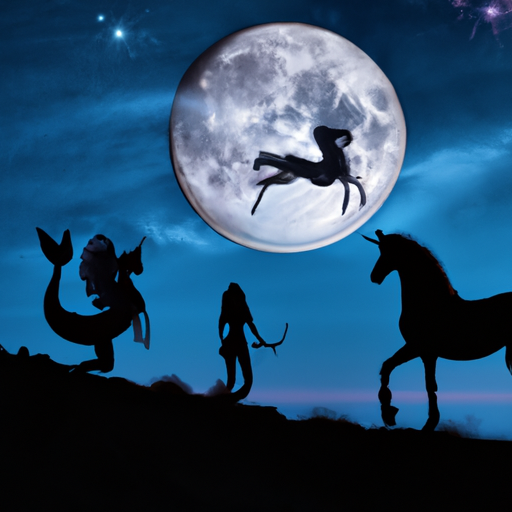
Mermaids: The Sirens of the Sea
Mermaid Folktales and Legends
Venturing into the dark depths of the sea, we meet the enchanting yet bewitching mermaids. With the beautiful upper body of a woman and a tail of a fish, these aquatic creatures have seduced sailors with their beauty and mesmerizing songs, leading them off course or to their doom.
Symbolism of Mermaids
Mermaids symbolize both beguiling beauty and perilous risk. Their dual nature reflects the seductive yet malevolent facet of the sea and human curiosity towards the unknown.
Metamorphosis and Variations of Mermaids
Mermaids appear in different forms across diverse cultures. From the ancient Syrian goddess Atargatis to the mischievous water spirits of Celtic folklore, the image of a human-fish hybrid has always fascinated mankind.
Centaurs: Half-Human, Half-Horse
Cultural Interpretations of Centaurs
Centaurs, with the upper body of humans and lower body of horses, originate from Greek mythology. These creatures represent the perfect blend of raw beastly power and human intellect, teaching us about the duality of our own nature.
Most Famous Centaurs in Mythology
One of the most renowned centaurs is Chiron, who stands out due to his wisdom and swerving from the usual boorish behavior associated with centaurs. He served as a mentor for Greek heroes like Achilles and Heracles.
Centaurs: Significance and Symbolism
Centaurs typically symbolize man’s wild and untamed nature. They continue to appear in various media, captivating audiences with their unique blend of human wisdom and animal power.
Basilisk – The King of Serpents
Basilisk in Ancient Lore
Moving to hazardous creatures, we encounter the famed Basilisk. Known as the ‘King of Serpents’, it has the power to kill with a single glance. Rooted in European mythology, it often appears as a small, crown-adorned serpent, capable of causing destruction beyond its size.
Symbolisms Associated with the Basilisk
Symbolizing the devil in Christian symbolism, the basilisk embodies supreme power and terror. It’s a metaphor for anything harmful or destructive.
Modern Interpretations of Basilisk
The basilisk remains alive in contemporary pop culture, featuring prominently in works like J.K. Rowling’s “Harry Potter” series, as a fearsome adversary that only the bravest can conquer.
Griffins: The Majestic Beast
Historic Roots of Griffin Tales
Envision a creature with a lion’s body and an eagle’s head and wings. That’s the Griffin for you! These majestic creatures symbolize a blend of intelligence and strength, hailing from ancient Persian and Egyptian mythologies.
Representation of Griffins
Griffins are universally hailed as guardians of divine entities and treasures. They represent the perfect amalgamation of mastery over earth and sky.
Griffins in Folklores
In Greek and Roman myths, they’re associated with the divine power of the sun and a deep connection to gold. Their fearsome yet majestic image remains vivid in our minds, symbolizing strength and vigilance.
Chimera: The Fire-Breathing Monster
Origins of Chimera
The Chimera, in Greek mythology, was a monstrous fire-breathing creature, often described as a lion, with the head of a goat arising from its back, and a tail that ended in a snake’s head.
Chimera’s Symbolic Value
As an amalgamation of different animals, the Chimera represents something impossible, an unrealistic, wild imagination. The word “chimera” often refers to an illusion or fabrication of the mind today.
Other Literary References
From Homer’s “Illiad” to modern literature and films, the Chimera continues to be a potent symbol of creation and imagination reaching beyond the boundaries of natural beings.
Minotaur: The Creature of the Labyrinth
Heritage of Menacing Minotaur
Under the depths of the Cretan palace, inside a complex maze, dwelt the terrifying Minotaur–a mythical creature with the body of a man and the head of a bull. The creature was the embodiment of a secret shame and a terrifying, almost uncanny mixture of the human and bestial.
Significance and Symbolism
The Minotaur is emblematic of the primitive, irrational mind lost within the maze of our subconscious, emphasizing our fear of the monstrous within us.
Modern-day Depictions
From iconic novels like “The Hunger Games” to popular video games, the enduring myth of Minotaur and his labyrinthine dwelling continues to color our psychological landscapes and nightmares.
Kraken: The Terror of the Seas
The Legend of the Kraken
Concluding our list is the gigantic sea monster – the Kraken. Stemming from Norwegian folklore, the Kraken was said to dwell off the coasts, eerily rising from the depths to ravage ships and terrify sailors.
Cultural Interpretations
Representing the unimaginably vast and mysterious sea, the kraken symbolizes our fear and fascination of the vast, impenetrable depths of the ocean and the unknown horrors that may lie beneath.
Symbolism and Mythological Connections
The archetype of a massive sea monster appears in multiple cultures, always conveying humanity’s primal fear of the unfathomable, uncontrollable forces of nature.
Conclusion
From the majestic dragons to the terrifying Kraken, these mythical creatures invite us to gaze into humanity’s collective imagination, laced with beautiful dreams and haunting nightmares. They operate as powerful symbols, representing our hopes, fears, aspirations, and the perpetual fascination with the realm of the fantastical. As you journey through your world, remember these creatures and the lessons they embody. After all, in every tale, legend or myth whispers some truth about the human experience. Happy exploring!

