
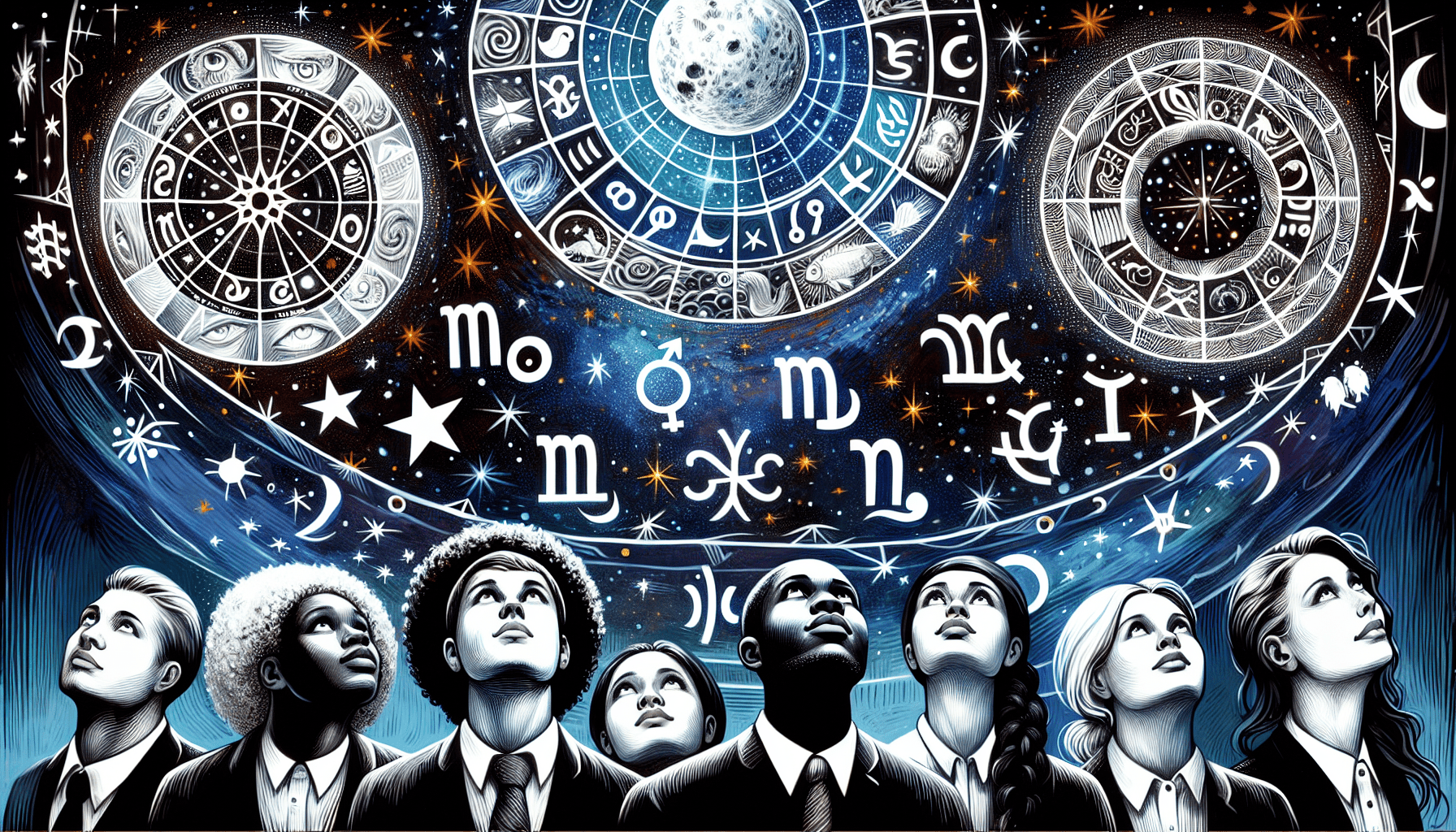
Imagine a world where the stars not only shape our destinies, but also vary in meaning and influence across different cultures. From the romantic astrology of France to the ancient wisdom of the Chinese zodiac, astrological practices have captivated mankind for centuries. In this eye-opening article, we will embark on a journey of discovery as we compare and contrast the fascinating astrological practices around the world. Prepare to be amazed by the diversity and beauty of the celestial beliefs that connect us all. So sit back, relax, and let’s explore the cross-cultural stars together.
Astrology as a Cultural Phenomenon
Astrology has captivated people across the globe for centuries, serving as a lens through which we understand ourselves and the world around us. This ancient practice has evolved and taken on different forms in various cultures, reflecting their unique traditions and beliefs. From the West to the East, and even in indigenous societies, astrology has left its mark on art, literature, and popular culture. In this article, we will delve into the global fascination with astrology, explore its influence on different cultural practices, and examine its impact on our lives today.


The Global Fascination with Astrology
Astrology has an enduring worldwide appeal that transcends borders and boundaries. People from all walks of life find solace, guidance, and entertainment in the study of the stars. Whether you are a true believer or a casual observer, astrology has a way of piquing your curiosity and sparking intrigue. In a world that often feels chaotic and unpredictable, the notion of finding meaning and order in the cosmos can be incredibly comforting.
Astrological Practices as a Reflection of Culture
Astrology is not only a means of personal introspection, but it also reflects the values, traditions, and societal norms of different cultures. Western astrology, with its focus on zodiac signs and natal charts, offers insights into individual personalities and life paths. Meanwhile, Chinese astrology incorporates zodiac animal signs and the five elements to provide a holistic view of a person’s character. Indian astrology places great significance on the positions of celestial bodies and their influence on human lives, while indigenous cultures infuse astrology with their unique spiritual beliefs and connections to nature.
Astrology’s Influence on Art, Literature, and Popular Culture
Artists, writers, and musicians have long drawn inspiration from astrology, infusing it into their creative works. The zodiac signs, with their distinct traits and archetypes, serve as a wellspring of ideas for storytelling and character development. From William Shakespeare’s plays to modern pop songs, astrology has weaved its way into the tapestry of popular culture. Astrological themes can be found in everything from fashion to home decor, further solidifying its presence in our daily lives.
Western Astrological Practices
The Origins of Western Astrology
Western astrology has its roots in ancient Babylon and Mesopotamia, where celestial patterns were observed and recorded for divination purposes. Over time, this practice spread to Greece and Egypt, where it became entwined with mythology and philosophy.
The Zodiac Signs in Western Astrology
The zodiac signs in Western astrology are based on the position of the sun at the time of a person’s birth. Each sign has unique characteristics associated with it, providing a framework for understanding personality traits and compatibility.
Popular Western Astrological Systems
Sun sign astrology, also known as horoscope astrology, is the most widely recognized system in the Western world. It focuses on the position of the sun at the time of birth and provides general predictions and personality descriptions based on the zodiac sign. Additionally, natal charts, also known as birth charts, offer a more comprehensive analysis by considering the positions of all the planets at the time of birth.
Astrological Symbols and Their Meanings in the Western Tradition
Western astrology is rich with symbols that represent the planets, zodiac signs, and various astrological aspects. These symbols have deep meanings and are often used in astrological charts and readings to convey information about a person’s life and personality.
Eastern Astrological Practices
Chinese Astrology and the Zodiac Animal Signs
Chinese astrology is based on a twelve-year cycle, with each year associated with a specific animal sign. These animal signs are believed to influence an individual’s personality and destiny. From the ambitious Rat to the compassionate Dog, each animal sign carries distinct qualities.
The Five Elements in Chinese Astrology
In addition to the zodiac animal signs, Chinese astrology incorporates the concept of the five elements: Wood, Fire, Earth, Metal, and Water. These elements interact with the animal signs, adding another layer of complexity to astrological interpretations.
Indian Astrology and the Significance of the Planets
Indian astrology, also known as Vedic astrology, places great emphasis on the positions and movements of the planets at the time of a person’s birth. The planetary placements are believed to influence different aspects of life, such as career, relationships, and health.
Astrological Systems in Japan and Other Eastern Cultures
Japan and other Eastern cultures have their unique astrological systems that blend indigenous beliefs with influences from China and India. In Japan, the Shinto religion incorporates astrology through the use of sacred calendars and auspicious dates. Similarly, other Eastern cultures have their own astrological practices that reflect their distinct cultural and spiritual traditions.
Astrology in Indigenous Cultures
Native American Astrology and Animal Totems
Native American cultures have their own rich astrological traditions, with animal totems playing a central role. Each animal is believed to possess specific qualities that can be harnessed and understood through astrology. Native Americans look to these totems for guidance and insight into their lives.
African Astrology and Ancestral Spirits
African astrology is deeply intertwined with ancestral spirits and the belief in a cosmic connection between the living and the dead. Through astrology, individuals can gain insights into their spirits’ desires and navigate life accordingly.
Australian Aboriginal Astrology and Connection to the Land
Australian Aboriginal astrology reflects the deep spiritual connection between the indigenous people and the land. The movements of celestial bodies are considered integral to understanding the natural cycles and the connections between humans, animals, and the environment.
Astrological Practices in Other Indigenous Cultures
Indigenous cultures across the world have developed their own astrological practices that are tied to their unique spiritual and cultural perspectives. These practices, often passed down through generations, provide guidance and insight into individual paths and community dynamics.
Astrological Divination Methods
Astrological Consultations and Readings
Astrological consultations and readings involve seeking guidance from professional astrologers who interpret astrological charts and provide insights into various aspects of life. These sessions can help individuals make informed decisions, understand personal strengths and challenges, and gain a deeper understanding of themselves.
Using Astrology for Decision-Making and Planning
Astrology has long been used as a tool for decision-making and planning. By considering the positions of celestial bodies, individuals can align their actions and choices with auspicious times and gain a sense of the potential outcomes.
Astrological Divination Tools Across Different Cultures
In addition to astrological charts and readings, various divination tools are used across cultures to tap into the wisdom of the stars. The I Ching, a Chinese divination system based on hexagrams, offers guidance through ancient texts. Tarot cards, a popular divination tool in Western cultures, use a deck of cards with archetypal imagery to provide intuitive insights.
Notable Astrologers Throughout History
Throughout history, there have been notable astrologers who have made significant contributions to the field. From ancient astronomers like Claudius Ptolemy to modern astrologers like Liz Greene, these individuals have shaped astrological practices and interpretations, leaving a lasting impact on the art and science of astrology.
Astrological Beliefs and Superstitions
Astrological Predictions and Their Cultural Impact
Astrological predictions have influenced cultures around the world, shaping beliefs and customs. From the ancient Greek belief in the influence of the stars on an individual’s fate to the Chinese tradition of consulting astrologers for auspicious dates, astrology has played a significant role in how societies make decisions and understand the world.
Beliefs in the Influence of Celestial Bodies on Human Lives
People across cultures hold diverse beliefs regarding the influence of celestial bodies on human lives. While some view astrology as a science that can provide valuable insights, others consider it a source of guidance and inspiration. These beliefs vary widely and speak to the deep connection humans feel with the cosmos.
Superstitions Related to Astrology in Different Cultures
Throughout history, astrology has given rise to numerous superstitions in different cultures. These range from wearing specific gemstones to attract good fortune to avoiding certain actions during astrologically unfavorable periods. Superstitions connected to astrology offer a glimpse into the rich tapestry of cultural practices.
Astrology’s Role in Marriage, Career Choices, and Other Life Decisions
In many cultures, astrology plays a crucial role in making important life decisions. From selecting auspicious dates for weddings to consulting astrologers for career guidance, astrology offers insights and guidance that individuals consider when making significant life choices. These practices help individuals align their decisions with the cosmic energies.
Controversies and Skepticism
Scientific Criticism of Astrology
Astrology, while admired by many, faces scientific criticism. Skeptics argue that there is no evidence supporting the claims made by astrologers and consider it a pseudoscience. They argue that astrological predictions are too vague to be empirically tested and that any perceived accuracy is the result of confirmation bias.
Ethical Concerns in the Astrological Industry
Like any industry, astrology is not without ethical concerns. Issues such as fraudulent practices, misrepresentation, and misleading claims have plagued the field. It is important to approach astrology with discernment and seek out reputable practitioners who prioritize integrity and client well-being.
The Debate Between Determinism and Free Will in Astrology
Astrology raises questions about the nature of determinism and free will. While some believe that the positions of celestial bodies determine one’s fate, others argue that astrology is a tool for self-awareness and choice. The debate between the influence of the stars and individual agency continues to spark philosophical discourse.
Differences in Astrological Practices: Modern vs. Traditional
The practice of astrology has evolved over time, leading to differences between modern and traditional approaches. Traditional astrologers often rely on ancient texts and techniques, while modern astrologers have adapted to incorporate new discoveries and perspectives. Understanding these differences can provide a deeper appreciation for the breadth of astrological practices available today.
Astrology and Personality Traits
The Connection Between Astrology and Personality
The study of astrology and personality is deeply intertwined. Astrologers believe that an individual’s birth chart, which outlines the positions and interactions of celestial bodies, can shed light on their inherent character traits, strengths, and weaknesses.
Common Personality Traits Associated with Each Zodiac Sign
Each zodiac sign is associated with a set of common personality traits. For example, Aries is typically described as energetic and assertive, while Taurus is known for its practicality and determination. These traits, however, should be taken as generalizations, as individual variations exist.
Astrology’s Influence on Individual Behavior and Relationships
Astrology offers insights into individual behavior patterns and provides a framework for understanding relationships. By analyzing the compatibility of different zodiac signs, astrologers can offer guidance on forming and maintaining harmonious connections.
Cultural Variations in the Interpretation of Astrology and Personality
The interpretation of astrology and personality traits varies across cultures. While some cultures may emphasize specific zodiac signs and their associated qualities, others may focus on different astrological elements or entirely different systems. Exploring these cultural variations deepens our understanding of astrology’s cultural significance.
Astrological New Year Celebrations
Western New Year vs. Lunar New Year
The Western New Year, celebrated on January 1st, marks the beginning of the calendar year. In contrast, the Lunar New Year follows the lunar calendar and varies each year, typically falling between late January and early February. Both celebrations hold cultural and astrological significance in their respective regions.
Astrological Significance of New Year Celebrations
New Year celebrations often carry astrological significance, representing a fresh start and the opportunity for personal growth. These festivities are marked by rituals and customs meant to bring good fortune, ward off evil spirits, and align individuals with positive cosmic energies.
Traditional Customs and Rituals During Astrological New Year
Whether it’s the Western New Year or the Lunar New Year, these celebrations are filled with unique traditions and rituals. From the lighting of fireworks to the exchange of gifts, each culture has its own customs aimed at welcoming the new year with joy and prosperity.
Festivals and Events Related to Astrological Calendars
Beyond New Year celebrations, numerous festivals and events worldwide revolve around astrological calendars. These events, such as the Hindu festival of Diwali and the Chinese Lantern Festival, offer opportunities for communities to come together and engage in cultural practices deeply rooted in astrology.
Astrology’s Future: Trends and Adaptations
The Rise of Online Astrology and Social Media Influencers
In the digital age, astrology has adapted to reach a wider audience through online platforms and social media. Websites, apps, and social media influencers provide personalized readings, horoscopes, and astrological content that cater to the modern lifestyle.
Astrological Predictions for the Future
As astrology continues to evolve, predictions about its future also abound. Some believe that astrology will become even more accessible and integrated into various aspects of life, while others foresee its decline in favor of other forms of self-exploration and spirituality. Only time will reveal the true trajectory of astrology.
Astrology’s Role in Contemporary Society
In contemporary society, astrology occupies a unique place as both a source of entertainment and introspection. It serves as a lens through which individuals can navigate life’s challenges and uncertainties, offering guidance and understanding.
Innovative Approaches to Astrology in the Modern World
Innovation has found its way into astrology, with new approaches and techniques emerging. From astrological life coaching to astrology-based wellness practices, these innovative approaches offer fresh perspectives and new ways to engage with astrology in the modern world.
In conclusion, astrology is a fascinating cultural phenomenon that has captivated people around the world for centuries. It reflects the beliefs, traditions, and values of different cultures and has left its mark on art, literature, and popular culture. Whether you view astrology as a guiding force or a fun diversion, there is no denying its profound impact on how we understand ourselves and our place in the universe. So, the next time you gaze up at the stars, remember that you are part of a global fascination that spans centuries and cultures.

