
Astronomy is fun. To be clear, that is astronomy, not astrology. Astronomy is the studying of extra-planetary bodies such as stars and planets. Astrology is the belief that the location of the Earth relative to the stars when you were born has an influence on your personality and life. While many do-follow and believe in astrology, it is not a proven science and not relevant here.
Jupiter is truly a strange planet, at least for our home solar system. It is unique compared to all the other planets and is, in a sense, a miniature solar system of its own. Jupiter was one of the first planets discovered thanks to its large size and brightness in the sky. Early civilizations almost universally tracked the stars and planets. Each of the planets, with the exception of Earth, is named after the Roman gods.
Jupiter has more moons than any other planet in the solar system and has a magnetic field that is 72 times stronger than Earth’s This giant gas planet is truly an interesting subject. While scientists do know a lot about Jupiter, there is even more that they do not know. This alien planet seems destined to remain a mystery largely for centuries to come.
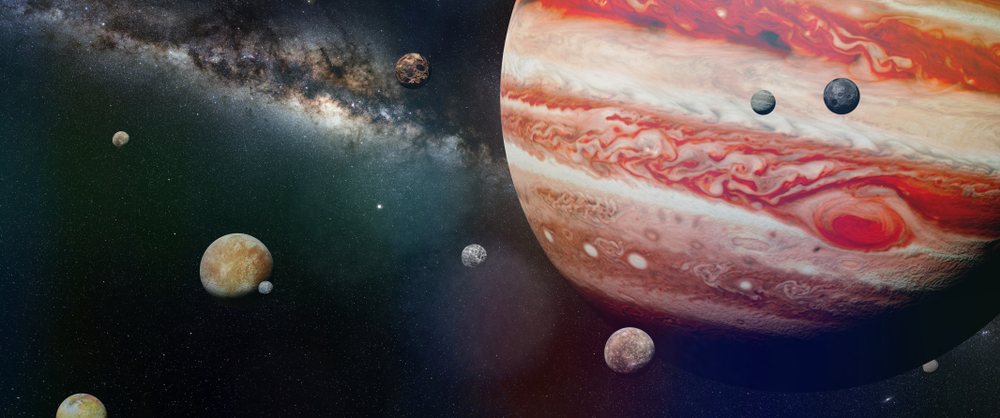
Thanks to probe flybys, scientists have put together some impressive images of Jupiter to give you an accurate idea of what this massive planet looks like up close. Sadly, most of these probes end up being destroyed in order to prevent potential life contamination. Below are 10 interesting facts about Jupiter.
Jupiter’s Moons are Named After His Mistresses

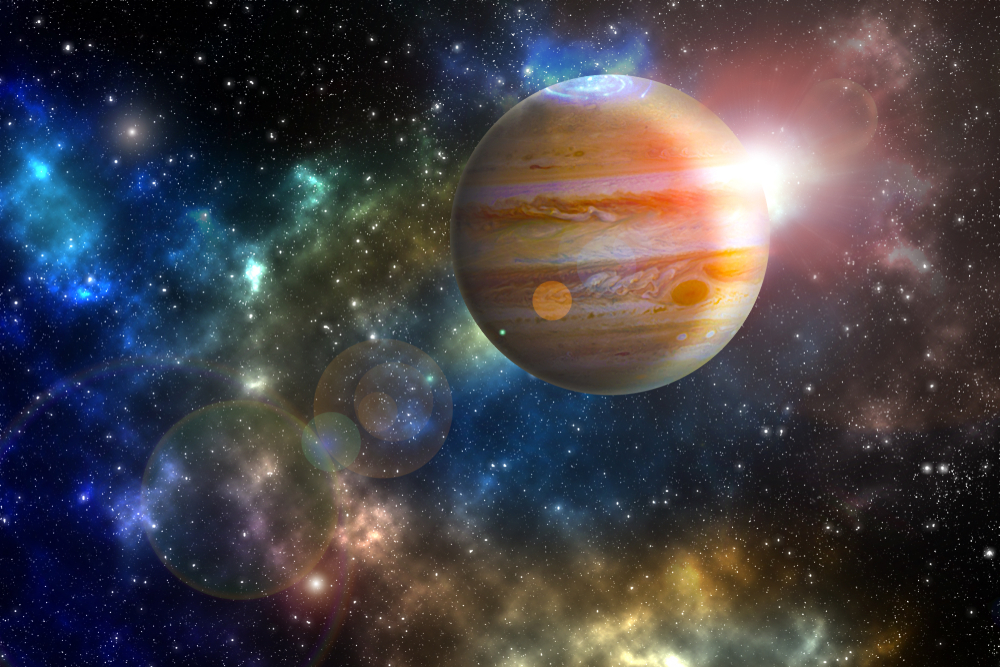
Jupiter, the Roman god of thunder and head of the Pantheon, is simply Zeus, the identical Greek god, rebranded with a Latin name. Most of the Roman gods actually either come directly from other pantheons or have been merged with gods from other pantheons. The Romans always incorporated conquered gods into their own Pantheon.
The reason the Romans integrated other gods into their Pantheon was to maintain the Pax Romana or Roman Peace. It was believed that the gods bestowed the Pax Romana onto Rome in exchange for staying in their good graces. The Romans did not want to offend the gods by ignoring or denouncing one of their other names, so they would always merge the foreign gods with the ones that closest matched their own.
Since Jupiter is just another name for Zeus, it should be no surprise that Jupiter had a lot of mistresses. Where this really becomes relevant is when you realize that one of the probes sent to Jupiter was named Juno. Juno is Jupiter’s wife, so NASA sent Jupiter’s wife to check on him and his dozens of mistresses. Juno has been able to send back valuable data and breathtaking pictures of this massive gas giant.
Jupiter is Almost Entirely Hydrogen and Helium

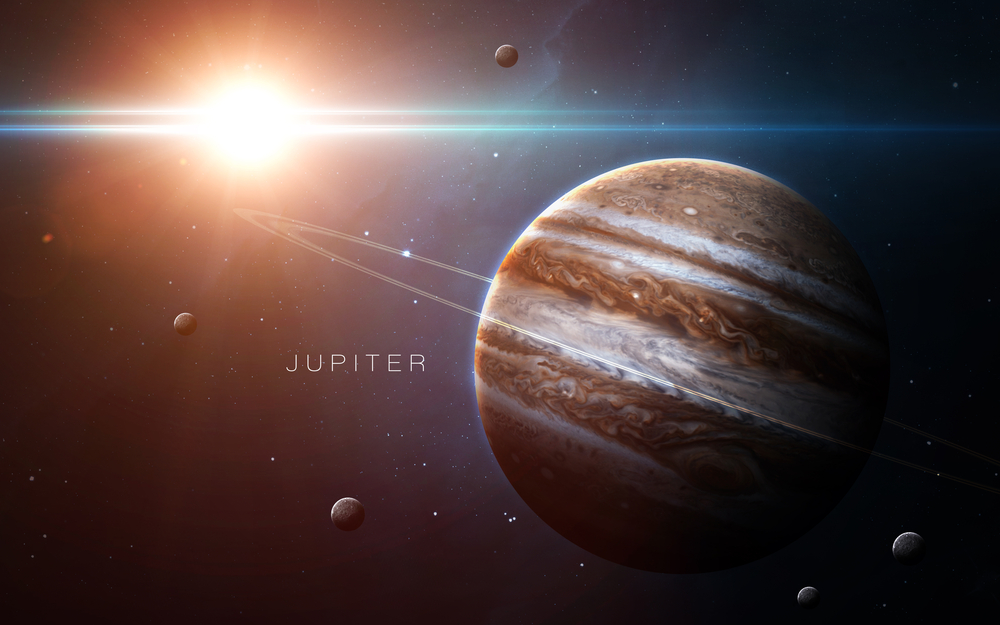
Hydrogen and helium are the two most common elements in the universe. This is because they are so simple to form. Hydrogen is the most basic building block for all of the other elements. Helium is the result of a single fusion occurrence, making it the second most common element. It should come as no surprise that Jupiter, being a failed star, is almost entirely comprised of hydrogen and helium.
The upper 50km of Jupiter’s atmosphere contains its iconic clouds, the most noticeable feature of Jupiter. These clouds are almost entirely made up of ammonia crystals. As these crystals come up to the surface, they change colors based on the elements contained in them. The darker colored spots are more recent, while white areas have been sun-bleached.
While scientists do know that the atmosphere is primarily hydrogen and helium, they do not know the state of the matter. Is it all gas with a gas core? Does the pressure get high enough that the gasses eventually form a liquid, and the planets have a liquid core? Or do they have a rocky core with a very large atmosphere? We don’t know and without further advancements in technology, cannot know. Most theorize that there may be a rocky core, but most likely, there is a certain point where the gas transitions to a liquid.
Jupiter’s Moons Could Support Life

From what can easily be observed, it seems likely that Earth is the only planet in our solar system that has life. It is certainly possible that microbial life exists on Mars, but even this seems unlikely because of the environmental factors of Mars and solar radiation that the planet is exposed to. This is a result of its lack of a magnetosphere. Regardless, Mars at least has the advantage of being a rocky planet, meaning that life could theoretically form.
Jupiter, however, is a gas giant. This makes it extremely unlikely to be able to support life as we know it. While Jupiter itself may not be able to support life, it is possible that one or more of its moons may harbor life right now. Europa is the most likely candidate. It contains massive oceans that could host life underneath the icy surface. The geology of Europa is also similar to Earth. This makes it possible, though unlikely, that life could form.
Another possible candidate for life in our solar system is Saturn’s moon, Titan. Life on Titan would be completely different than anything that we are familiar with today, however. Titan is rich in methane, not water. This means that any life that evolved on the moon would likely be methane-based, not carbon-based. All life on Earth stems from a single common ancestry, so it is all carbon-based.
All of the Other Planets Could Fit Inside of Jupiter

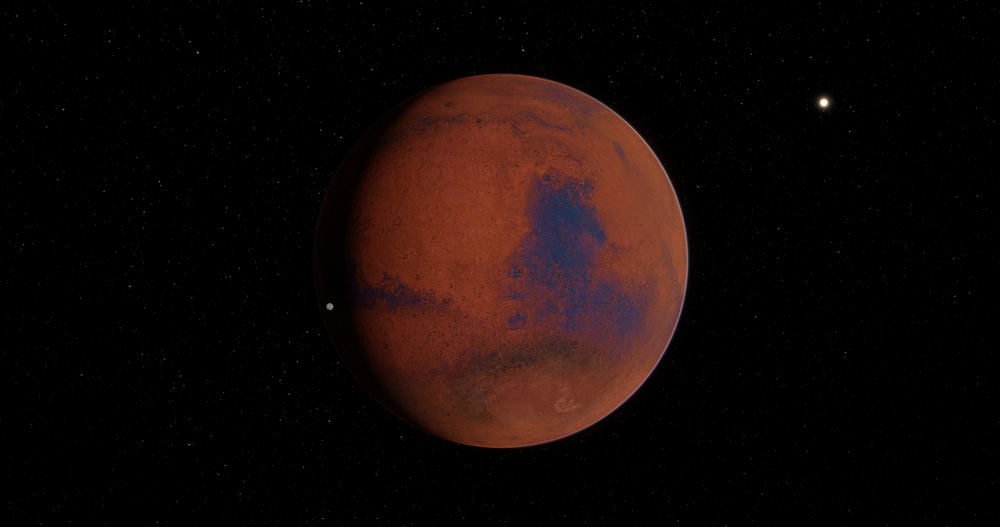
Jupiter is by far the largest planet in the solar system. Saturn is close to the same size as Jupiter, but thanks to its lower density, it is several times less massive. The other gas giants are much smaller than either Jupiter or Saturn.
A pound of gas and a pound of stone take up vastly different amounts of space. Gas giants are not bound by the same limits as rocky planets, allowing them to grow to hundreds of times the size of rocky planets. For example, Mercury is so small that it is smaller than several of Jupiter’s moons. Pluto is so small that it is no longer considered a planet.
Based on the size, Saturn would take up enough space inside of Jupiter that the other gas giants would not be able to fit. When working with mass, not size, however, all of the other planets could fit inside of Jupiter twice.
Remember, mass is not the same as size. Mass refers to the total weight of an object and is not related to size at all. Many people get confused and use mass and size interchangeably. This could not be further from the truth, however. Imagine a container that is one cubic foot. One is air, the other has water in it. The one with water is more massive even though they take up the same amount of space.
One Year on Jupiter is 12 Years on Earth

Time dilation is a very real phenomenon in space. When two objects are either moving at vastly different speeds or under vastly different amounts of gravity, time can flow differently for both objects. This difference can be a factor of several years. For example, for every minute that passes on planet A, two years pass for planet B.
While time dilation is a very real phenomenon, it is not the cause of Jupiter’s long years. A single year on Jupiter is 12 years on Earth. This is simply because Jupiter is so much further from the Sun that it takes that much longer to make a full rotation around the Sun.
The longer years on Jupiter make it difficult to plan probe missions, requiring years of advance planning to make sure it is launched at the right time. To make matters worse, since the Earth and Jupiter are not geosynchronous, they are not going to cross paths very often.
Since they move at a constant rate, it is possible to accurately predict the location of any planet in the solar system several thousand, or even millions of years in the future or past. This technology is so common that there are several video games available that use the actual models, providing very accurate models with a simple personal computer.
It is the Fastest Spinning Planet

Thanks to the spin of the Earth, you are always moving. In fact, you are moving so fast at any given time that the effects of you consciously moving are negligible in comparison. Thanks to the rotation of the Earth, you are always moving at around 1000 miles per hour. This effect is strongest near the equator and weakest at the poles. This means that people in Alaska are actually moving slower than people in Hawaii.
The rotation of the Earth is so fast that if it were to stop suddenly, as has been used in several superhero stories, the destruction would be immeasurable. Buildings would collapse, cars would be thrown hundreds of feet, and anyone not strapped to the ground would immediately be thrown into the nearest building. Going from 1000 MPH to 0 MPH instantly would result in enough of an impact to kill all life on Earth. With that in mind, it seems like the Earth is rotating pretty fast, right? Not so compared to Jupiter.
The Earth rotates at 1000 miles per hour. That is certainly fast, but it is nothing compared to Jupiter. Jupiter’s rotation is an astounding 28,000 miles per hour, 28 times faster than Earth’s.
This rapid rotation is a large factor contributing to Jupiter’s large, destructive storms. Jupiter is host to some of the most severe storms in the solar system, largely thanks to its incredible rotation speed.
Jupiter has the Strongest Magnetic Field

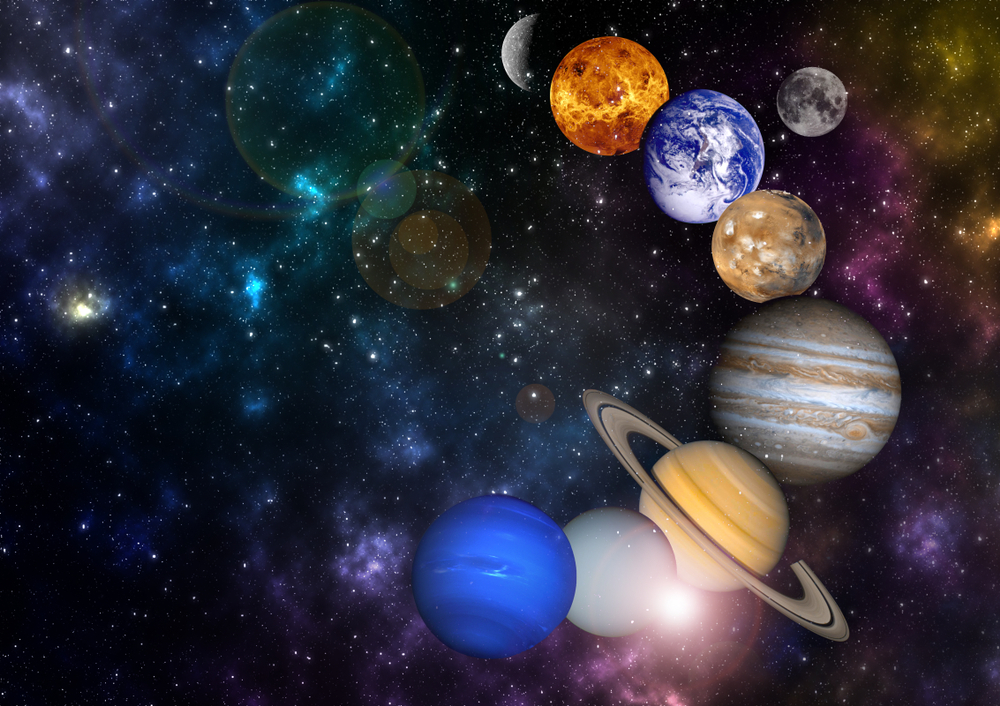
The magnetic field of a planet is essential for its continued existence. This is especially true for a gas giant such as Jupiter. Without a magnetic field, the atmosphere would slowly be blown away by solar winds from the Sun.
This is exactly what happened to Mars. It is believed that in the past, Mars had a dense, breathable atmosphere, but for some reason, it lost its magnetosphere. Without this, the Red Planet was not able to protect itself from the solar winds from the Sun. Over time the atmosphere was blown away, resulting in a barren planet that cannot even support liquid water in its current state.
If this were to ever happen to Jupiter, it is likely that the entire planet would eventually be blown away into space. Since Jupiter is a gas giant, if all of the gas were blown away, it is unlikely that anything would even remain. Even if Jupiter were to lose its magnetic field today, however, this process would still take thousands, possibly millions, of years to complete. It is unlikely that you would even begin to see the effects in your lifetime.
For now, however, Jupiter’s magnetic field is about 20 times stronger than Earth’s. Even at the top of the clouds, it is still about 10 times stronger than the magnetic field on Earth. It is also about 20,000 times larger in diameter. This is essential for protecting the gas giant. Since Earth loses only minimal atmospheric elements, it should be expected that Jupiter’s losses are negligible thanks to its increased magnetic shielding.
The Red Spot is a Giant Storm
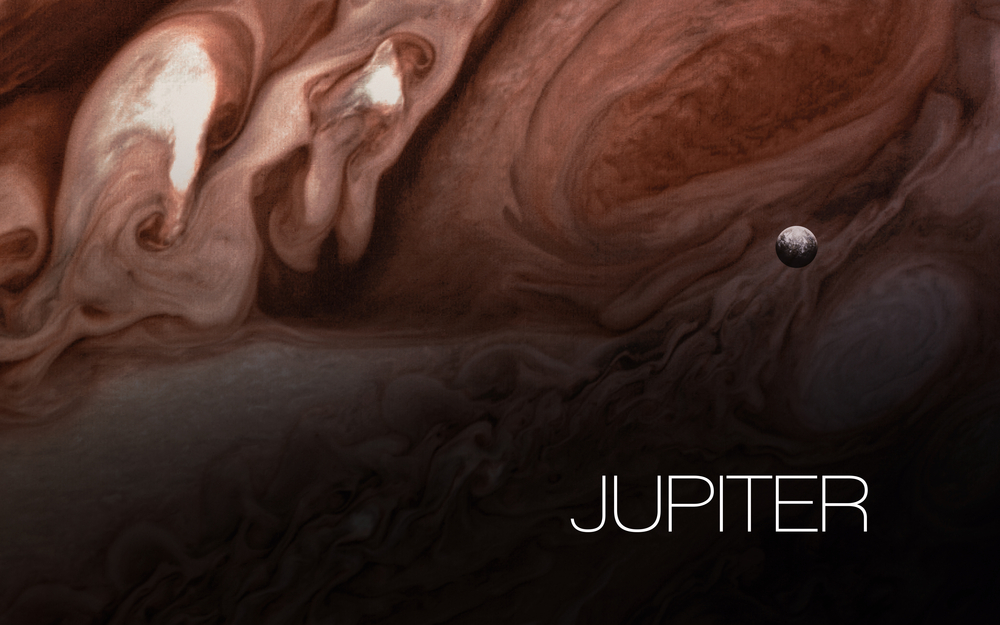
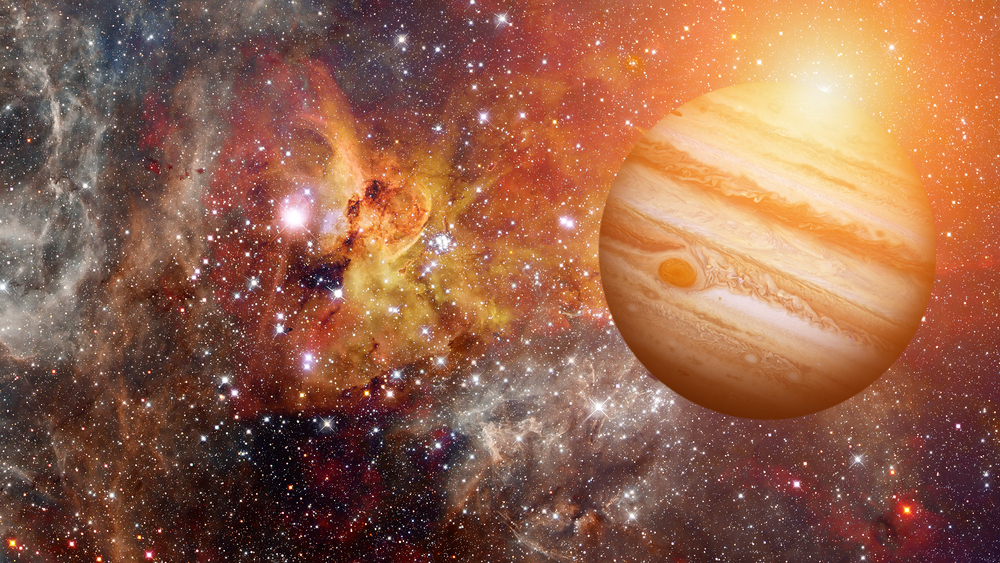
The Red Spot is one of the most iconic features of Jupiter. It was first discovered in the 17th century but could have existent even longer. Without access to proper imaging techniques, it was impossible for early astronomers to view such distant objects clearly. What we do know is that it is a storm that has been raging on the planet for at least a few hundred years. With no environmental factors or geological factors to break the storm, it is able to continue for extended periods. This is true for all gas giants. The storms need physical features to cause them to break. For example, look at hurricanes. As long as they are in the ocean, they are able to continue to grow, but once they hit land, they begin to break. The same is true on gas giants, but there is nothing to break the storm.
The Red Spot is massive. It is so big that Earth could fit inside of it three times over. The storm is likely caused by a persistent high-pressure system. Combine the gaseous atmosphere with the incredibly rapid rotation of Jupiter, and it only makes sense that the planet would have enormous storms that last for hundreds, or even thousands, of years.
The winds on gas giants in intense, as one would expect from a gas planet. This can be attributed partially to the rapid rotation, but also to the lack of anything to stop the wind. Winds are able to build speed with only other air currents to interfere. As a result, the winds can reach very high speeds.
Jupiter can Cause Orbital Oscillation on Other Planets


Thanks to its incredibly high mass, Jupiter is able to cause the orbits of other planets to fluctuate. This effect is minimal and does not cause significant changes to the orbit of the other planets, but it does cause temporary differences. The main victim is Mars, Jupiter’s closest rocky neighbor.
There are several different objects that can cause oscillation, such as this. Anything with enough mass can have high enough gravity to impact other bodies. The more mass an object has, the more it is able to impact other objects. This is true thanks to the increased gravity and reduced effects of gravity as mass increases.
While Jupiter is a relatively tame example, there are more extreme examples of this occurring in space. When an object interferes with another object’s orbit, it is known as a Jovian Binary. If a Jovian Binary is severe enough, it can cause extreme and rapid weather shifts and other impacts to the planets being affected. The most noticeable effect would be the very sudden shifts in temperature as the planet is pulled between the sources of gravity.
Jupiter is a Failed Star

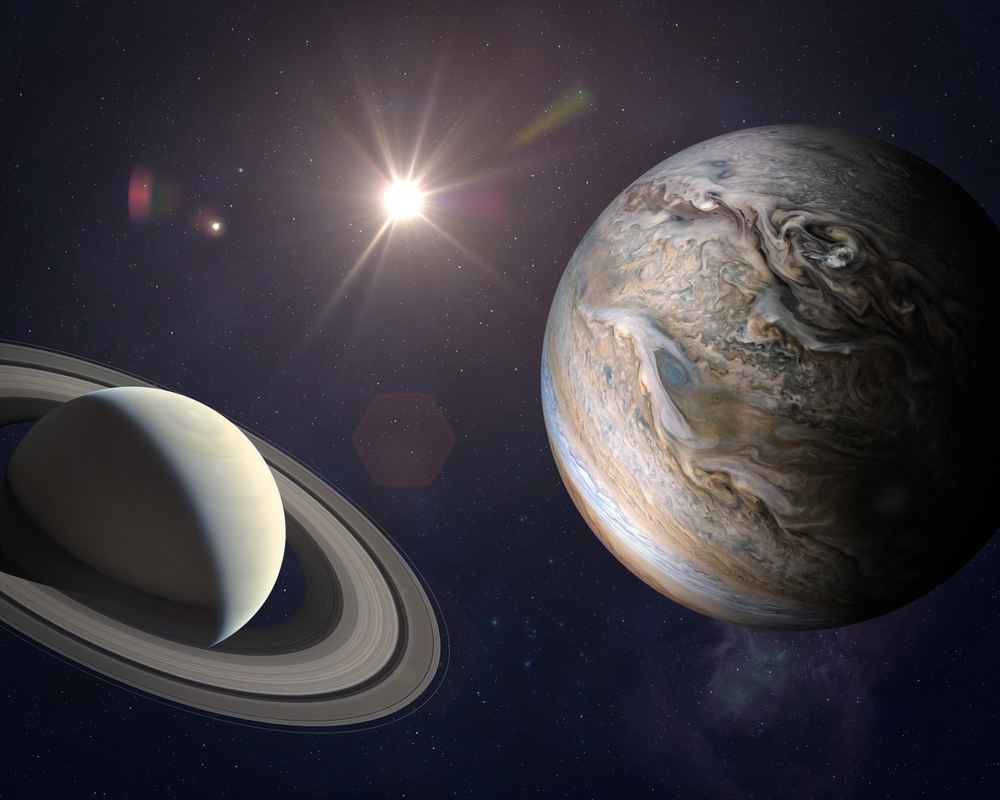
Stars form when enough gasses and other elements gather together into a giant ball of gas. At a certain critical point, the gravity of the forming star becomes so great that the force of gravity is able to force-start nuclear fusion. This causes hydrogen to fuse together to form helium. Once the hydrogen has all been consumed, the star begins fusing helium into heavier elements.
This process continues until it reaches the point where the star is fusing iron. Iron requires much more energy to fuse than lighter elements, so the iron settles to the bottom of the star. Over time this iron core becomes too heavy, and the gravity formed by the core is strong enough to overcome the force keeping electrons from smashing into protons. Essentially the gravity overcomes the force keeping atoms apart. This causes the atoms to collapse on themselves and form a neutron star. Neutron star material is the single densest material in the universe.
Jupiter came close to becoming a star, but it was not able to collect enough matter to start the fusion process. As a result, Jupiter does produce more heat than it gets from the Sun, but it does not perform fusion or fission. This means there is no nuclear activity generating energy on Jupiter.
Conclusion
The largest planet in our solar system is also one of the most interesting. There are many more interesting facts about Jupiter but trying to cover everything about this giant planet is far beyond the scope of one article. Jupiter is interesting because there are so many unique things about it. How many other planets are failed stars? Also, having Juno, the probe sent to Jupiter, be named after his wife was a brilliant naming move by someone at NASA.
A solar system is a fascinating place, and it is well worth further study if you are interested in astronomy. Once you get outside of the solar system, things become even more strange, and you must factor in different influencing factors such as time dilation, which occurs when there are massive differences between speed or gravity between two objects. This difference can result in a difference of several years for the parties involved, even if only a few minutes pass for one.
With serious advancements in technology and a long timeframe, it is even possible for humans to transform Jupiter into a new star. The process would take millions of years, and humans would likely cease to exist before it was completed, but it could be done. This could be used as a secondary source of solar radiation in the solar system and even make many of Jupiter’s moons inhabitable.

